


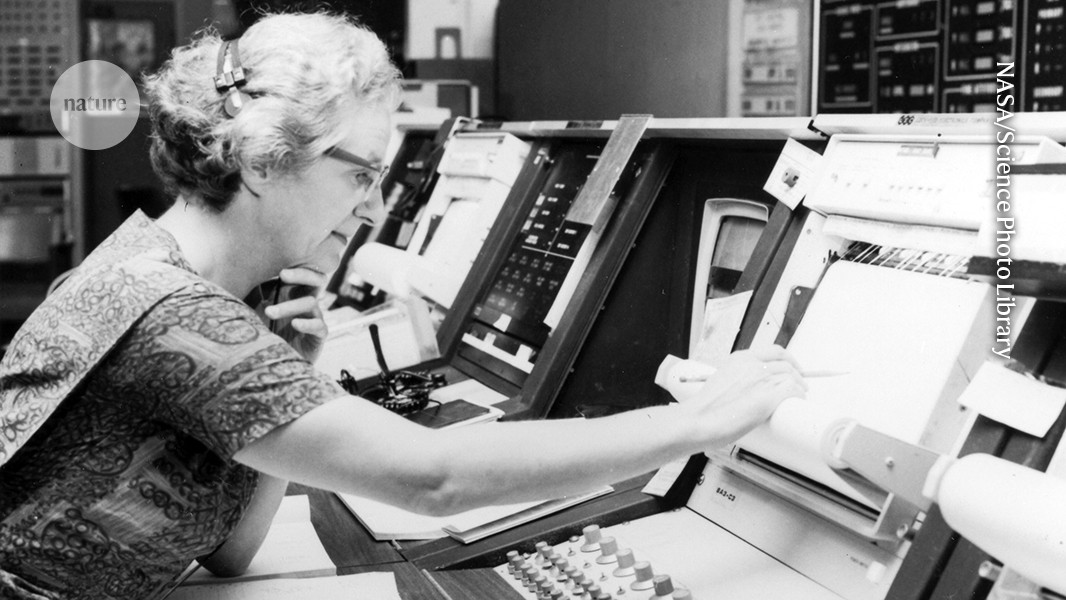
Early in her career, Nancy Grace Roman defied those who said women should not become scientists.
Credit: NASA/Science Photo Library
Astronomers have a powerful new way to explore the universe, investigate dark matter and dark energy, and search for exoplanets. The Nancy Grace Roman Space Telescope, launched on August 30, is the first space telescope named after a woman. NASA renamed the observatory in 2020, changing its original name from the Wide-Field Infrared Survey Telescope (WFIRST) to honor Nancy Grace Roman, the scientist who established NASA’s first space astronomy program in 1959. Roman is widely recognized as the “mother of the Hubble Space Telescope.”
Before the name change, the WFIRST mission faced repeated budget cuts and was nearly removed from the US president’s budget. Those threats made the telescope’s future uncertain. Naming the mission after Roman made it “uncancellable,” said Thomas Zurbuchen, who served as director of NASA’s Science Mission Directorate in 2020. In that sense, Roman continued to protect the space astronomy programme she created and guided for decades, even after her death in 2018.
NASA’s Roman Space Telescope could do far more than map the invisible universe
After teaching the history of astronomy for three decades, I have come to view the rise of space astronomy in the 1950s and 1960s as one of the most important transformations in the history of the field. Observatories operating above Earth’s atmosphere opened new opportunities to study the universe across the electromagnetic spectrum.
When NASA was founded in 1958, astronomers used sounding rockets, balloons and high-altitude aircraft to carry scientific instruments. Their next objective was to operate above Earth’s atmosphere for far longer than the approximately five minutes possible with a sounding rocket. Earth’s atmosphere absorbs, obscures and distorts radiation from distant celestial objects, limiting what ground-based telescopes can observe.
However, as Roman told me in a 1984 interview, even during the mid-1960s “there was a minority of people who supported telescopes of any kind in space, big or small” (see go.nature.com/4qywze8). Some ground-based astronomers regarded space astronomy as a threat and worried that space missions would divert funding from their own research programmes.

The Roman Space Telescope is set to transform planetary exploration
Others argued that space telescopes were too expensive. Why rush to build them when ground-based astronomy was also advancing rapidly? For critics, the risks were underscored by the failure of the Orbiting Astronomical Observatory-1 in 1966, when its batteries overheated only three days after launch. Roman also recalled that some scientists opposed NASA’s Apollo programme because they felt the agency had presented it as a scientific mission while offering too little science in practice. They “felt taken advantage of and opposed it,” she said.
As NASA’s first chief astronomer, Roman worked to establish a powerful programme of space-based missions and technology development. She championed space astronomy, built support among scientists and the public, and helped lay the foundation for the observatories that continue to expand our understanding of the cosmos.
Source: www.nature.com