


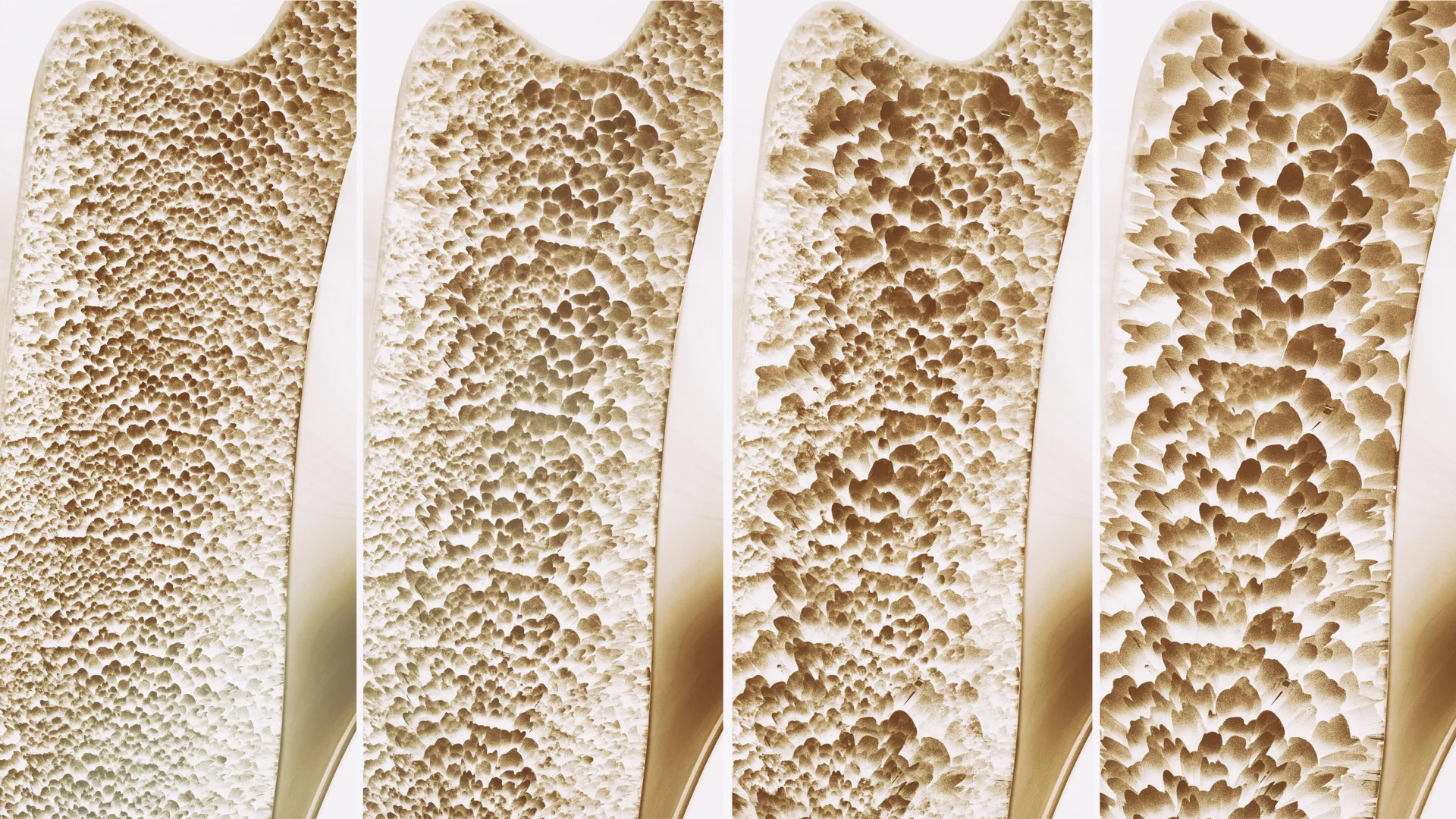
Osteoporosis is a bone disease that reduces bone density and increases the risk of fractures. It affects millions of people worldwide, including approximately 6 million people in Germany, most of them women. Because current osteoporosis treatments may cause side effects or have limitations during long-term use, researchers are exploring new ways to preserve and rebuild bone strength.
Scientists at Leipzig University have identified a promising biological target called GPR133. This receptor appears to play an important role in maintaining healthy bones and could eventually lead to new treatments for osteoporosis and other conditions linked to bone loss.
GPR133: A promising receptor for bone health
GPR133 belongs to a group of cell-surface proteins known as adhesion G protein-coupled receptors. These receptors help cells detect and respond to signals from their surrounding environment. Although this receptor family is not yet fully understood, research suggests that GPR133 is closely involved in the formation and maintenance of strong bones.
“When this receptor is impaired by genetic changes, mice develop reduced bone density at an early age, similar to osteoporosis in humans,” explains Professor Ines Liebscher of the Rudolf Schönheimer Institute of Biochemistry at the Faculty of Medicine. “By using the compound AP503, we were able to significantly increase bone strength in both healthy and osteoporotic mice.”
These findings suggest that GPR133 could become a valuable target for future osteoporosis therapies. In laboratory studies, activating the receptor with AP503 increased bone strength in healthy mice as well as in mice with osteoporosis-like bone loss.
How GPR133 may help build stronger bones
Within bone tissue, GPR133 responds to physical forces and interactions between neighboring bone cells. Once activated, the receptor triggers signaling pathways that influence the balance between bone-forming and bone-resorbing cells.
Bone-forming cells, known as osteoblasts, produce new bone tissue. Osteoclasts, by contrast, break down and remove old bone as part of the skeleton’s normal renewal process. Strong, healthy bones depend on a balanced relationship between these two activities.
Activating GPR133 appears to stimulate osteoblast activity while reducing osteoclast activity. This may shift bone remodeling toward stronger, denser and more durable bones.
AP503 appears to mimic the natural activation of GPR133. In the future, this compound could potentially be used to improve bone strength or support the healing of weakened bones. One possible application is osteoporosis associated with menopause, when declining hormone levels can accelerate bone loss in women.
Possible benefits for bones and muscles
The potential benefits of AP503 may extend beyond bone health. Previous research from Leipzig University found that activating GPR133 with AP503 also helped strengthen skeletal muscles.
“The newly demonstrated parallel improvement in bone strength once again highlights the significant medical potential of this receptor in an aging society,” says Julian Lehmann, Ph.D., lead author of the study and a researcher at the Rudolf Schönheimer Institute of Biochemistry.
A treatment that supports both bone and muscle strength could be especially valuable for older adults, who often experience declines in both tissues at the same time. Stronger muscles can improve mobility, balance and stability, while stronger bones may reduce the risk of serious fractures.
The Leipzig research team is conducting follow-up studies to better understand how GPR133 works. Researchers are also examining whether AP503 could have applications in other diseases and are continuing to investigate the receptor’s broader functions throughout the body.
Leipzig’s long-term research into G protein-coupled receptors
For more than a decade, Leipzig University has made adhesion G protein-coupled receptors a major research focus through Collaborative Research Centre 1423, “Structural Dynamics of GPCR Activation and Signaling.”
The program investigates how these receptors change shape, become activated and transmit signals inside cells. Leipzig University is internationally recognized for its research into G protein-coupled receptors and their potential applications in medicine.
Source: www.sciencedaily.com