


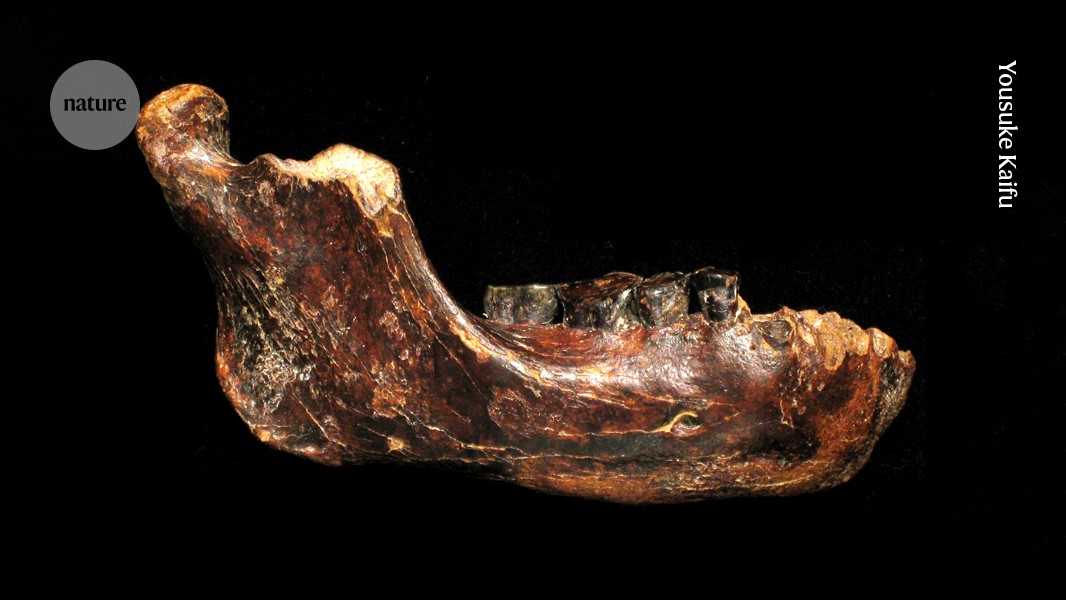
In 2025, researchers used protein analysis to show that a jawbone recovered from marine sediments off the coast of Taiwan belonged to a Denisovan.Credit: Yosuke Kaifu
An abandoned quarry in southwestern China is offering scientists an unprecedented glimpse into the Stone Age. Fossils and archaeological artifacts recovered from the site are revealing new details about the lives, technologies and abilities of the mysterious ancient humans known as Denisovans.
Evidence from the site suggests that Denisovans made bone tools similar to those produced by their Neanderthal relatives. The discoveries also indicate that Denisovans occupied the area for at least 30,000 years and possibly as long as 120,000 years. They appear to have been skilled hunters of animals including deer. No other archaeological site has produced such a long and detailed record of Denisovan behavior and technology.
“This site is a complete package,” says archaeologist Ben Marwick of the University of Washington in Seattle, who was not involved in the study. “This is the first site with a long and rich sequence unique to Denisovans,” he says.
Details of the discovery are available today. nature1,2.
New fossils reveal a Denisovan home
Denisovans were first identified in 2010, after researchers sequenced DNA from a finger bone discovered in Siberia’s Denisova Cave. The genetic material did not match that of any previously known human species. Since then, ancient proteins — which can survive when ancient DNA has degraded — have become an important tool for identifying Denisovan fossils.
Denisovan jawbones recovered from sediments on the Tibetan Plateau and in the Taiwan Strait have expanded the known range of these extinct humans far beyond Siberia. In 2025, researchers confirmed that a skull discovered near Harbin in northeastern China also belonged to a Denisovan, further extending the fossil record of the group.
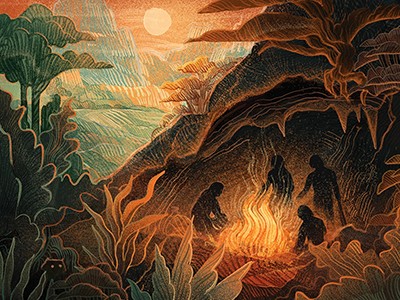
Who were the ancient Denisovans? Fossils reveal mysterious human secrets
In 2019, workers carrying out ecological restoration at a quarry in China’s southwestern Yunnan province discovered bones and stone tools. Archaeologists later excavated thousands of objects from Bianhu Cave, a cavern within the quarry. Protein analysis revealed that five bone fragments belonged to Denisovans: two pieces of a curved skull, part of a lower arm bone and two teeth.
Qiaomei Fu, a paleogeneticist at Beijing’s Institute of Vertebrate Paleontology and Paleoanthropology, led the protein analysis. The Denisovan fossils came from two separate layers of cave sediment, she says, suggesting that ancient humans occupied Bianhu Cave over an extended period. The layers date to between 167,000 and 134,000 years ago.
Bianhu Cave’s location in southwestern China is also significant because it is closer to regions where Denisovans may have encountered and interbred with modern humans. Today, some of the highest proportions of Denisovan DNA are found in the genomes of people living in Papua New Guinea and nearby islands.3.
What Denisovan bones reveal
The Bianhu Cave arm bone, part of a radius, is one of the few Denisovan fossils discovered below the head. Its recovery provides researchers with rare evidence about the anatomy and biology of this elusive ancient human population.
Source: www.nature.com