


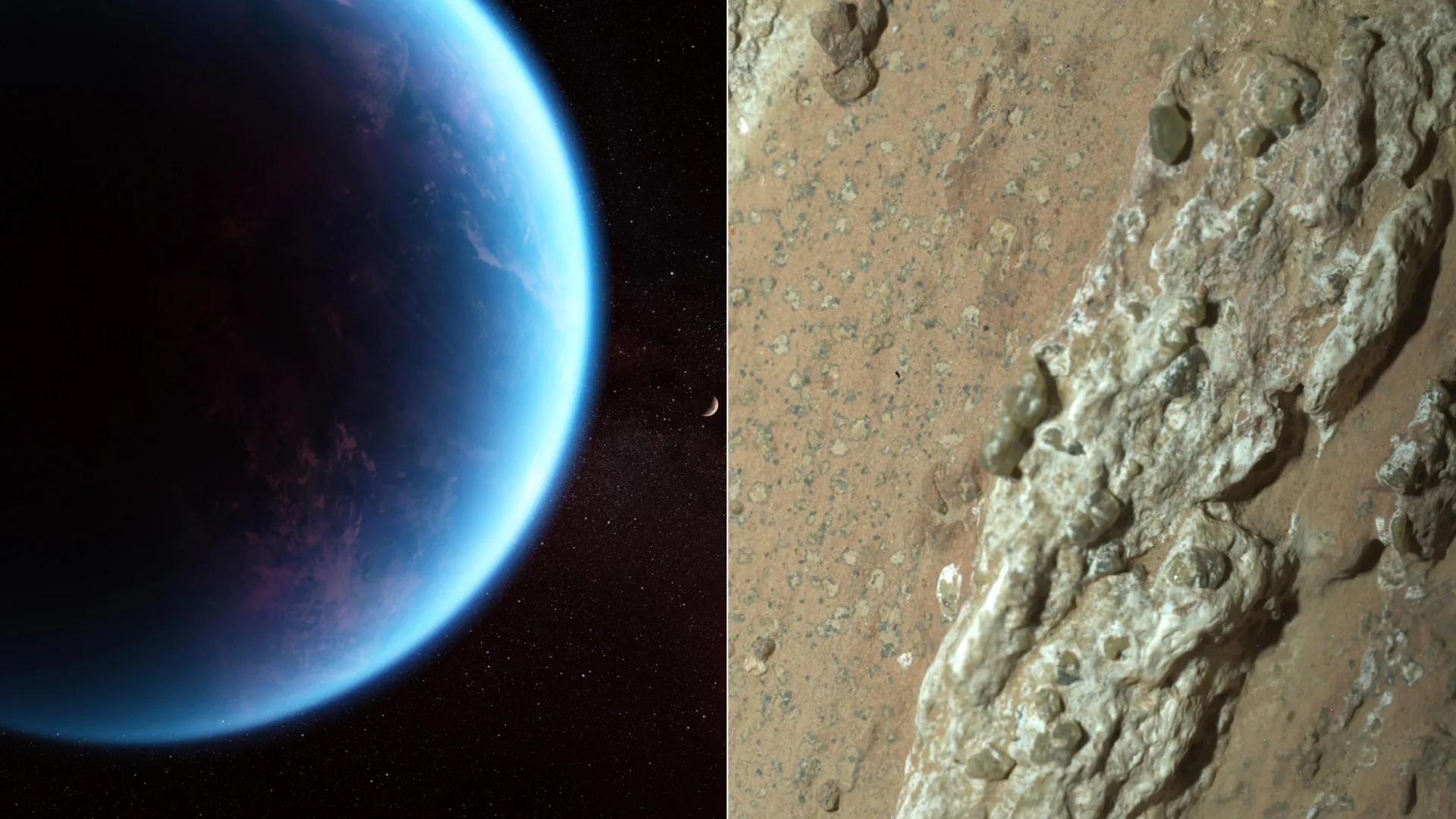
Humanity may be closer than ever to detecting extraterrestrial life. In 2025, researchers described findings linked to exoplanet K2-18b as the “strongest hint yet of biological activity.” Meanwhile, after examining a rock named “Cheyava Falls” on Mars, NASA Administrator Sean Duffy said the discovery brought scientists “closer than ever” to finding life on the Red Planet.
Discoveries like these capture the public imagination. They also raise an important question: What does the wider scientific community actually think about the possibility of extraterrestrial life?
Surprisingly, we often do not know. When scientific breakthroughs or controversies make headlines, journalists and press officers typically quote a small number of experts. These comments can be valuable, but they rarely reveal how the broader scientific community views the evidence. Public discussions frequently use phrases such as “according to science” or “scientists believe,” as if scientific opinion always produces one clear and measurable answer.
In reality, systematic evidence about scientific opinion is often limited. My colleagues and I recently examined this issue in astrobiology. Following two major 2025 announcements about possible signs of extraterrestrial life, we surveyed astrobiologists to understand how expert views differed across disciplines and how scientists responded to uncertain evidence.
The first case involved exoplanet K2-18b. In April 2025, researchers reported possible traces of dimethyl sulfide and/or dimethyl disulfide in the planet’s atmosphere. On Earth, these molecules are associated with biological activity. The findings received extensive media coverage, with many reports describing them as a major advance in the search for life beyond Earth.
The second case took place in September, when NASA announced that the Perseverance rover had identified features in the Cheyava Falls rock that could represent a potential biosignature. The rock contains mineral formations sometimes called “leopard spots,” which can be produced by microbial activity on Earth. Once again, headlines and public statements suggested that the evidence could be significant.
What Do Scientists Actually Think About Extraterrestrial Life?
Within days of each announcement, we surveyed hundreds of astrobiologists from research institutions around the world. We asked a straightforward question: Did they think scientists had possibly discovered extraterrestrial life?
The results showed a notably cautious scientific response. For K2-18b, only 6.6% of surveyed astrobiologists agreed that scientists had probably discovered extraterrestrial life. Nearly two-thirds disagreed, while 28.0% remained neutral. In the Mars case, support increased but remained limited: 15.1% agreed, 44.6% disagreed, and 40.3% selected a neutral position.
However, focusing only on agreement and disagreement overlooks an important part of the results. The share of astrobiologists who strongly disagreed fell sharply, from 35.1% for K2-18b to just 11.1% for the Mars discovery. Much of the change therefore reflected a movement from strong rejection toward more provisional or uncertain positions, rather than a direct shift from “no” to “yes.”
In other words, expert opinion changed in a structured way. After the Mars announcement, scientists appeared more open to the possibility of extraterrestrial life, but they did not fully accept the claim that life had been discovered.
One explanation may be that the two cases involved different types of evidence. The K2-18b claim depended on atmospheric signals detected across interstellar distances. By contrast, the Mars claim involved a physical rock that can be examined directly and studied in greater detail. At the same time, astrobiologists have long recognized that apparently life-like features can also be created by non-biological processes. A central challenge in the search for life on Mars and beyond is not simply identifying how life could produce a signal, but understanding all the ways nature could create a similar signal without life.
Scientific opinion is rarely divided into two simple camps. Public debate often presents science as a choice between agreement and disagreement, but the full distribution of views is more informative. Strong agreement, agreement, neutrality, disagreement, and strong disagreement each reveal something about how scientists evaluate a new claim.
A large neutral response can mean several things. Scientists may believe the evidence is inconclusive, feel only moderately confident in their judgment, or consider the claim too speculative to either support or reject. Likewise, a shift from strong disagreement to ordinary disagreement may indicate that attitudes are becoming less negative, even if overall opposition remains high. Reducing scientific opinion to “for” or “against” can hide these important distinctions.
What Scientific Opinion Can Teach Us Beyond Astrobiology
These lessons extend well beyond the search for extraterrestrial life. In fields such as climate science, pandemic research, artificial intelligence, and medicine, public discussions regularly appeal to scientific consensus.
Sometimes there is a strong and measurable agreement among researchers. Sometimes there is not. Yet we often lack a systematic method for measuring what scientists actually think, particularly when evidence is emerging and uncertainty remains high. Instead, public debate may depend on selected quotations, the reputation of an individual expert, or assumptions about the wider research community.
More systematic approaches are beginning to emerge. Through our research group at Durham University, C-Scope, the Center for Scientific Community Opinion Survey and Evaluation, we study how expert opinion is distributed and how it changes over time. Our goal is not to replace scientific evidence with opinion polls or to treat majority opinion as proof. Rather, we aim to understand how scientists respond to uncertainty, new evidence, and competing interpretations.
Scientific knowledge advances through uncertainty, disagreement, and gradual revision. If public debate—and potentially political decision-making—increasingly relies on claims about what scientists think, then we need better ways to measure and explain those views.
Source: www.sciencedaily.com