


8
Rare Bigfin Squid Filmed Alive for the First Time in the Northeastern Pacific
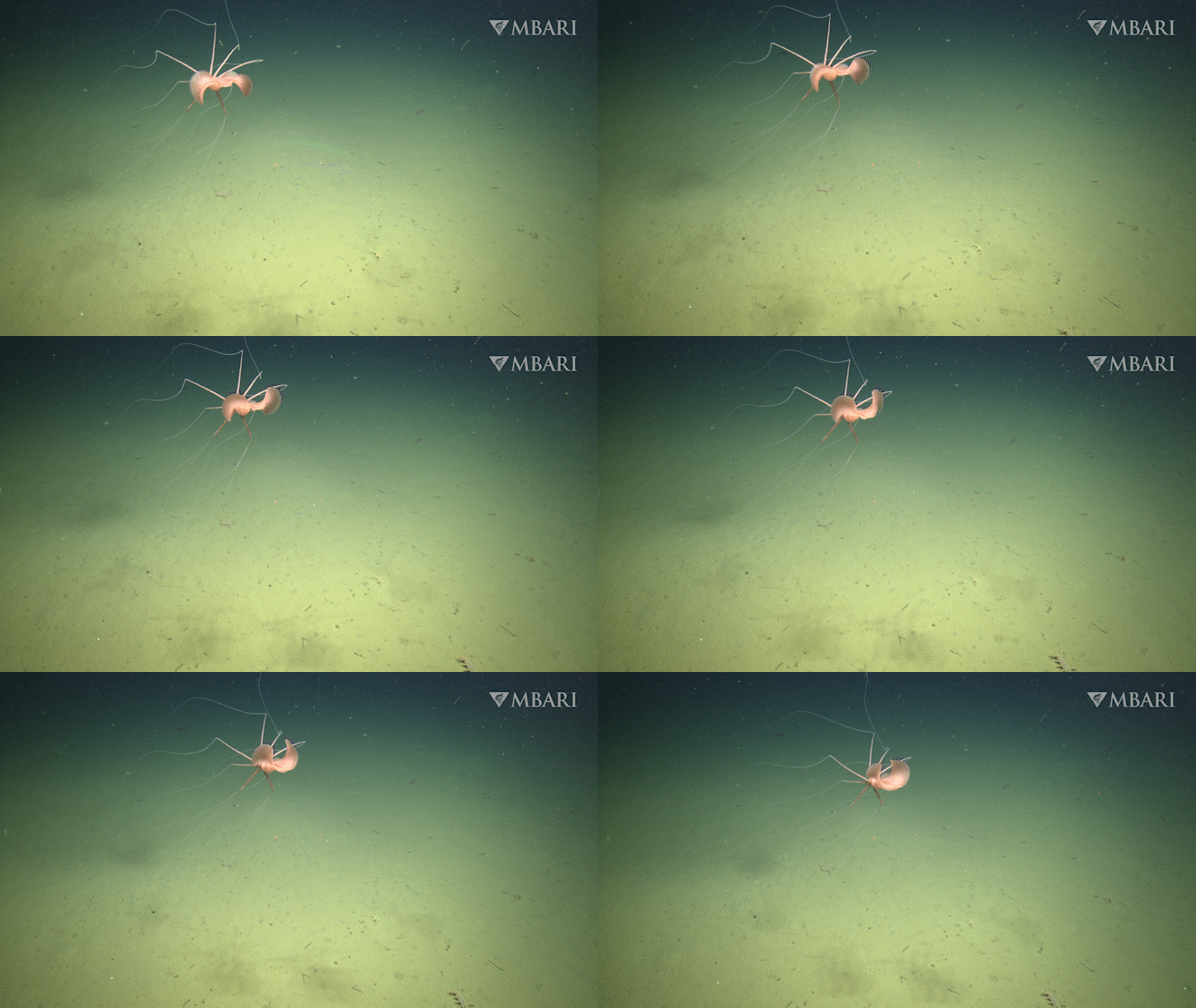
Researchers have captured the first live footage of a rare bigfin squid in the northeastern Pacific Ocean, revealing the mysterious deep-sea animal hovering above the seafloor off the coast of California.
The squid, which belongs to the genus Magnapinna, was recorded more than 10,000 feet (3,000 meters) below the surface near Davidson Seamount. The discovery was made by scientists from the Monterey Bay Aquarium Research Institute (MBARI) and the National Oceanic and Atmospheric Administration (NOAA).
Rare deep-sea squid spotted near California
The remarkable encounter took place on August 7 during a 10-day expedition exploring Davidson Seamount and nearby underwater mountain ranges. Researchers were piloting MBARI’s remotely operated submersible Doc Ricketts when they encountered the squid at a depth of approximately 10,751 feet (3,277 meters).
Davidson Seamount is located about 80 miles (130 kilometers) southwest of Monterey, California, within the Monterey Bay National Marine Sanctuary. The region is known for its rich deep-sea biodiversity, including corals, sponges and other unusual marine animals.
Why the squid’s “elbow pose” matters
In the footage, the bigfin squid appears to float above the ocean floor with its arms and tentacles bent at approximately 90-degree angles. Researchers have informally described this unusual posture as an “elbow pose.”
Olivia Soares Pereira, a deep-sea ecologist and MBARI postdoctoral fellow, said the position may help the squid capture prey. Its long appendages extend outward, reducing the risk of entanglement while allowing small organisms to become trapped on the sticky surfaces of its arms and tentacles.
“Based on the behavior of other deep-sea squid, we think this pose may be part of their foraging strategy,” Pereira told Live Science.
Bigfin squid have exceptionally long tentacles
Bigfin squid are among the most unusual animals found in the deep ocean. Their bodies are relatively small, but their arms and tentacles can extend many times beyond the length of their bodies.
The specimen observed during the expedition measured approximately 4.1 feet (1.25 meters) in total length. Some members of the genus Magnapinna have been observed at depths greater than 20,000 feet (6,000 meters), making them some of the deepest-dwelling squid known to science.
Only a small number of bigfin squid have been observed
Bigfin squid are rarely seen because they live in the deep ocean, far beyond the reach of conventional divers and most research vessels. MBARI researchers last encountered one off Hawaii in 2001, and scientists have observed or collected only about 70 individuals in total.
Pereira also reported seeing two additional bigfin squid earlier in the year during an expedition to the Mid-Atlantic Ridge. These encounters suggest that the animals may be more widespread than their rarity in scientific records indicates.
Deep-sea discoveries reveal hidden biodiversity
The researchers were originally surveying Davidson Seamount and the nearby Surr Ridge for deep-sea corals, sponges, octopuses and feeding beaked whales. The bigfin squid was not one of the animals they expected to find.
Unexpected sightings such as this highlight how little scientists know about life in the deep ocean. Remote-operated submersibles allow researchers to explore extreme environments and document animals that would otherwise remain almost completely unknown.
As deep-sea exploration continues, scientists expect encounters with rare species such as the bigfin squid to provide new insights into ocean ecosystems, animal behavior and the adaptations that allow life to survive under immense pressure and in near-total darkness.
Source: www.livescience.com