


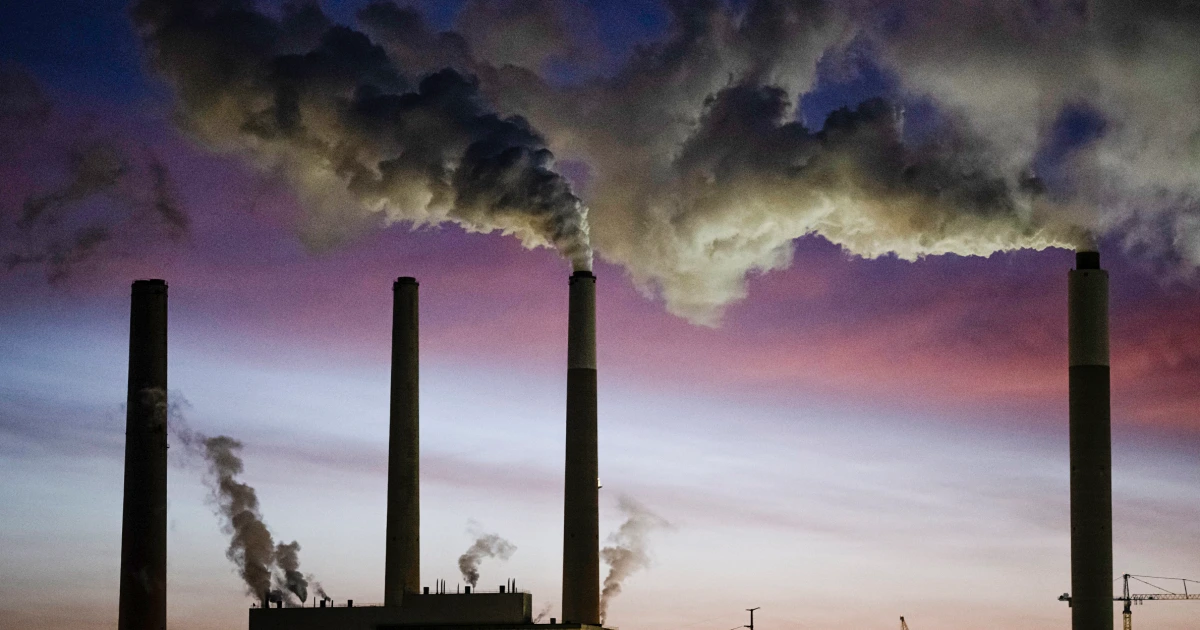
Trump EPA Moves to Roll Back Coal and Gas Power Plant Emissions Limits
The Environmental Protection Agency announced Monday that it is lifting emissions limits for coal- and gas-fired power plants in one of the Trump administration’s most significant moves yet to undo climate policies enacted under Presidents Joe Biden and Barack Obama.
The change would overturn a 2024 rule requiring power plants to use carbon sequestration equipment to curb pollution. The rule was one of the largest climate regulations enacted by the Biden administration’s EPA.
EPA proposes ending greenhouse gas regulations
The agency also proposed eliminating all other greenhouse gas emissions regulations, arguing that it does not have the authority under the Clean Air Act to regulate emissions linked to climate change.
In February, the EPA similarly repealed vehicle emissions regulations, which are the most polluting cause of air pollution in the United States today. The agency repealed vehicle greenhouse gas emissions standards and the legal conclusions, known as hazard findings, that underpinned the obligation to regulate those emissions in the first place. The measures announced Monday would essentially do the same thing for power plants, the nation’s second-largest source of emissions.
If the newly announced policy rollbacks survive expected legal challenges, they could prevent future administrations from requiring coal-fired and gas-fired power plants to curb global warming pollution.
“This is part of a thematic effort to lower air quality standards,” said Charles Driscoll, a professor of environmental systems engineering at Syracuse University. “President Trump has said he doesn’t believe in climate change, and that’s why he’s working hard to undo every type of carbon regulatory action that has been put in place or that might be taken in the future.”
Industry groups welcome the rollback
The announcement was made during the Energy Ministers’ Meeting on Energy Abundance at the G20 Summit in Houston.
The EPA said eliminating the 2024 power plant regulations would save industry more than $300 billion and help “free up” U.S. energy.
“The Trump administration came to protect America’s energy and ensure we can afford to keep the lights on,” EPA Administrator Lee Zeldin said in a statement.
Industry groups welcomed the announcement.
“Reversing these examples of EPA overreach will help preserve and strengthen America’s coal-fired power plants, protect the reliability of our power grid, and protect power consumers from higher costs as demand from data centers, artificial intelligence, and advanced manufacturing surges,” Michelle Bloodworth, a spokeswoman for America’s Power, an industry group representing the nation’s more than 400 coal-fired power plants, said in a statement.
Environmental groups prepare legal challenge
Environmental groups have already filed a lawsuit against the Trump administration seeking to rescind the species’ endangered status. They also vowed to file a lawsuit in response to the changes announced Monday.
“This is total denial of climate change,” said Patrick Drapp, director of climate policy at the Sierra Club. “We will continue to rely on fossil fuels, which means more pollution, more extreme weather, and higher electricity costs. … This means the administration is doubling and tripling the old fossil fuels, coal and gas.”
What the Biden-era power plant rule required
The Biden administration’s 2024 rule was designed to be phased in over time. It would require power plants to sequester and store at least 90% of the carbon pollution they produce by 2032.
At the time, the administration said the requirement would provide climate and public health benefits that far outweigh the costs of implementation. In 2035 alone, the government said the rule would prevent 1,200 premature deaths, 360,000 asthma symptoms and 47,000 lost workdays. Read the EPA’s announcement about the rule.
Climate change and the future of the EPA rules
The Trump administration is shifting policy as the effects of climate change become more apparent, including more intense heat waves and severe storms.
A heat wave has scorched much of the world this summer. According to the National Oceanic and Atmospheric Administration, July was the hottest month on record in the United States, breaking records in many places. Overall, the three months from June to August were the warmest on record for the continental United States.
Last year was the third-warmest year in modern history, according to Copernicus, the European Union’s climate monitoring service. The past 11 years have been the 11 warmest years on record, according to Copernicus data.
Litigation over the new EPA policy changes could take years and may not be resolved by the time President Donald Trump leaves office.
“These cases move relatively slowly in the appellate courts,” said Meghan Greenfield, a partner at the law firm Jenner & Block, who oversaw the EPA’s Supreme Court record on rulemaking under the Biden administration. “At this point, it is unclear to me whether this repeal, which is being finalized today, will make it to the Supreme Court by the end of this administration.”
Source: www.nbcnews.com