


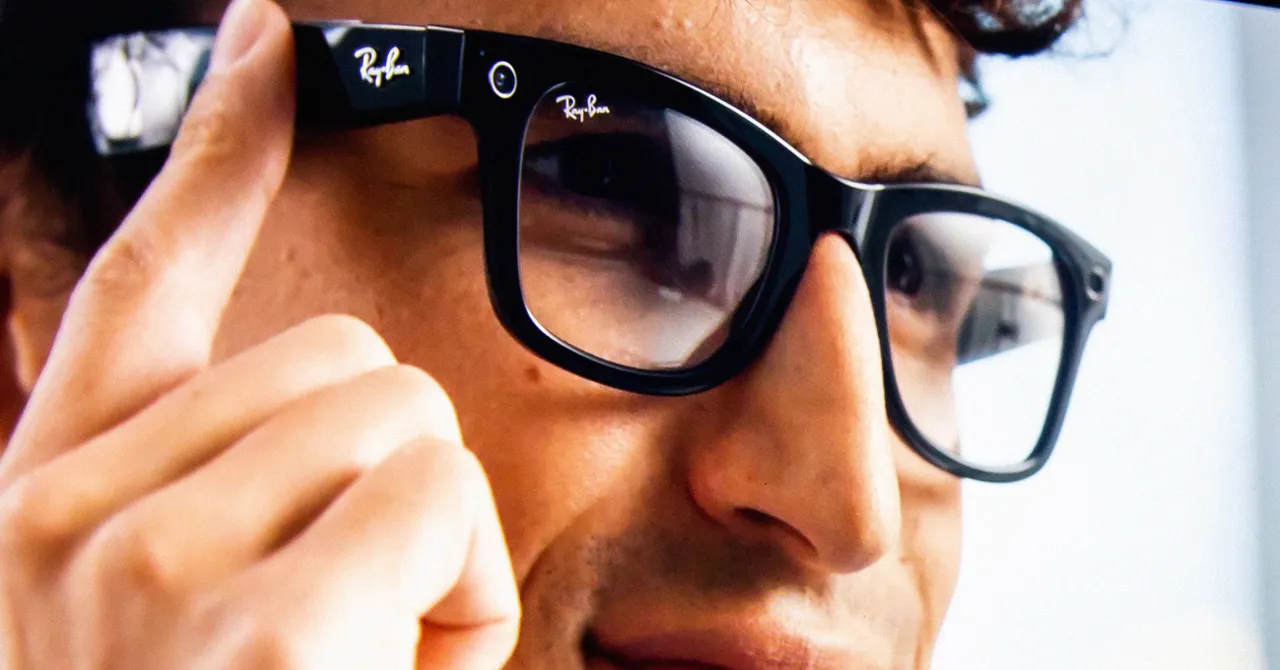
Meta Ray-Ban Smart Glasses Are Making Some People Fear They’re Being Secretly Filmed on Dates
A growing number of women say AI-powered glasses have created a new dating concern: being recorded without consent.
Courtney McAnuff agreed to meet a potential suitor for drinks after ending a one-year relationship in the summer of 2024. She did not expect the date to become an unsettling lesson in the privacy risks of Meta Ray-Ban smart glasses.
They met at a bar in Midtown Manhattan. McAnuff said the man arrived wearing a baseball cap and black-rimmed glasses. As they discussed life in New York and past relationships, he mentioned that the glasses were Meta Ray-Bans.
“I didn’t know much about them,” McAnuff, a 28-year-old project manager who now lives in Toronto, told WIRED. It was her first time seeing smart glasses up close that could record images and video from the wearer’s perspective. He let her try them on and showed her videos he had taken earlier. “That was it. We stopped talking about it after that. I thought that was the end of it.”
The next day, McAnuff checked Instagram and discovered that she had been tagged in one of his Stories. To her surprise, it showed footage recorded at the bar and on the subway while they traveled to an uptown basketball game. In the video, which WIRED reviewed in a screenshot, McAnuff sits across from her date while holding a glass, filmed from an elevated angle.
“I felt very violated,” McAnuff said. “What if I don’t want everyone to know what I’m doing? He filmed me so freely and posted it. There was no conversation about it.”
Why Meta smart glasses are raising privacy concerns
Meta sold more than 7 million pairs of Ray-Ban smart glasses in 2025. The glasses have become more visible in public spaces, including among pranksters seeking viral attention by recording people without their knowledge.
Reports have also described people using the glasses at work. The trend has spread to pickup artists who film themselves approaching women, leading some people to call the devices “creep glasses.”
Among single people, particularly women, Meta’s AI-powered glasses have become a source of anxiety about being filmed in public and recorded secretly on dates.
Some daters are banning smart glasses
“Those glasses are completely prohibited,” a young woman wrote on Bluesky in August. She said her date “leaned over to show me a photo he had taken. I didn’t know he was taking it.”
A TikToker said in a video that she felt “immediately uncomfortable” after a date involving the glasses. She questioned why people “feel comfortable filming everything on video,” adding that having a camera over her face was “a terrible way to express yourself.”
Would you continue a date with someone wearing camera glasses?
Users debated that question in August Reddit posts. In another thread, one person said she ghosted a man after noticing that he was wearing the glasses on a date.
“We didn’t realize it until near the end of the night,” the person wrote. “We ended up kissing him while he was putting on his glasses.”
In July, a man in Seoul, South Korea, was placed under investigation on suspicion of filming four women he was dating and uploading the videos to social media, according to The Korea Herald.
Smart glasses make consent harder to see
Technology has already reshaped modern dating. Apps bring people together, chatbots can act as wingmen or role-playing partners, and smartphone cameras capture shared moments. But a person holding up a phone usually creates a visible opportunity to object.
Smart glasses can make that moment much less obvious. Meta’s glasses include a front-facing LED that lights up while they are recording, but the light is the only warning, and it can be disabled by hacking the hardware. For daters such as McAnuff, the technology raises a basic question: Can people meaningfully consent to being recorded if they do not know a camera is running?
Source: www.wired.com