


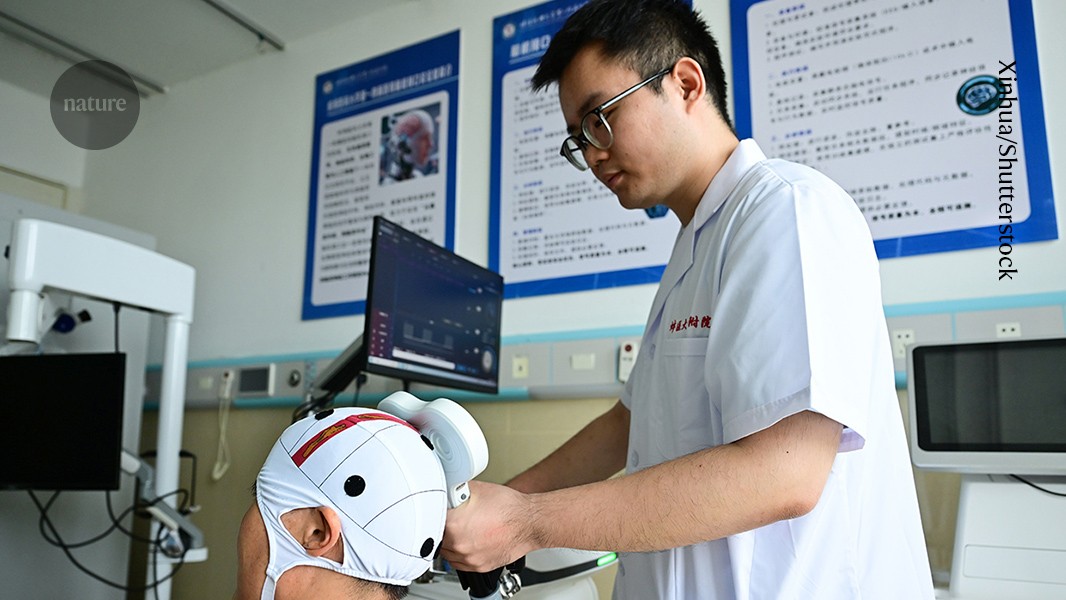
Under China’s Decree No. 818, only high-level hospitals will be able to conduct investigator-initiated trials (IITs).
Credit: Xinhua/Shutterstock
Reports that two children died after receiving gene-editing treatments in separate clinical trials in China have drawn renewed attention to the country’s fast-moving clinical trial system.
Investigator-initiated trials (IITs) are a common way for researchers and biotechnology companies to evaluate experimental treatments. In China, these studies can move more quickly than trials conducted through the country’s formal drug-approval pathway, which is overseen by the National Medical Products Administration, the agency broadly equivalent to the US Food and Drug Administration.
IITs are widely viewed as a major driver of China’s competitiveness in biomedicine, particularly in cell and gene therapy. The number of registered IITs in these fields increased 11-fold, from 19 in 2015 to 207 in 2023.1 Similar investigator-led clinical research also takes place in the United States, although US trials require approval from the FDA.
The deaths were reported just months after China introduced stricter rules for IITs involving new biomedical technologies. Researchers and industry officials say the regulations are designed to encourage medical innovation while strengthening government oversight. The regulation, known as Order 818, came into effect on May 1.
What Are Investigator-Initiated Trials?
IITs can generate early evidence about the safety and effectiveness of an experimental treatment, helping researchers determine whether it is suitable for larger and more expensive clinical studies, said Dai Jialing, president of Shanghai-based PharmaDJ, which provides business intelligence on the biopharmaceutical industry.
China already had rules governing these studies, but researchers and legal experts say enforcement and supervision were inconsistent. Previous regulations, for example, required stem-cell treatments to be conducted in approved hospitals, including leading research and training institutions. Iris Zhang, a lawyer at Han Kun Law Firm in Shanghai, said that substantial cell-therapy activity was nevertheless taking place in unauthorized facilities, private clinics and hospital-linked ventures.
Inconsistent oversight helped create a gray market in which companies and hospitals charged patients large sums for unauthorized or fraudulent treatments. In some cases, these practices resulted in serious medical emergencies and deaths.
What Are China’s New IIT Rules?
Order 818 applies to IITs involving new biomedical technologies, including cell therapies, brain implants and gene-editing treatments. Hao Bin, an economist at Xi’an Jiaotong-Liverpool University in Suzhou, China, said the regulation is intended to strengthen supervision of these high-risk clinical studies.
Under Order 818, only approved hospitals can conduct IITs involving new biomedical technologies. “These hospitals have the best clinicians, the best researchers and the greatest access to patient populations,” said Ruby Wang, a London-based internist and China health-policy consultant. “They provide additional safeguards for patients and are the most trusted institutions to conduct this research.”
Previously, an IIT could begin after passing scientific and ethical reviews conducted by the hospital and being registered with China’s National Health Commission (NHC), the authority responsible for health policy and reform. Under Order 818, the NHC can organize a second review of registered trials and order their suspension, modification or cancellation if it identifies technical or ethical concerns.
Aaron Gu, a lawyer with Han Kun Law Offices, said the revised application process is expected to function as “a de facto approval process” and provide an additional layer of regulatory oversight.
For the first time, the rules also establish penalties for hospitals and companies that violate IIT requirements. An organization that submits a biomedical technology for clinical testing without authorization could face a fine of millions of yuan. The company and hospital could also be barred from conducting IITs involving new biomedical technologies for three years, while the physician leading the trial could lose their medical licence.
The regulation’s ultimate impact will depend on how consistently it is enforced, said Lizzy Li, who studies China’s economic and technology policy at the Asia Social Policy Research Institute, a New York-based think tank. Inconsistent enforcement could undermine public trust and accountability, whereas overly strict implementation could slow the innovation that China hopes to promote.
Gu said the policy changes could also make collaboration between Chinese companies and hospitals more practical by allowing companies to initiate IITs for the first time. Previously, these trials could be initiated only by clinical researchers, with companies required to work in partnership with them.
Source: www.nature.com