


Close Menu
HitechubHitechub
    What's Hot
    Science

    Top New Science Fiction Novels to Read in June 2026: Featuring Adrian Tchaikovsky and M. John Harrison

    Gadgets

    Effects of Different Electronic Gadgets on Students

    Science

    Timeless Math Memes That Have Captivated Mathematicians for Over a Century

    Important Pages:
    • About Us
    • Privacy Policy
    • Terms & Conditions
    Facebook X (Twitter) Instagram Pinterest
    Facebook X (Twitter) Instagram
    HitechubHitechub
    Wednesday, June 10
    • Technology
      1. AI
      2. Gadgets
      3. View All

      This is the most popular CEO in the world

      Sectors in which “Chat-GPT” is most often used

      AI Pioneer Expresses Concern About Potential for AI to Surpass Humanity

      Artificial intelligence has begun to “swallow” professions

      What’s new in Android 14

      Europeans have about 700 million old mobile phones in their drawers

      Here’s how you can tell if your phone is being tapped

      “Sneaker X” – computer case in the shape of a sneaker

      Russian Gamers Unite to Prevent Nuclear War: Join the Fight Online

      Challenges of Space Travel: Why Journeying to Space is So Difficult

      NASA Astronaut Casts Historic Vote from Space

      Discover the Future of Comfort: What If You Could Wear a Chair?

    • Science
      1. Space
      2. Wheels
      3. View All

      Galaxies in the universe are growing more slowly than they should

      “Espace” presented the new lander “Apex 1.0”

      The largest asteroid sample ever collected has arrived on Earth

      (VIDEO) Incredible flight of the Parker Solar Probe

      Toyota wants to make a new generation battery with a range of up to 1,200 km

      Meet Toyota’s lunar “baby” that could make exploring the Moon easier

      Microlino – Is this the perfect city car?

      Alfa Romeo 4C gets an electric successor

      Discover How Millions of Planets Could Form Around Supermassive Black Holes

      Unlocking Sloth’s Slow Lifestyle: The Ancient ‘Jumping Gene’ Explained

      Rapid Melting of Glaciers on the Roof of the World: Causes and Impacts

      Near Miss with Waymo: Why I’m Still Optimistic About Self-Driving Cars

    HitechubHitechub
    Home » Near Miss with Waymo: Why I’m Still Optimistic About Self-Driving Cars
    Science

    Near Miss with Waymo: Why I’m Still Optimistic About Self-Driving Cars

    Share Facebook Twitter Pinterest WhatsApp
    Share
    Facebook Twitter LinkedIn Pinterest WhatsApp
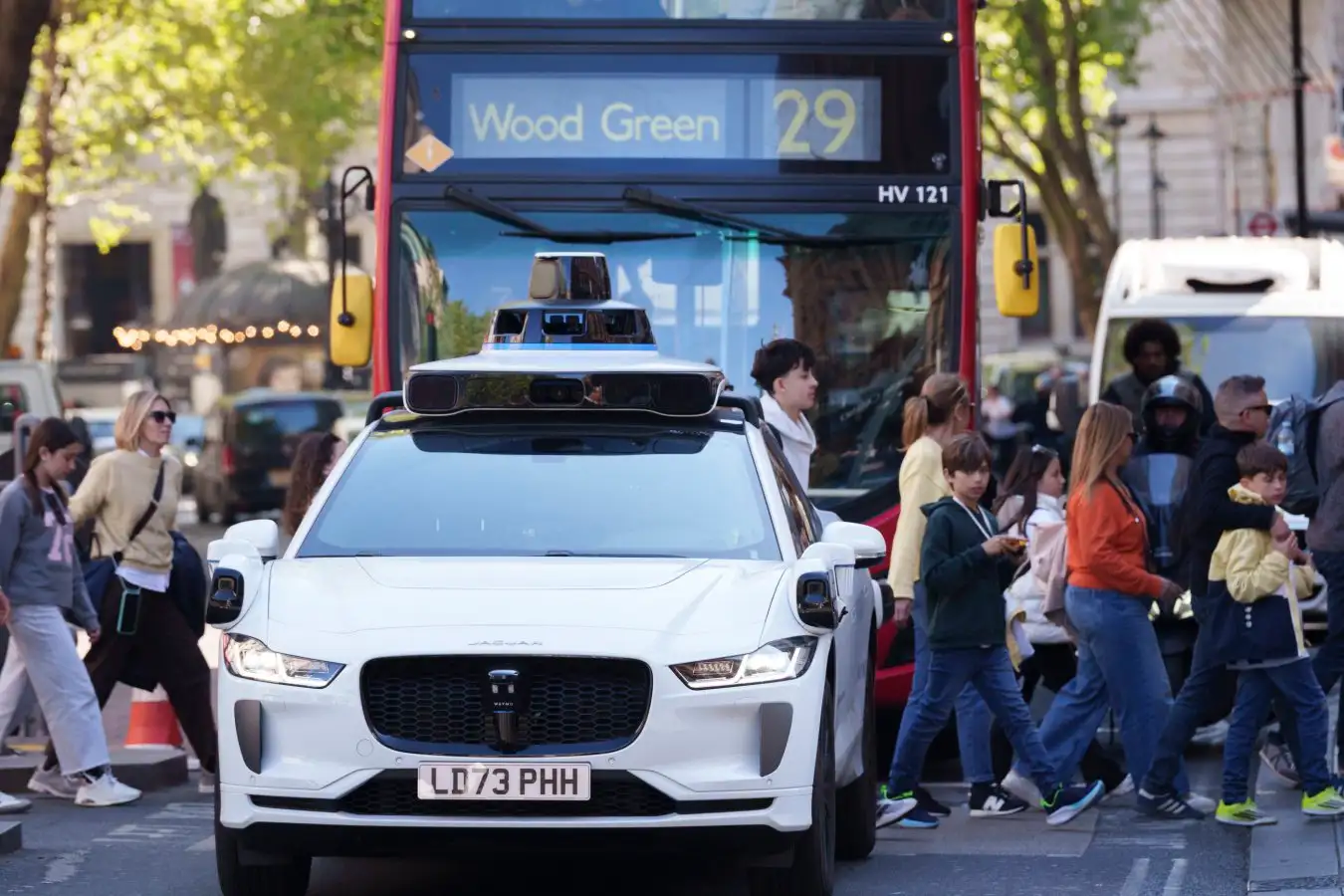
    Waymo Driverless Cars in London

    Waymo’s Driverless Cars in London: A Step Towards Safer Roads?

    Richard Baker/In Pictures via Getty Images

    Waymo’s driverless cars have been operating in London for several months, but they currently do not carry passengers and remain under the supervision of a human to take control if necessary. My encounters with these vehicles have shown them to be cautious and predictable. However, I recently experienced a near miss while cycling.

    While navigating a roundabout, a Waymo vehicle attempted to park directly in front of me. Despite my right of way, it seemed to be advancing without slowing, only to stop abruptly. It wasn’t the scariest moment I’ve had on a bike, nor the worst encounter of my day. I wasn’t in immediate danger, as I was prepared for an unexpected situation. Nonetheless, the fact that the driver was an AI, not a human, made it memorable.

    I reached out to Waymo to report the incident’s time and location and inquire about their response. A representative explained, “ADS [Automated Driving System] detected a bicycle approaching from the right side of the roundabout, prompting the safety driver to take manual control and apply the brakes.” In essence, human intervention occurred because the AI wasn’t ready to react.

    Inquiring about the frequency of such incidents in London, Waymo stated it does not track that data and prefers not to use it as a performance measure. I also asked about the incident that confused the AI, especially since I was legally cycling while wearing a neon yellow bike. Unfortunately, I received no response regarding algorithm improvements.

    Other cyclists in London reported mostly positive experiences with Waymo, but one noted a troubling moment where a roadwork sign reading “Narrow Lanes—Do Not Pass Cyclists” seemed to mislead the vehicle into doing just that. Simon Munk from the London Cycling Campaign pointed out that, overall, these autonomous vehicles exhibit caution around cyclists.

    Last year, I shared my perspective on AI drivers as they began hitting London streets. I pondered whether unpredictable AI drivers might be safer than tired or distracted human drivers, as I have faced reckless cyclists before. My recent experience with Waymo hasn’t swayed my opinion. Still, there was a past incident where a car managed to navigate through police tape blocking roads, which was later clarified by the company as a controlled event.

    While I don’t fully trust AI to navigate city streets, I am also skeptical of human drivers. My belief is that AI has the potential to learn and adapt rapidly. As sensors that inform these systems advance, their ability to detect hazards will also improve. Currently, it’s debatable whether AI represents a lesser danger, but I hold out hope for future advancements.

    Munk cautions that self-driving cars have both significant advantages and disadvantages for cyclists and pedestrians. They could enhance road safety by making traffic more predictable, or they could further marginalize vulnerable users. Although Waymo shows promising results in San Francisco, Munk notes that London presents a unique level of complexity and chaos in traffic scenarios. He highlighted a video demonstration of a Waymo vehicle navigating a busy San Francisco intersection, contrasting it with his daily commute, which often involves dealing with less competent drivers.

    Munk also fears that once these cars are operational, updates could alter their driving behaviors, even if they initially seem safe. Ensuring the continual monitoring of driverless cars is essential to uphold public safety.

    As other companies seek to introduce their self-driving services in London, such as Wayve’s upcoming driverless taxis, there’s no guarantee that they will prioritize safety. Just as human drivers vary in proficiency, different AI systems can demonstrate distinct levels of safety. Additionally, companies can design AI to exhibit specific behaviors, raising concerns about the risks associated with aggressive driving. For instance, Waymo previously faced backlash for modifying its cars to behave more like “aggressive New York taxi drivers” to manage traffic congestion in San Francisco.

    We’ve even observed troubling proposals that shift the responsibility for safety onto pedestrians, suggesting they wear special vests for better visibility to self-driving cars.

    “In five to ten years, if these practices become standard, will companies push for increased speed and aggression in their services to outpace competitors?” Munk raises an important question about the need for vigilance as we navigate the future of driverless technology.

    Topics:

    Source: www.newscientist.com

    Share. Facebook Twitter Pinterest LinkedIn WhatsApp
    Previous ArticleNASA’s Stunning New Image Reveals the Incredible Power of a Supermassive Black Hole
    Next Article Rapid Melting of Glaciers on the Roof of the World: Causes and Impacts

    Related Posts

    Science

    Discover How Millions of Planets Could Form Around Supermassive Black Holes

    Science

    Unlocking Sloth’s Slow Lifestyle: The Ancient ‘Jumping Gene’ Explained

    Science

    Rapid Melting of Glaciers on the Roof of the World: Causes and Impacts

    Science

    NASA’s Stunning New Image Reveals the Incredible Power of a Supermassive Black Hole

    Science

    Join The New Scientist Book Club: Exclusive Excerpt from Richard Dawkins’ “The Selfish Gene”

    Science

    How Robots Are Set to Replace Armed Soldiers as Decision Makers in Warfare

    Science

    How Aliens Make First Contact with Humans: Unraveling the Truth

    Science

    Viral Injections Show Promising Results in Halting Pancreatic Cancer Progression in Three Patients

    Add A Comment
    Leave A Reply Cancel Reply

    Stay In Touch
    • Facebook
    • Twitter
    • Instagram
    • Pinterest
    Top Picks
    Technology

    How to Identify and Combat Fake News on Your Facebook Feed

    error code: 524 Source: www.cnn.com

    What’s new in Android 14

    Transforming Polystyrene with Sunlight and Sulfur: Innovative Upcycling Techniques – Sciworthy

    Driverless taxi in Japan

    Unveiling the Mystery: Why Tyrannosaurus Rex Had Surprisingly Small Arms

    Most Popular
    Science

    Why Does Your Cat Love Sitting on Your Laptop? Uncover the Surprising Reasons

    Science

    Hurricane Season Kicks Off: Below-Average Forecast Highlights First Time in a Decade

    Categories
    • AI (13)
    • Gadgets (10)
    • Science (172)
    • Space (9)
    • Technology (37)
    • Wheels (9)
    Our Picks
    Science

    Unveiling the Mystery: Why Tyrannosaurus Rex Had Surprisingly Small Arms

    Science

    Astronomers Discover Clearest Evidence of an Exoplanet’s Magnetic Field Yet

    © 2026 Hitechub.
    • Home
    • About Us
    • Privacy Policy
    • Terms & Conditions

    Type above and press Enter to search. Press Esc to cancel.

    We are using cookies to give you the best experience on our website.

    You can find out more about which cookies we are using or switch them off in .

    Ad Blocker Enabled!
    Ad Blocker Enabled!
    Our website is made possible by displaying online advertisements to our visitors. Please support us by disabling your Ad Blocker.
    Go to mobile version
    Hitechub
    Powered by  GDPR Cookie Compliance
    Privacy Overview

    This website uses cookies so that we can provide you with the best user experience possible. Cookie information is stored in your browser and performs functions such as recognising you when you return to our website and helping our team to understand which sections of the website you find most interesting and useful.

    Strictly Necessary Cookies

    Strictly Necessary Cookie should be enabled at all times so that we can save your preferences for cookie settings.