


Did Time Begin With the Big Bang? Scientists Explore What Came Before
Time seems to behave differently depending on how we experience it. It can drag when we are waiting, speed up as we grow older and become distorted when we are tired. Physics makes the question even more complicated: time is relative to an observer’s position and motion, while entropy gives it a seemingly one-way direction.
Quantum mechanics, however, suggests that time may be able to move both forward and backward—at least within certain quantum systems.
Did time begin with the Big Bang?
One possibility is that the Big Bang marked the beginning of time itself. In this view, the event was followed by a brief period of rapid cosmic inflation, during which the universe expanded at an extraordinary rate.
Another possibility is eternal inflation. In this scenario, inflation continues indefinitely across an immense expanse of space. Our universe would be a tiny bubble that formed when one region stopped inflating and began expanding at a slower rate.
Under this model, the Big Bang was not the beginning of all time. Instead, it marked the birth of our bubble universe while inflation continued outside it. Other bubble universes could have formed elsewhere, potentially creating an infinite collection of separate universes known as the multiverse.
Some physicists argue that eternal inflation lies outside the boundaries of testable science because there is currently no clear way to observe the other universes it predicts.
A universe that goes through endless cycles
Another proposal is conformal cyclic cosmology, an idea associated with physicist Roger Penrose. It suggests that our universe is one of an infinite series of cosmic “epochs.” Each epoch begins with a Big Bang and eventually ends in a vast, cold universe in thermal equilibrium, containing only evenly distributed radiation.
This model does not require the universe to collapse in a “big crunch.” Instead, a subtle geometric transformation known as conformal mapping connects the cold, expanded end of one universe with the hot, dense beginning of the next.
Other proposals for a time before the Big Bang include a mirror universe and a universe that expands and contracts indefinitely.
Image credit: Curly_photo/Getty Images
Conformal cyclic cosmology has faced several criticisms, including questions about the conservation of information and how the high entropy of one cosmic epoch could be reconciled with the low entropy of the next.
The ekpyrotic universe: Could cosmic collisions create Big Bangs?
A related idea is the ekpyrotic universe model. Its name comes from the Greek word ekpyrosis, meaning “great fire,” and echoes a cosmological idea proposed by the ancient Stoic philosophers.
In this model, the universe is born in a fiery event, expands and cools, then contracts, reheats and is reborn. The modern version was developed in connection with string theory by physicist Paul Steinhardt.
String theory allows for the possibility that our three-dimensional space is a “brane,” a higher-dimensional equivalent of a membrane. This brane could exist within a higher-dimensional space. When it collides with another brane, the collision could release enormous amounts of heat and radiation, producing an event similar to the Big Bang.
After the collision, the branes move apart. They may eventually reach a maximum separation before being drawn together again, producing another collision and another Big Bang. If this model is correct, time may not have had a beginning—and the Big Bang may have been one event in an endless cosmic cycle.
What if, on the other side of the Big Bang timeline, there was a mirror-like universe evolving in the direction that we think is heading into the past?
Could a mirror universe exist on the other side of the Big Bang?
Another model, proposed by physicist Neil Turok, suggests that the Big Bang may have produced two separate universes moving in opposite directions through time.
This mirror universe theory addresses the apparent conflict between the time symmetry of many fundamental equations and the second law of thermodynamics. While the basic laws of physics can work in either temporal direction, entropy increases in the direction we experience as the future.
The model proposes that the Big Bang was a specially ordered state. On our side, entropy increases away from that event in one direction. On the other side, a separate mirror universe would experience its own direction of increasing entropy. Its inhabitants could regard our universe as the one that existed before their Big Bang, just as we might regard theirs as existing before ours.
The theory could also offer an explanation for why our universe contains more matter than antimatter: the mirror universe would contain the imbalance in the opposite form, with what we call normal matter corresponding to our antimatter.
Are these theories scientifically testable?
These cosmological models remain speculative. Their proponents acknowledge that they require empirical evidence, such as possible traces of a pre-Big Bang reality preserved in the cosmic microwave background.
Without such observational evidence, theories about what came before the Big Bang remain intriguing theoretical possibilities rather than established descriptions of the universe.
Excerpt from On Time: The Physics That Makes the Universe Tick © 2026 by Jim Al-Khalili. Reprinted with permission of Princeton University Press.
Princeton University Press
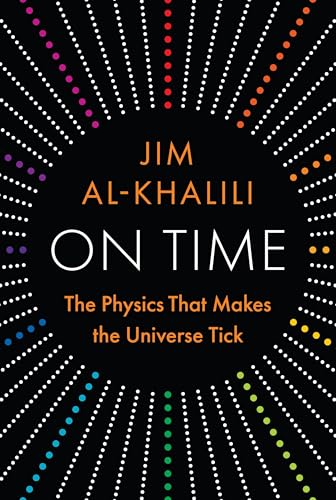
On Time: The Physics That Makes the Universe Tick
In this book, Jim Al-Khalili examines the enduring questions surrounding time through three central pillars of physics: quantum mechanics, general relativity and thermodynamics.
Al-Khalili argues that time is real rather than an illusion, and that the arrow of time may be a fundamental feature of the universe.
Source: www.livescience.com