


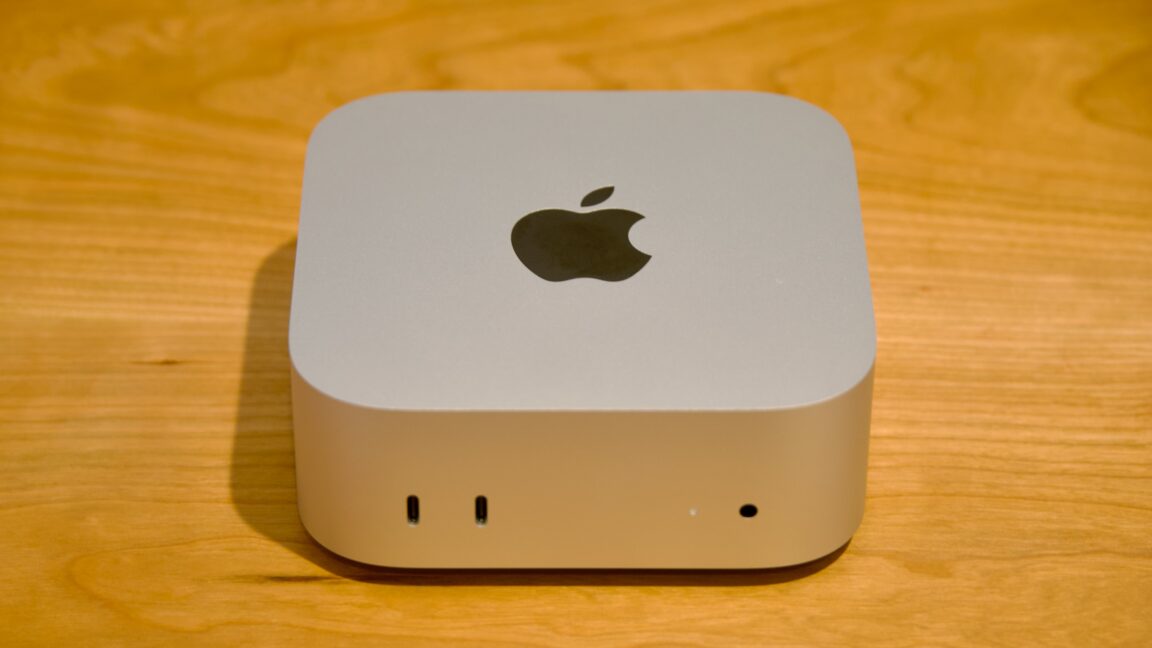
Apple M6 Chip: CPU Cores, Cache, Clock Speeds and Memory Bandwidth
Apple’s M6 chip introduces changes to its CPU, GPU, Neural Engine and memory architecture. The chip adds CPU cores, increases the number of GPU cores and expands the Neural Engine from 16 to 32 cores.
Apple M6 CPU Cache and Clock Speeds
| CPU type | L1 instruction cache | L1 data cache | L2 cache | Minimum clock | Maximum clock |
|---|---|---|---|---|---|
| M6 E-core | 160KB | 128KB | 8MB shared between 6 core clusters | 1,010MHz | 2,908MHz |
| M6 P-core | 128KB | 64KB | 20MB split between P-cores and S-cores | 1,440MHz | 4,788MHz |
| M6 super core | 192KB | 96KB | 20MB split between P-cores and S-cores | 1,440MHz | 4,788MHz |
M6 Adds More GPU Cores and a Larger Neural Engine
The M6 adds GPU cores for the first time since the M2, increasing the total core count from 10 to 12. The new GPU cores include an improved version of the integrated neural accelerator Apple introduced in the M5 series. The accelerator is designed to speed up AI and machine-learning workloads, including ray tracing and MetalFX upscaling.
Apple also describes the chip as having a “Dual 16 Core Neural Engine.” That increases the total number of Neural Engine cores from 16 to 32.
Mac mini M6 Memory Bandwidth
The M6 version used in the Mac mini has different memory bandwidth depending on the amount of unified memory. The base 16GB Mac mini offers the same 153GB/s of memory bandwidth as the M5.
The 24GB and 32GB models increase memory bandwidth to 170GB/s, an 11% improvement. That could provide slightly faster graphics performance and improve the performance of local AI models running on the Mac mini. The review machine is the 24GB version.
Will Apple Release M6 Pro, M6 Max and M6 Ultra Chips?
Apple may not release M6 Pro, M6 Max or M6 Ultra versions. According to Bloomberg’s Mark Gurman, Apple may skip a complete M6 chip generation and move directly to M7 branding for its higher-end processors.
That would be a first for Apple. The company has released baseline, Pro and Max chips in each generation, although it has not shipped an M4 Ultra.
Why Apple Might Skip the M6 Pro and Max
One possible reason is that many of the M6’s improvements come from adding CPU and GPU cores compared with the M5. The M5 Pro, M5 Max and M5 Ultra already have significantly more cores of both types than the M6.
Apple may also be planning around the early availability of TSMC’s 2nm manufacturing process. After three generations using versions of TSMC’s 3nm process, the 2nm process is still relatively new. Apple may be competing with other fabless chip designers for production capacity.
For now, Apple could focus on smaller and simpler 2nm chips, while waiting to produce larger and more complex processors once the technology offers greater capacity, better yields and lower costs.
Source: arstechnica.com