


Experimental CBL-514 Injection Reduces Dangerous Visceral Fat in Early Human Trials
An experimental injection that causes fat cells to self-destruct has shown promising results in early human trials, significantly reducing visceral fat hidden deep in the abdomen. Researchers believe the treatment could eventually offer a new way to treat obesity and help people maintain weight loss after stopping common weight-loss drugs.
The drug, known as CBL-514, was highlighted at the annual meeting of the European Society for the Study of Diabetes (EASD) in Milan, Italy. Early research suggests that it can reduce both subcutaneous fat, which sits beneath the skin, and visceral fat, which surrounds internal organs.
Dr. W. Timothy Garvey of the University of Alabama at Birmingham said the findings also raise the possibility that CBL-514 could reduce weight regain after patients stop taking GLP-1 receptor agonists (GLP-1 RAs), including Ozempic, Wegovy, Mounjaro and Zepbound. However, this potential benefit has so far been demonstrated in animal studies and still needs to be confirmed in humans.
How does the CBL-514 fat-loss injection work?
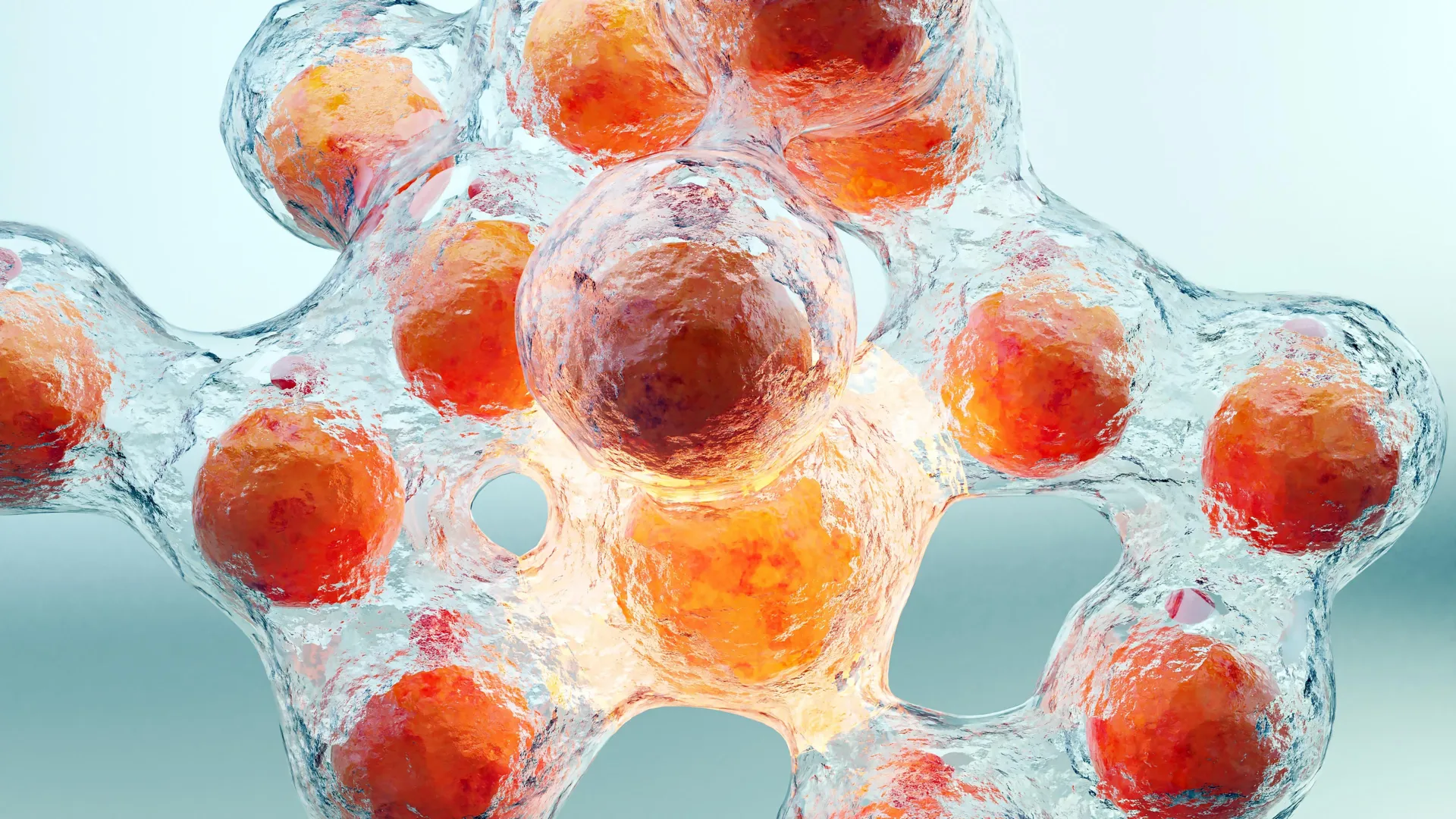
CBL-514 is unusual because it is designed to trigger apoptosis, a natural biological process in which cells break down and die. Rather than simply reducing the amount of fat stored inside existing cells, the drug is intended to target fat cells and cause them to self-destruct without affecting other cell types.
In a phase 2 clinical trial, researchers observed a significant reduction in subcutaneous fat, the soft layer of fat just beneath the skin that can be “pinched.”
At the eight-week follow-up, 69.6% of participants treated with CBL-514 had reduced their subcutaneous fat mass by at least 150 mL. None of the participants who received a placebo reached that threshold.
Animal studies suggest CBL-514 may reduce visceral fat
Preclinical animal studies provided additional evidence that the treatment may affect more than visible body fat. In animal models, CBL-514 reduced body weight as well as subcutaneous and abdominal visceral tissue, also known as visceral adipose tissue (VAT).
Visceral fat is particularly important from a medical perspective. Unlike subcutaneous fat, which accumulates beneath the skin, visceral fat lies deep in the abdominal cavity around organs such as the liver and intestines.
This hidden fat is biologically active and can interfere with the body’s ability to regulate blood sugar and metabolism. Excess visceral fat is associated with cardiometabolic conditions, including insulin resistance, type 2 diabetes, heart attacks and strokes.
Could CBL-514 help prevent weight regain?
One of the most interesting possibilities is combining CBL-514 with existing weight-loss medications.
GLP-1 receptor agonists have transformed obesity treatment by helping patients lose significant amounts of weight. However, maintaining that weight loss can be difficult, and many people regain weight after stopping treatment.
Researchers investigated whether reducing the number of fat cells could help address this problem.
In animal studies, combining CBL-514 with tirzepatide, a medication used to treat obesity and type 2 diabetes, produced greater weight loss than tirzepatide alone.
The researchers also examined what happened after tirzepatide was stopped. Rats given both drugs regained less weight than rats given tirzepatide alone.
One possible explanation is that eliminating fat cells reduces the body’s capacity to store fat again. With fewer fat cells available, researchers hypothesize that fat storage could be slower after weight loss.
Professor Garvey said this approach could ultimately help patients maintain the health benefits associated with weight loss, including improvements in blood pressure, blood sugar and cholesterol levels.
However, whether CBL-514 can reliably prevent weight regain in people remains an open question. Additional clinical studies are needed to determine whether the effects observed in animals also occur in humans.
Human trial shows a reduction in dangerous abdominal fat
To investigate CBL-514’s effects on human visceral fat, Professor Garvey and Yu-Fan Lin of Caliway Biopharmaceuticals, the drug’s developer based in New Taipei City, Taiwan, analyzed data from two phase 2 clinical trials: CBL-0204 and CBL-0205.
The analysis focused on participants who underwent magnetic resonance imaging (MRI), allowing researchers to measure changes in fat deep inside the abdomen.
Participants had a body mass index (BMI) of 22–30 kg/m2 and received injections into the lower abdomen every three weeks for up to 12 weeks. Treatments included up to 600 mg of CBL-514 in 23 participants or a placebo in 17 participants. The mean age ranged from 36.4 to 42.4 years across the groups.
The number of injections varied according to the amount of abdominal fat in each participant. As the fat layer became thinner, fewer injections were needed. Treatment ended when fat thickness fell below the specified threshold.
MRI scans were performed before treatment and again four weeks and eight to 12 weeks after the final injection. The scans allowed researchers to compare changes in visceral fat mass between the CBL-514 and placebo groups.
The original subgroup included 41 participants: 23 received CBL-514 and 18 received a placebo. Among those who received the experimental drug, 17 participants, or 74%, were women and six, or 26%, were men. The placebo group included 10 women, or 56%, and eight men, or 44.4%.
At subsequent follow-up, data were available for 40 participants, including all 23 CBL-514 recipients and 17 placebo recipients.
Before treatment, mean visceral fat mass was 563.85 mL in the CBL-514 group and 659.81 mL in the placebo group.
Over the following weeks, the groups showed distinctly different patterns. Visceral fat decreased among participants who received the experimental injections, while it increased among those who received the placebo.
CBL-514 reduced hidden belly fat by more than 10%
Four weeks after the final injection, participants treated with CBL-514 had an average visceral fat reduction of 12.01% compared with their baseline measurements.
By contrast, the placebo group had an average increase of 5.68%. The difference between the groups was 17.69 percentage points.
The results remained encouraging at later follow-ups conducted eight weeks after final treatment in the CBL-0205 trial and 12 weeks after treatment in the CBL-0204 trial.
At those follow-ups, average visceral fat mass in the CBL-514 group remained 10.45% below baseline. Meanwhile, the placebo group had an average increase of 11.76%.
This represented a difference of 22.21 percentage points between the groups, suggesting that the injections’ effects persisted for several weeks after treatment ended.
The researchers concluded that CBL-514 significantly reduced abdominal visceral fat compared with placebo. Together with earlier findings on subcutaneous fat, the results suggest that the treatment may target both subcutaneous and perivisceral fat.
The drug was generally well tolerated during the trial. Most reported side effects involved temporary reactions around the injection site, including pain, swelling and redness. These reactions were generally mild to moderate, and no serious adverse events were reported.
Potential health benefits beyond a flatter stomach
Although reducing visible abdominal fat may appeal to patients for cosmetic reasons, researchers emphasize that the potential medical benefits could be more important.
Professor Garvey said, “We hope that patients will be satisfied with the cosmetic effects, such as a flat stomach due to the reduction of subcutaneous fat. However, what is important for health are weight loss, visceral fat reduction, and associated improvements in blood pressure and cholesterol.”
Because visceral fat is closely linked to metabolic disease, reducing it could provide benefits beyond changes in appearance.
The researchers also noted that surgical procedures such as liposuction and abdominoplasty primarily remove or reshape subcutaneous fat. These procedures are more invasive and do not directly address the deeper visceral fat surrounding the abdominal organs.
CBL-514 may eventually offer a nonsurgical way to target both types of abdominal fat, although its effectiveness and safety still need to be established in larger trials.
“This is a highly innovative approach to obesity pharmacotherapy, which has produced some remarkable results in early human trials,” Professor Garvey said.
CBL-514 enters larger clinical trials
Despite the promising findings, CBL-514 remains an experimental treatment. Extensive research is needed to establish its long-term efficacy and safety.
At the time of publication, recruitment was underway for the first of two phase 3 clinical trials. Both studies were designed as randomized, placebo-controlled trials investigating whether CBL-514 could safely and effectively reduce abdominal fat without surgery.
The announcement indicated that the first results were expected at the end of the next year.
These larger trials will help determine whether the reductions in abdominal fat observed in early studies can be replicated in a broader patient population.
Researchers must also establish whether reducing the number of fat cells leads to lasting improvements in weight management and metabolic health, particularly after patients stop taking GLP-1 medications.
If the findings are confirmed, CBL-514 could represent a different strategy for treating obesity—one that focuses on eliminating fat cells rather than simply reducing the amount of fat they contain.
Source: www.sciencedaily.com