


Best Science Books of 2026: Science Journalism, Kelp Forests and Alchemy
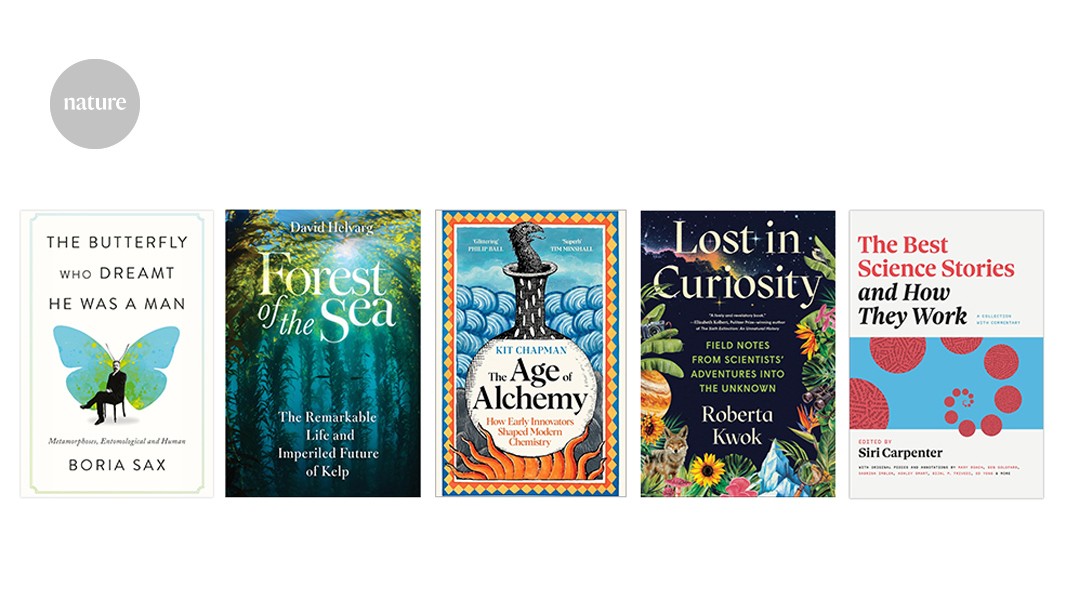
The Best Science Fiction and How It Works
Edited by Shiri Carpenter. University of Chicago Press (2026)
“It’s all too easy to mistakenly think that science journalism exists in a bubble,” writes science journalist Shiri Carpenter in her introduction to this editorial collection. The book reprints 11 wide-ranging scientific articles by different authors that have appeared in newspapers, magazines and journals, including Nature. Each article is accompanied by commentary from another science writer, as well as an interview with the author and commentator. The result is an enlightening look at how to structure high-quality science journalism beyond the bubble.

Sea Forest
David Hellwag. Island (2026)
Cold-water kelp forests are “as mysterious to many as the depth of the Mariana Trench,” says journalist, author and marine conservationist David Hellwag. He points out that kelp forests cover a larger area than the Amazon rainforest and enrich the waters around many of the world’s coastlines. Along with mangroves, salt marshes and seagrasses, they absorb huge amounts of carbon dioxide and produce 20% of the world’s oxygen. Hellwag’s pioneering book is a plea to save kelp from continued human destruction.

The Age of Alchemy
Kit Chapman. Profile (2026)
In 1901, when chemist Frederick Soddy discovered the radioactive decay of thorium to radium, he exclaimed to his collaborator, physicist Ernest Rutherford, “This is transmutation!” Rutherford retorted, “For Mike’s sake, Soddy, don’t call it alchemy. They’ll beheading us as alchemists.” By that time, alchemy, once practiced by many scientists, had fallen into disrepute. But, as science writer Kit Chapman argues in his vivid history, chemistry “could never have existed” without its mysterious precursors.

Curious
Roberta Kwok. Source Book (2026)
Source: www.nature.com