



Could Fusion Propulsion Make Mars Reachable in Weeks?
Nuclear fusion propulsion could transform deep-space travel, potentially cutting journeys to Mars to weeks or months, reaching Saturn in months and Pluto in years. After decades as a science-fiction concept, fusion-powered spacecraft are now being developed by companies and research teams in the United Kingdom and United States.
U.K.-based Pulsar Fusion hopes to demonstrate its Sunbird fusion propulsion technology in orbit by 2027. Princeton University researchers and Helicity Space are also developing competing fusion-drive concepts.
If any of these designs succeed, faster missions for robotic spacecraft and humans could open destinations across the solar system—and perhaps eventually make interstellar travel possible.
“If we continue on the current trajectory, everything we know about space travel is going to change within a decade,” Stephane Lintner, CEO and co-founder of Helicity Space, told Live Science.
How nuclear fusion propulsion works
Nuclear fusion occurs when two atoms combine to form a heavier atom, releasing energy as heat and light. The process powers the sun, where hydrogen atoms fuse into helium at temperatures of up to 27 million degrees Fahrenheit (15 million degrees Celsius).
Scientists have spent decades trying to reproduce fusion on Earth as a source of abundant, low-carbon energy. Projects such as the International Thermonuclear Experimental Reactor, or ITER, are designed to study fusion at an enormous scale. However, a commercially viable fusion reactor has yet to be built.
One of the central challenges is confining turbulent plasma at the extreme temperatures required for fusion. In a spacecraft, however, the plasma would not necessarily need to remain confined indefinitely. Instead, a fusion engine could expel the plasma through an exhaust system, producing continuous thrust in the frictionless vacuum of space.
A fusion-powered spacecraft could accelerate for months rather than producing the brief, powerful bursts associated with chemical rockets. That sustained thrust could eventually propel spacecraft to hundreds—or potentially thousands—of miles per second.
Fusion propulsion still faces major engineering obstacles. A reactor must be small and light enough to launch into space, generate extreme temperatures, provide fuel and propellant, and use powerful magnetic fields to keep plasma away from the engine’s walls.
“Fusion propulsion in some ways is harder, and in some ways is easier, than terrestrial energy production.”
Bhuvana Srinivasan, professor of aeronautics and astronautics at the University of Washington
Producing useful thrust would require an extraordinary number of fusion reactions. About a quintillion reactions would generate roughly 10 newtons of thrust—the force equivalent to the weight of a 1-liter bottle of water. A fusion engine could maintain that thrust for months, allowing a spacecraft to build up substantial speed.
Pulsar Fusion achieves “first plasma” in Sunbird engine
In March, Pulsar Fusion reported achieving “first plasma” inside a nuclear fusion engine. During a test at the company’s Bletchley facility, a Sunbird engine briefly transformed krypton gas into plasma, demonstrating that electromagnetic fields could confine the plasma within the exhaust system.
“The plasma will sit in the system where you want it to sit,” Richard Dinan, Pulsar Fusion’s CEO and founder, told Live Science. “The difficult work now is to be able to heat the plasma to temperatures nearer to fusion.”
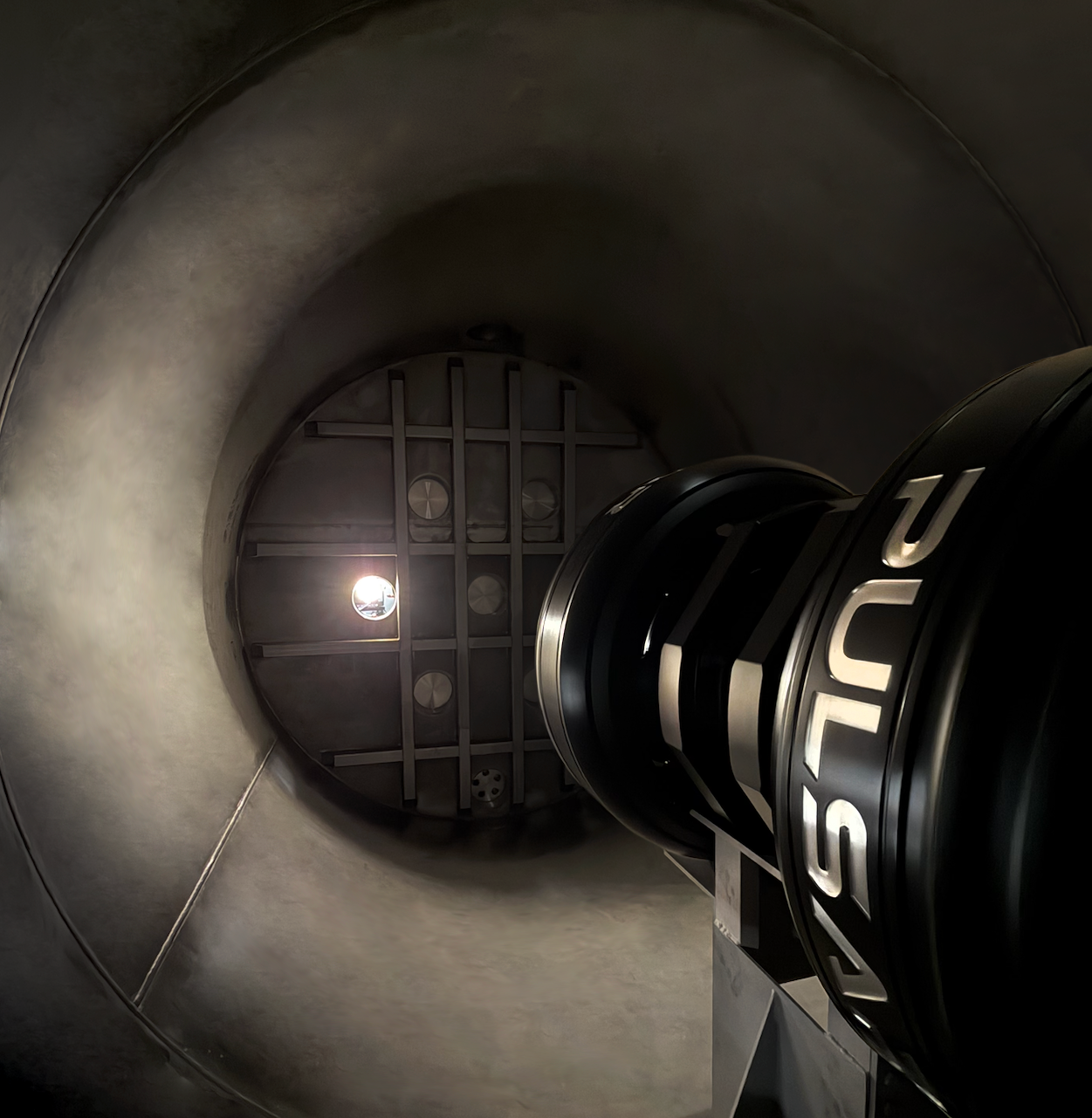
Pulsar Fusion was founded in 2011 with the goal of developing fusion-powered propulsion. Its proposed system would fuse helium-3 and deuterium, an isotope of hydrogen, then use the resulting energy to heat helium-4 and expel it as propellant.
The company says only a few hundred grams of deuterium and helium-3 would be needed to sustain the fusion reaction during a Mars mission. However, the spacecraft could require 10 to 20 metric tons (11 to 22 U.S. tons) of deuterium propellant to generate enough thrust to reach its target speeds.
Pulsar Fusion envisions Sunbird spacecraft reaching up to 329,000 mph (529,000 km/h)—about 10 times faster than Voyager 1. Because the spacecraft would need months to accelerate and decelerate, it would not reach that speed instantly.
At those speeds, Pulsar Fusion says a journey to Mars could be reduced from roughly nine months using conventional chemical propulsion to about half that time. The company also believes quicker missions to Saturn’s moon Titan and the metal-rich asteroid Psyche could become possible.
Why fusion engines may need a billion-degree plasma
Pulsar Fusion’s approach is known as dual direct fusion, in which the fusion plasma is used directly to produce thrust. Princeton University physics professor Samuel Cohen has been investigating a related concept, the Direct Fusion Drive, through a project called Starfire.
Cohen’s team has studied the concept for more than 20 years. The proposed system would fuse deuterium and helium-3, which is rare on Earth but abundant on the moon. Researchers have built a prototype fusion thruster at Princeton that produces plasma reaching 18 million F (10 million C).
That temperature is still far below what is needed for deuterium-helium-3 fusion. “It’s a start, but you’ve got to get to a billion degrees” Celsius, Cohen told Live Science. Possible approaches include compressing the plasma or heating it with radio or neutron beams.
The Princeton team has demonstrated a small amount of thrust—measured in a few milligrams, or a few hundred-thousandths of a newton. With additional funding, Cohen said a working fusion propulsion system could be possible within 10 to 20 years.
Pulsar Fusion has received support from the European Space Agency and the U.K. Atomic Energy Authority. The company hopes to conduct an in-orbit demonstration of its thrusters by 2027.
Helicity Space is developing pulsed fusion propulsion
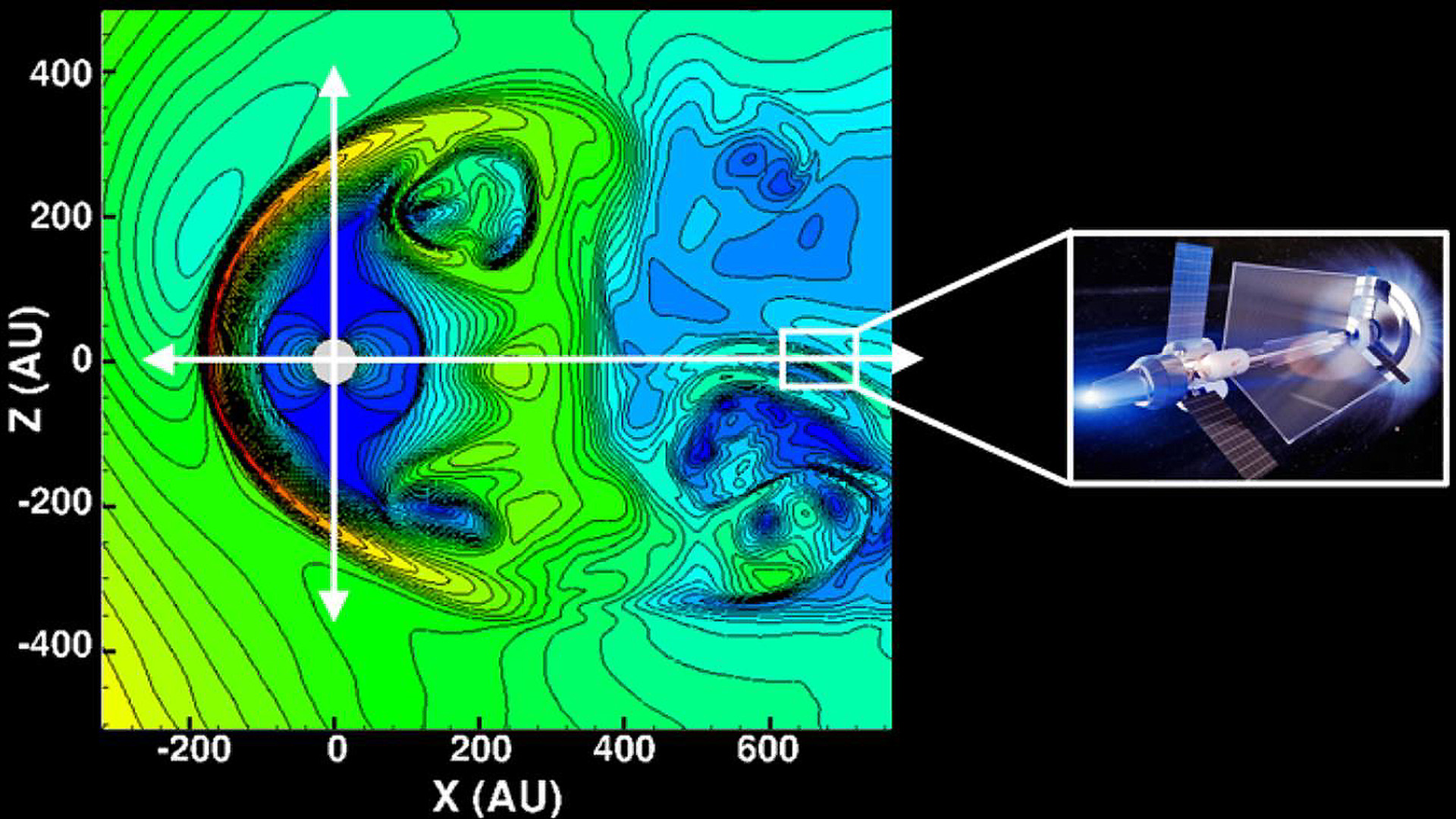
Helicity Space is targeting a launch of its fusion propulsion system in the 2030s. The company raised $5 million in 2023 and is developing the Helicity Drive.
Unlike systems designed to produce continuous fusion, the Helicity Drive would use pulses of plasma to generate thrust. Lintner said the company hopes to fly an initial prototype within three years, reach fusion temperatures soon and achieve net gain—producing more energy than the system consumes—in its engines by the 2030s.
“If you get a reaction every few seconds, that’s an amazing science experiment on Earth, but you can’t do anything with it,” Lintner said. “In space, you have the most advanced electric propulsion drive ever built. You change the game for propulsion.”
Fusion propulsion faces serious challenges
Not every researcher is convinced that fusion drives will soon propel spacecraft through the solar system. John Slough, who is developing a design called the Fusion Driven Rocket, has warned against “false promises” because the underlying physics and engineering remain extremely difficult.
Remaining problems include stabilizing the fuel, containing plasma, protecting engine walls and shrinking the entire fusion system enough to fit inside a spacecraft. As Srinivasan noted, the technology is not likely to arrive overnight.
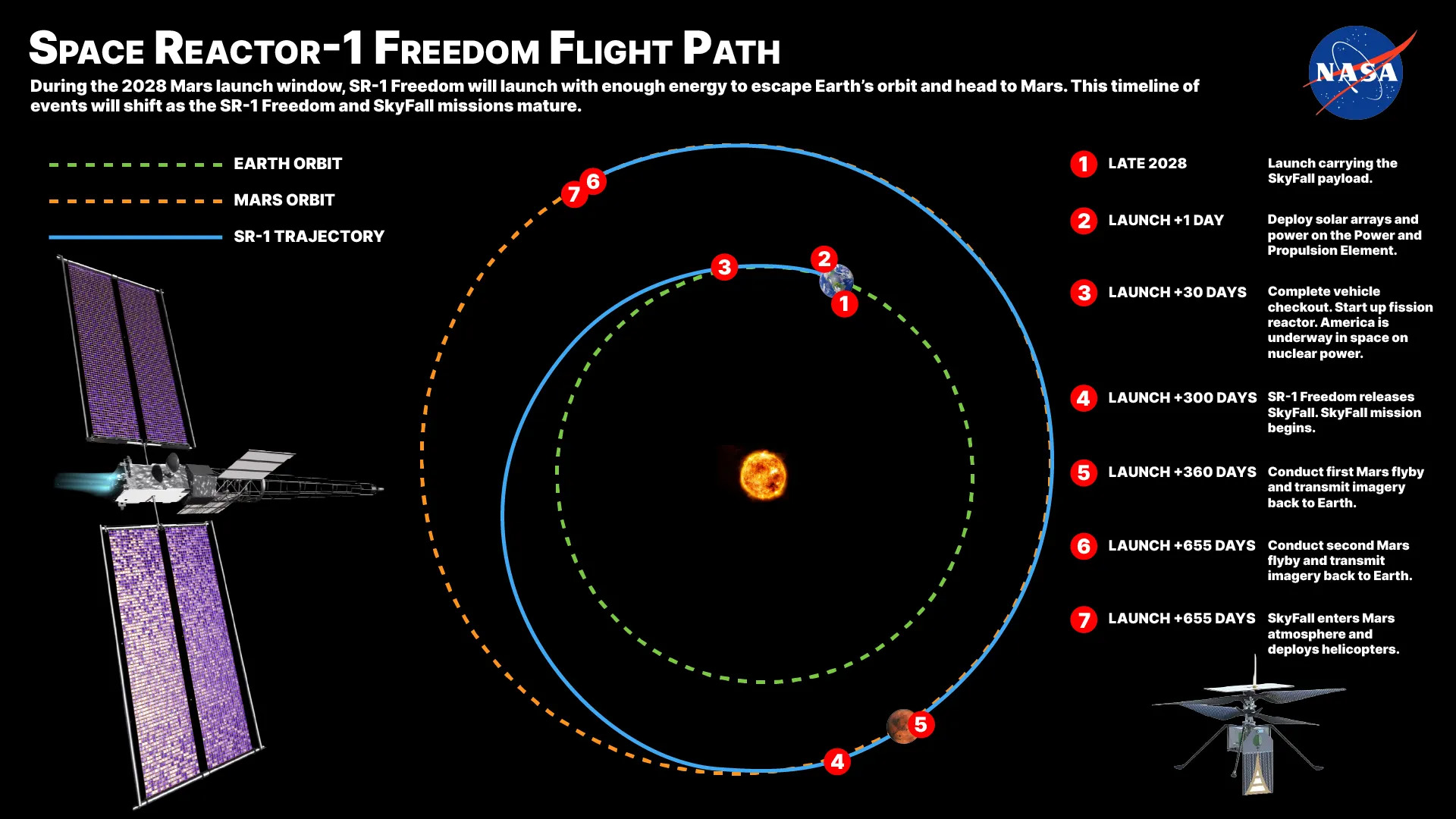
Other forms of nuclear propulsion may become practical sooner. NASA is developing SR-1 Freedom, a spacecraft powered by nuclear fission rather than fusion. Announced in March, the mission aims to launch to Mars by December 2028 and deploy three small robotic helicopters. Its reactor would split uranium-235 to generate power and thrust.
Fission propulsion could provide reliable power far from the sun, but it cannot match the temperatures—and potentially the speeds—available from fusion. Fusion systems magnetically confine plasma, allowing them to reach much higher temperatures than fission reactors, whose temperatures are limited by their materials.
Could fusion propulsion reach Sedna?
The potential benefits of fusion propulsion extend far beyond Mars. Elena Ancona, a flight dynamics engineer at the Polytechnic University of Bari in Italy, and her colleagues have described how a direct fusion drive could enable a mission to Sedna, a distant icy dwarf planet beyond Neptune.
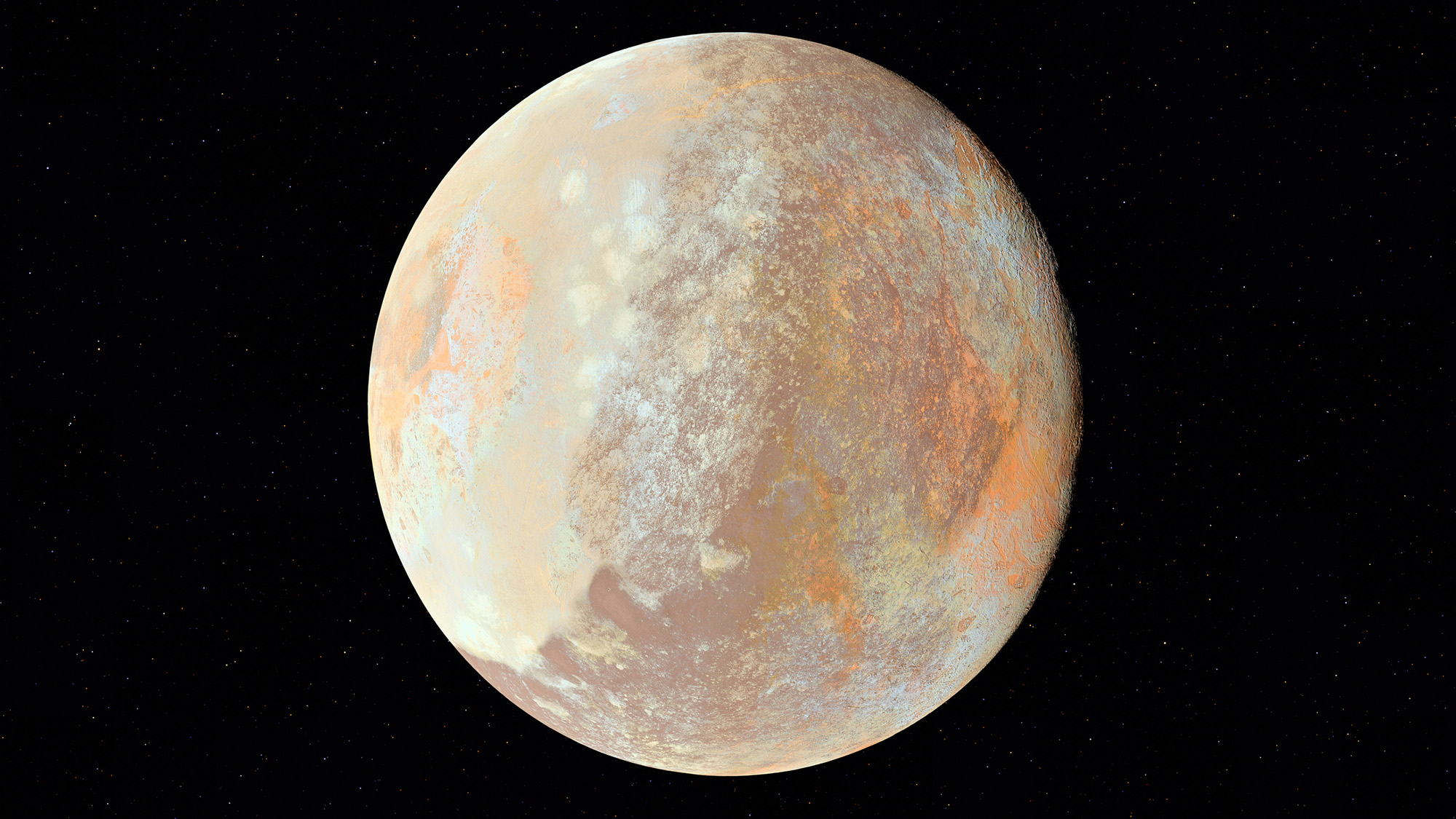
Sedna will reach its closest point to the sun in 2075, and it will not return to that point for another 11,000 years. A conventional chemical spacecraft would need to launch 30 years in advance to reach the planet during that window. A fusion-powered spacecraft could potentially make the journey in about 10 years.
Many more destinations could become accessible if fusion propulsion becomes practical, and interstellar travel might eventually be possible. However, researchers emphasize that a functioning fusion drive remains years away and depends on breakthroughs in both physics and engineering.
Fusion propulsion has been proposed as a solution for deep-space travel since the 1960s. The recent growth of commercial fusion research may finally provide a chance to test whether the technology can move beyond theory.
For now, the field remains experimental. But with Pulsar Fusion, Princeton University and Helicity Space pursuing different approaches, the next few years could determine whether fusion-powered spacecraft become a reality—or remain a science-fiction dream.
Source: www.livescience.com