


13,000-Year-Old Elephant Relative Bones Show Humans Hunted and Ate Megafauna in Chile
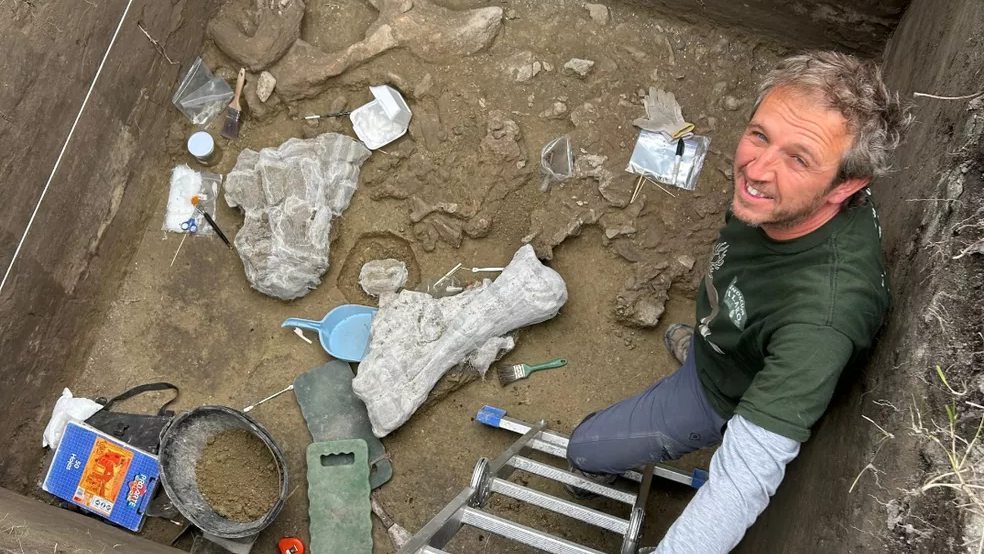
Cut marks on the bones of an extinct elephant relative, found alongside stone tools on the shores of Chile’s ancient Lake Taguatagua, suggest that some of the first people in the region hunted, butchered and ate these giant animals about 13,000 years ago.
Archaeological excavations conducted over the past two years in the basin of the ancient lake have uncovered large quantities of megafaunal remains and stone tools, according to a statement from the Catalan Institute of Human Paleoecology and Social Evolution (IPHES-CERCA).
Cut-marked bones reveal ancient human activity
Distinct traces on some of the bones belong to gomphotheres, an extinct group of tusked mammals related to modern elephants. The marks suggest that Indigenous people slaughtered the animals at the site.
The animal bones and artifacts date to between 12,000 and 13,000 years ago. They provide further evidence of early human occupation in southern South America, where hunter-gatherers repeatedly visited the shores of ancient lakes.
Image credit: “Walking among the Gomphotherium, the first human steps in South America” project team
Evidence of early people in South America
The Tagua Basin has previously yielded remains of other now-extinct American animals. Bones from horses and some species of deer show signs of cutting and charring, indicating that ancient people cooked and ate them.
The earliest known human site in South America is Monte Verde in Chile, dating to about 14,500 years ago. Other early Indigenous sites include Waka Prieta in Peru and Arroyo Seco in Argentina, both of which are about 14,000 years old.
Researchers from IPHES-CERCA described the well-preserved collection of animal bones, plant remains and stone tools as “an unparalleled record of what currently exists in South America.” The findings could help scientists understand when people first reached the Americas and how early populations used large continental animals before their extinction.
What researchers will study next
Following the field survey, the research team plans to analyze samples from the excavated deposits and site remains. Recent research has also examined archaeological evidence from the Tagua Basin.
Further analysis could narrow down when humans first settled around Lake Taguatagua and clarify how they killed, butchered and ate the animals they encountered as they reached the southern cone of South America.
Source: www.livescience.com