


China Leads the Race to Develop In Vivo CAR-T Cell Therapies
CAR-T cell therapy developed in China is rapidly moving into clinical trials in patients.
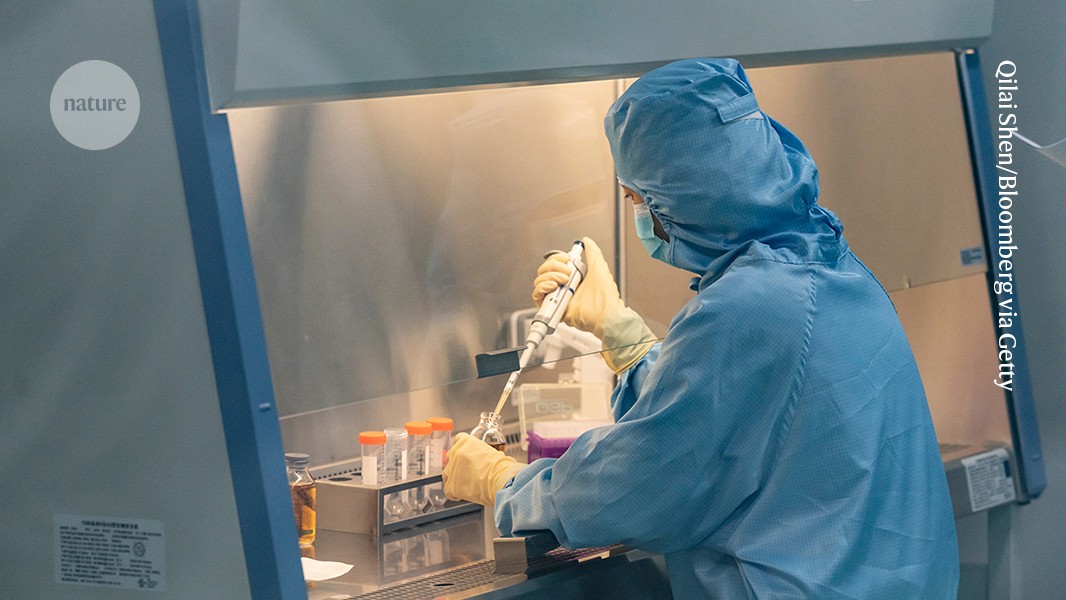
Credit: Qilai Shen/Bloomberg via Getty
China has become a global hotspot for developing and testing innovative treatments that could transform the treatment of cancer and autoimmune diseases. Researchers say the country’s large population, fast regulatory pathways and substantial resources have helped it dominate the development of therapies that generate disease-fighting immune cells inside the body.
In vivo CAR-T cell therapy reprograms a person’s immune cells inside the body. The modified cells can then attack cancer cells or eliminate immune cells that mistakenly target healthy tissue in autoimmune diseases. These therapies could be cheaper and easier to develop than existing CAR-T treatments.
In conventional, or ex vivo, CAR-T cell therapy, immune cells are collected from a person’s blood, genetically modified in a laboratory and returned to the body. These treatments are already used for some blood cancers.

Immunotherapy designed in the body alleviates multiple sclerosis
In an analysis published last month, John Woo and colleagues at the Boston Consulting Group in Massachusetts reported that most basic preclinical research in this field has been conducted by groups in the United States and Germany. However, China is rapidly moving into clinical development.1
Of 140 in vivo CAR-T cell therapies being tested in animals and humans around the world, 82% are being developed by groups in China, according to the analysis.
Government support is accelerating CAR-T research
Emily Bryce, a physician and cell-therapy researcher at the Westmead Medical Research Institute in Sydney, Australia, says China’s progress in developing these treatments has accelerated over at least the past five years.
“There’s a huge amount of research, much of it supported by the Chinese government,” Bryce said. She added that international organizations are increasingly interested in collaborating with China on these therapies.
Early clinical results show promise
The first human results for in vivo CAR-T cell therapy in autoimmune diseases were reported last September. Five people with treatment-resistant lupus experienced improvements in their symptoms three months after treatment, and no serious side effects were observed.
Earlier this month, Chinese researchers reported that the symptoms of 16 people with an autoimmune disease improved after treatment with in vivo CAR-T cell therapy.
The benefits could extend well beyond China. This month, the U.S. Food and Drug Administration approved the first China-developed in vivo CAR-T cell therapy for testing in clinical trials. The treatment is intended for blood cancer.
“Successful clinical development in China could accelerate innovation, reduce treatment costs, and even generate valuable clinical evidence to benefit patients around the world,” said Xiaoyuan Chen, a chemist at Shandong Cancer Hospital and Research Institute in Jinan, China. Chen is also studying in vivo CAR-T cell therapy for cancer and fibrosis.
Researchers caution, however, that these therapies remain in the early stages of development. Developers will need to produce data demonstrating long-term effectiveness and show that the treatments can overcome potentially toxic side effects. In vivo CAR-T therapy is still awaiting regulatory approval for widespread use.
Why China has become a CAR-T cell therapy hub
Chen said China has made substantial institutional investments in CAR-T cell research and has close collaborations among universities, hospitals and industry. Many people in China also have autoimmune diseases, while treatment options remain limited. According to Chen, many of these patients are willing to participate in clinical trials.
Wu said China’s rapid clinical-trial pathway, known as investigator-initiated trials (IITs), is probably the main driver of the country’s growth in cell and gene therapy.
This pathway allows researchers to test new treatments in humans and generate early clinical evidence without oversight from national drug regulators.
Source: www.nature.com