


Gut Bacterium’s Sugar Molecules Reduce Visceral Fat and Weight Gain in Mice
A human gut bacterium called Clostridium immunis produces large sugar molecules that reduced visceral fat, slowed weight gain and improved glucose tolerance in mice, researchers report in Cell Host & Microbe.
A gut bacterium linked to lower visceral fat
“The global obesity epidemic continues to worsen, and it is estimated that more than half of the world’s population will be overweight or obese by 2035,” said Dr. Neeraj Surana of Duke University School of Medicine and colleagues.
The researchers noted that rising obesity rates are expected to contribute to cardiometabolic diseases, including coronary heart disease, type 2 diabetes and stroke.
Although obese and lean people can have differences in the composition and functional potential of their gut microbiomes, determining whether those differences directly contribute to obesity has been difficult in human studies.
In earlier research, the team identified Clostridium immunis as a human commensal bacterium that protects mice from colitis. The new study examined whether the bacterium could also affect metabolism and body fat.
Exopolysaccharides reduced fat and improved glucose tolerance
Mice received a single oral dose of Clostridium immunis. Within a week, the animals lost weight, had lower blood triglyceride levels and showed an approximately one-third reduction in visceral fat. Their subcutaneous fat did not change.
The bacterium also slowed weight gain and improved glucose tolerance in mice fed a high-fat diet for 12 weeks.
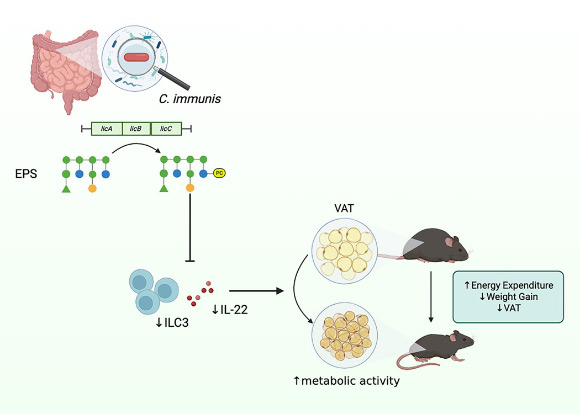
The researchers determined that these effects were caused by large sugar molecules called exopolysaccharides, or EPS, which are secreted by the bacterium.
However, the EPS worked only when it carried a chemical tag called phosphocholine. This modification is commonly associated with bacteria that cause respiratory infections and can help pathogens evade the immune system.
When the researchers used genetic mutants of Clostridium immunis that lacked the gene needed to attach phosphocholine, the exopolysaccharides lost their ability to reduce fat. Conversely, inserting the same gene into the closely related, inactive species Clostridium symbiosum gave it the ability to reduce weight and fat in mice.
How the bacterial molecule may affect metabolism
The researchers found that the molecule reduced levels of interleukin-22, or IL-22, a signaling protein produced by immune cells known as group 3 innate lymphoid cells.
Lower IL-22 levels may prompt adipose tissue to recruit thermogenic cells containing UCP1, a protein involved in energy expenditure. This process appeared to increase energy use, particularly in visceral fat.
Human microbiome data support a possible connection
To investigate whether the findings might be relevant to people, the researchers analyzed genetic data from thousands of human stool samples collected in previous studies.
They found that genes required to produce the phosphocholine tag were less common in the gut microbiota of people with obesity and high triglyceride levels than in people with healthier metabolic profiles.
These findings do not yet show that the bacterium or its exopolysaccharides can treat obesity in humans. The researchers said important questions remain, including whether the effects continue after the compound is cleared from the body and whether other immune cells help recognize it.
Potential for microbiome-based obesity treatments
“Taken together, our study combines biochemical and genetic approaches to characterize a commensal bacterial-derived phosphocholine-containing exopolysaccharide that protects against obesity in an IL-22-dependent manner,” the researchers said.
“Our findings suggest the potential for microbiome-derived products to treat obesity and associated comorbidities.”
The researchers added that advances in culturing and genetically manipulating beneficial microbes could reveal more about how the gut microbiome influences human physiology.
_____
Chin Yi Tan and colleagues. “Commensal-derived sugars prevent obesity by regulating immune metabolism.” Cell Host & Microbe, published online September 23, 2026. doi: 10.1016/j.chom.2026.08.018.
Source: www.sci.news