


Two New Australian Stick Insect Species Discovered After Decades of Misidentification
Scientists have identified two previously unrecognized species of large stick insects in Australia, showing that new species are still waiting to be discovered in some of the country’s best-studied environments.
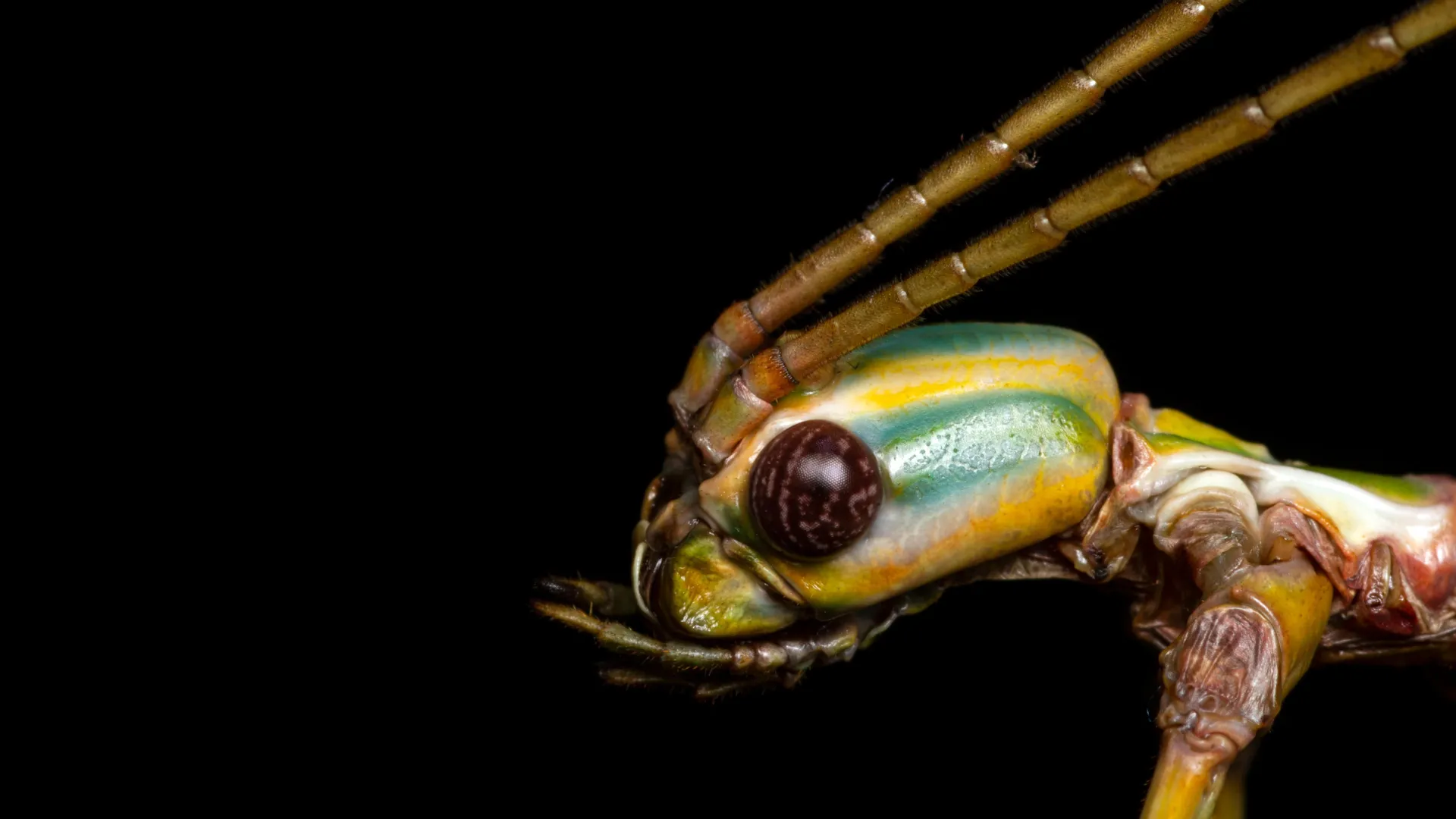
A research team from the University of Sydney reexamined members of the Australian stick insect genus Anchiale and discovered two new species. The researchers also identified a third species that had gone unrecognized for decades.
The study found that insects previously classified as just two species actually represent five different species. These stick insects occur from northern New South Wales along the Queensland coast to northern tropical Australia.
Hidden diversity in familiar Australian insects
Scientists reached this conclusion despite the extensive information already available about Australian stick insects. More than 1,000 citizen science observations have been recorded through iNaturalist and the Atlas of Living Australia, while the insects have been scientifically studied for decades.
Even so, much of Australia’s insect diversity remains undocumented, researchers say.
Lead author Dr Braxton Jones, from the Orla Richards Sydney Insect Hub at the University of Sydney, said the discovery demonstrated how much scientists still have to learn about insect biodiversity.
“Taxonomy is often like detective work. Even among Australia’s most photographed and frequently reported insects, we still find species that elude scientific recognition,” said Dr Jones, a postdoctoral researcher in the Laboratory of Molecular Ecology, Evolution and Systematics.
Interesting facts about stick insects
- Many stick insects can reproduce without mating with a male. This process, known as parthenogenesis, allows females to lay eggs that develop into female-only offspring that are clones of themselves.
- Some stick insects protect themselves by spraying chemicals at predators. The spray can irritate an attacker’s eyes and mouth.
- Australia’s longest stick insect is approximately 62 centimeters long, while the world record is 64 centimeters. There are 130 known species in Australia and 3,609 species worldwide.
- Stick insects belong to the group Phasmatodea, a name of ancient Greek origin meaning “phantom” or “ghost.” Their camouflage allows them to blend into plants, leaves, branches and bark.
- Some species can slowly change color to match their surroundings. Their appearance may range from green to brown, and some resemble lichens.
- Young Extatosoma tiaratum stick insects use an unusual survival strategy. After hatching, small nymphs have been observed emerging from ant nests looking and acting like ants. Their eggs are carried to ant nests, where they remain dormant for several months and are protected from wasps. After hatching, the young insects use their ant-like color, shape and behavior to move unnoticed toward the tops of eucalyptus trees.
- Some stick insects respond to threats by suddenly displaying brightly colored feathers, which can scare predators. Certain species can also make rustling noises with their wings.
- If a predator captures a stick insect’s leg, some species can intentionally sever the limb to escape. This process is known as autotomy. Young stick insects can regenerate lost legs during later molts.
Stick insects were misidentified for decades
One of the study’s biggest surprises involved a large stick insect that has long been familiar to scientists and insect enthusiasts.
The researchers combined DNA analysis with museum specimens, field research, citizen science observations and studies of captive-reared insects. The evidence showed that this insect had been incorrectly identified for decades.
It is now recognized as a separate species called Anchiale robusta.
The study’s findings were published in Austral Entomology.
The researchers also formally described Anchiale mabiensis, a new species discovered in the endangered Mabi rainforest on Queensland’s Atherton Tablelands.
The species’ eggs contain an unusually structured operculum, or lid-like structure, that had not previously been recorded in stick insects or their relatives.
Why the discovery matters for forestry and agriculture
The revised classification may also have practical value.
One stick insect, known to sometimes reach epidemic-like population levels and strip trees of their leaves, has now been shown to represent more than one species. Distinguishing these species could help researchers and land managers better understand and manage their future impacts on forestry and agriculture.
The study also points to the possibility of another new species at Cape York. Researchers believe it may be undescribed, but additional specimens are needed to confirm its identity.
“These discoveries demonstrate the importance of protecting endangered ecosystems and documenting Australia’s extraordinary biodiversity before we lose species without even discovering them,” Dr Jones said.
Funding for the research came from the Australian Biological Resources Survey through the Commonwealth Department of Climate Change, Energy, Environment and Water’s National Classification Research Grant and a CSIRO Postgraduate Scholarship.
Source: www.sciencedaily.com