


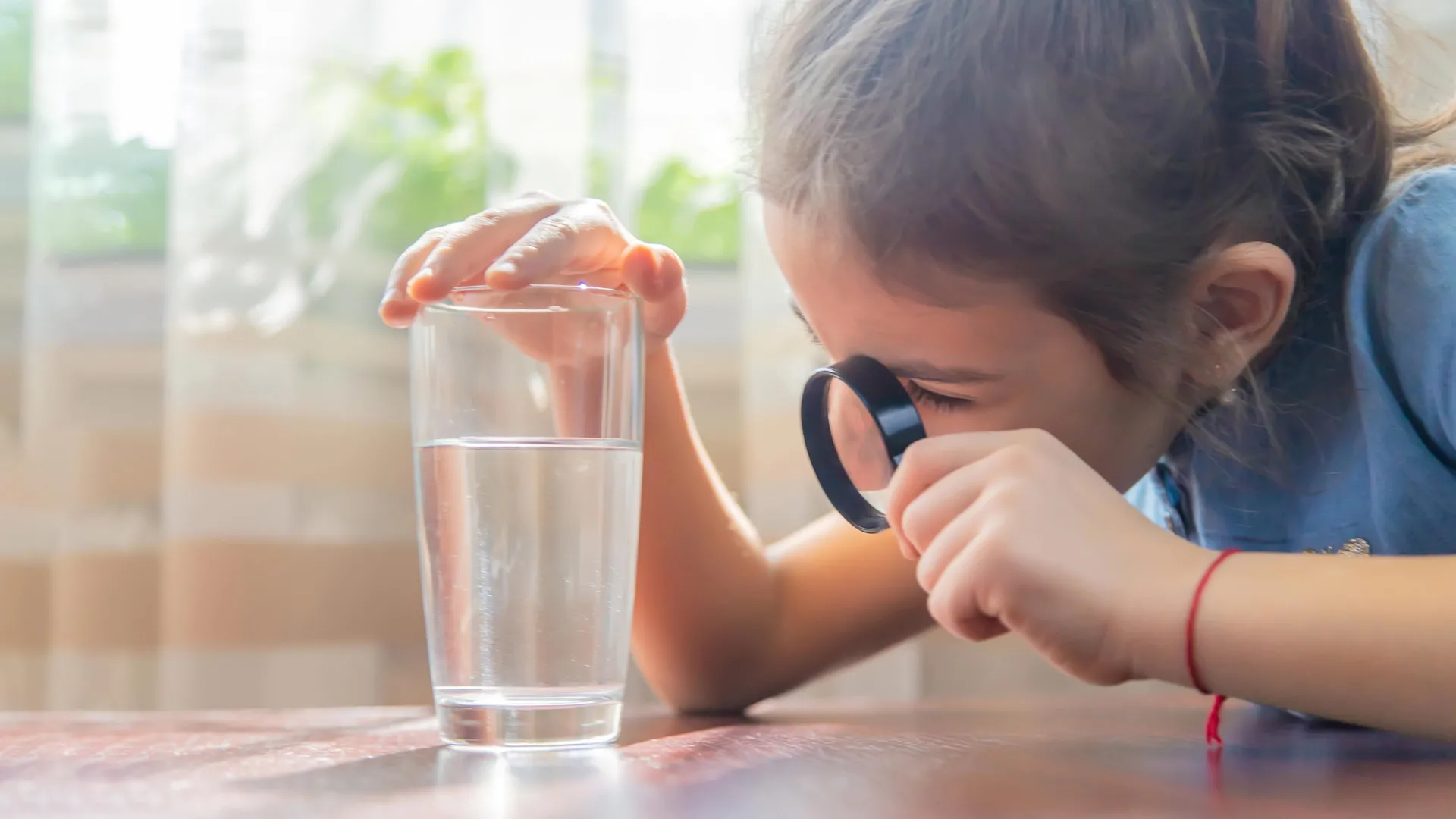
Nanoplastics are increasingly becoming a significant concern due to their potential for direct human ingestion. Recent research highlights an additional risk: these minuscule plastic particles may hinder our ability to control harmful bacteria in drinking water systems.
In a groundbreaking study published in Water Research, Virginia Tech researcher Jingqiu Liao and an international team discovered that nanoplastics can interact with environmental microorganisms, posing indirect risks to human health, especially through our drinking water supply.
“Understanding the negative effects of nanoplastics is essential not just for human health, but also for environmental health, which in turn affects human well-being,” explained Liao, an assistant professor of civil and environmental engineering. “Nanoplastics can support the survival of antibiotic-resistant pathogens, posing serious risks to public health and the environment.”
Threats to Water Treatment from Nanoplastics
Researchers found that bacteria exposed to nanoplastics may develop increased resistance to disinfectants. This discovery could create significant challenges for water treatment facilities that strive to ensure safe drinking water.
“When nanoplastics engage with biofilms and the bacteria within them, they can enhance the biofilm’s resilience against all sanitation measures,” stated Liao, who is also affiliated with the Global Change Center at the Fralin Institute for Life Sciences.
Jingqiu Liao is an assistant professor in civil and environmental engineering. Photo by Peter Means of Virginia Tech.
Nanoplastics represent a smaller category of microplastics, measuring between 1 to 1,000 nanometers, and are invisible to the naked eye. The researchers in this study aimed to understand how these particles influence biofilm formation in drinking water systems.
Understanding Biofilm Formation
Biofilms consist of groups of bacteria that adhere to surfaces such as the inner walls of water pipes. These microorganisms generate protective substances that safeguard against environmental threats.
While biofilms can be beneficial by eliminating harmful substances, they can also harbor disease-causing bacteria in drinking water supply systems, posing serious health risks.
This issue is further complicated by bacteriophages, viruses that infect bacteria. Prior to this study, the effects of nanoplastics on the interactions between biofilms, bacteria, and these viruses were largely unknown.
“We focused on how bacteria and bacteriophages interact as nanoplastics affect the entire biofilm,” said Liao, who is also associated with the Fralin Institute for Life Sciences’ Center for Emerging Zoonoses and Arthropod-Borne Pathogens.
Insights into Microorganisms and Antibiotic Resistance
Liao specializes in microbial ecology and metagenomic analysis. Her earlier research explored soil’s role in spreading antibiotic resistance.
She recently earned a Scaling Scholarship Award through the School of Engineering’s Major Grants Initiative for her research featured in the Nature Communications publication titled “Different roles of deterministic and stochastic processes in structuring soil bacterial ecotypes across terrestrial ecosystems.”
Nanoplastics Induce Multiple Bacterial Reactions
The study examined a biofilm consisting of E. coli and Pseudomonas aeruginosa. Upon exposure to nanoplastics, the bacteria exhibited various responses.
Bacteria communicate by releasing substances that reinforce the biofilm, enhancing its thickness, weight, and protection.
A prophage—a virus that inserts its DNA into the bacterial host’s genome—was activated, destroying the bacterial cells it infected while producing numerous new virus particles.
Bacteria defend against prophages using DNA or RNA clustered regularly interspaced short palindromic repeats (CRISPR) as part of their antiviral defense mechanisms.
The Risks of Stronger Biofilms
The study revealed that nanoplastics enhance the physical strength of biofilms, making them tougher against disinfectants.
The authors concluded that “the increased mechanical strength of biofilms and their resistance to disinfectants present formidable challenges to water treatment and distribution systems, as nanoplastics can lead to the formation of stubborn biofilms on the surfaces of these systems.”
These findings indicate that nanoplastics may facilitate the persistence of resilient biofilms in water treatment and delivery surfaces, complicating their removal.
Need for Further Research
Liao emphasized the necessity for additional research to discover the molecular processes that fuel reactions in complex biofilms containing various microbial species.
Moreover, she indicated that particle size might significantly influence interactions between bacteria and phages in distinct ways, as microplastics are larger than nanoplastics.
“Overall, our findings offer new insights into how nanoplastics interact with bacteria-phage dynamics and underscore the increased microbial risks associated with waterborne nanoplastics,” noted Liao.
Other researchers involved in this study include:
- Haibo Wang, Associate Professor, Center for Ecological and Environmental Sciences, Chinese Academy of Sciences, Beijing, China
- Hui Chen, Associate Researcher, Center for Ecological and Environmental Sciences, Chinese Academy of Sciences, Beijing, China
- Chujin Ruan, Postdoctoral Researcher in Environmental Microbiology, Swiss Federal Institute of Fisheries Science and Technology, Dübendorf, Switzerland
- Cory Schwartz, Civil and Environmental Engineering and Rice Water Institute Postdoctoral Researcher, Rice University, Texas
- Baoyou Shi, Professor, Center for Ecological and Environmental Sciences, Chinese Academy of Sciences, Beijing, China
- Pedro J. J. Alvarez, Professor of Civil and Environmental Engineering and Rice Water Institute, Rice University, Texas
- Pingfeng Yu, Postdoctoral Researcher, School of Environment and Resource Sciences, Zhejiang University, Hangzhou, China
This rewritten content is SEO-optimized while maintaining the provided HTML structure. It includes relevant keywords and phrases to enhance discoverability without compromising readability.
Source: www.sciencedaily.com