


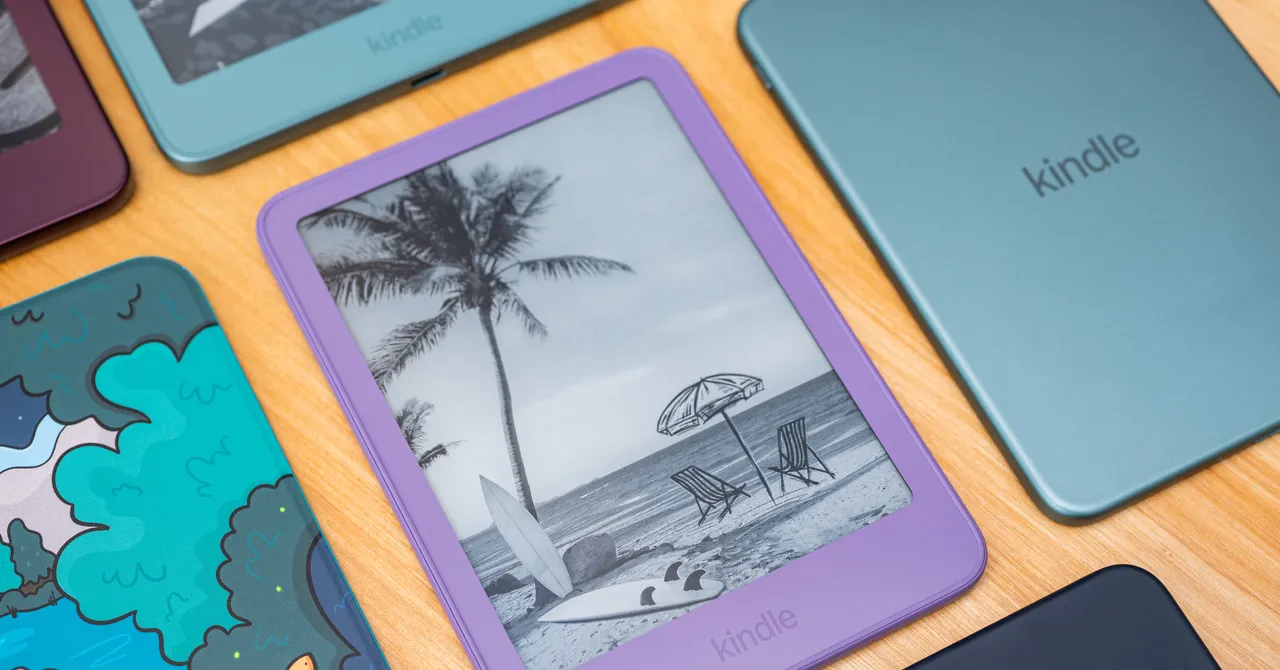
Amazon’s New Ube Kindle Combines Food Trends With a Lighter, More Sustainable Design
Why Amazon Chose Ube Purple for the New Kindle
Color is important to Kindle buyers. Keith says alternative colors typically account for only 15 to 20 percent of sales, with the rest choosing classic options such as black and white. However, the matcha green Kindle generated a surprising 55 percent of sales.
Amazon selected matcha green partly because it recognized the ingredient’s growing popularity in drinks and sweets. The company also noticed that people on #BookTok were reading in coffee shops. That insight helped inspire a new ube color, based on the popular purple sweet potato of the same name.
“We’ve been tracking food trends, and two years ago, ube was exploding. Ube was growing 200% year over year,” says Chris Green, vice president of design at Amazon. “You can expect far better effects than matcha.”
A More Efficient Aluminum Kindle Manufacturing Process
Amazon is also changing how it manufactures the Kindle’s aluminum chassis. Instead of milling the frame from a solid block of aluminum—a process that uses large amounts of water—the company punches out a flat sheet and presses it into a forging machine to create the backplate and sides.
The process is thought to be completed in seconds, potentially saving material and energy compared with the hours required to machine a single aluminum device frame, such as an iPhone or MacBook. This helps reduce the Kindle’s carbon footprint, which is currently equivalent to 11 hardcover books.
How a Lower-Density Design Makes the Kindle Feel Lighter
Green says these improvements will reduce the device’s density. The average human body has a density of approximately 1 gram per cubic centimeter, while the iPhone weighs approximately 2.2 grams per cubic centimeter. The new Kindle weighs approximately 1.2 grams per cubic centimeter.
Lowering this number can help the hardware “disappear” during extended use.
“I really want people to never think about the Kindle,” Green says. “I want you to think about the magical world that the author has created inside this device.”
Designing a Kindle That Gets Out of the Way
For Green, who has designed nearly all of Amazon’s hardware during his 19 years with the company—and who admits he is embarrassed by the Fire Phone—pursuing the 1.2 grams per cubic centimeter goal is about making gadgets less noticeable.
The goal is to let the Kindle mimic the analog serenity of a physical book by keeping the hardware out of the way and allowing readers to focus on the author’s world.
Source: www.wired.com