


Childhood Adversity May Build Specialized Skills — But Researchers Say Context Is Key
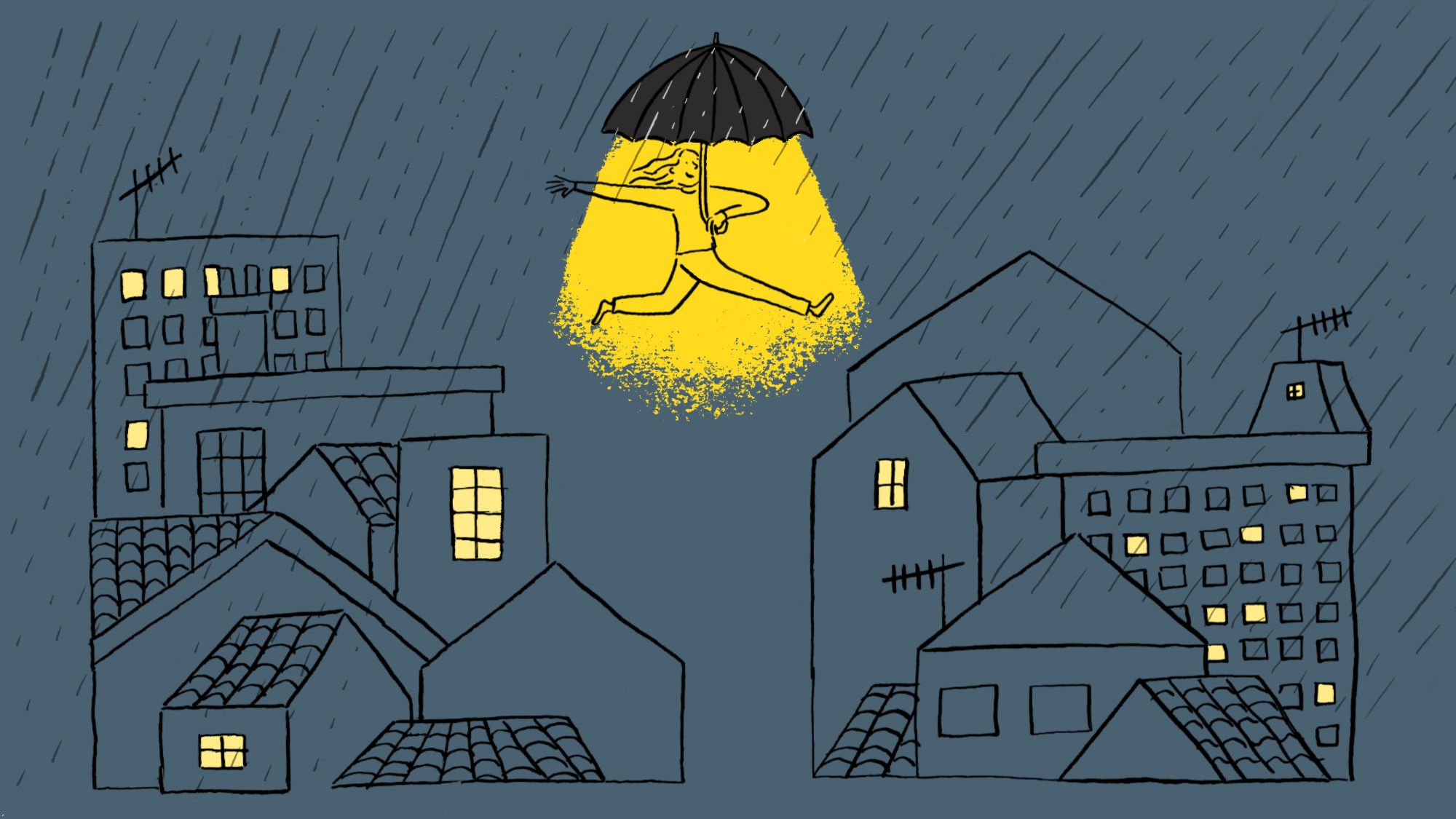
Growing up in poverty or an unpredictable environment can increase the risk of mental-health and developmental challenges. But a growing field of research suggests that adversity may also shape specialized abilities that are often overlooked by traditional psychology.
Developmental psychologist Meriah DeJoseph became interested in this idea while studying research on how poverty affects children. DeJoseph, who grew up below the poverty line, noticed that early studies focused overwhelmingly on the risks associated with poverty.
When she discussed that research with her mother and friends, their reactions made her question whether scientists were missing part of the picture. The research rarely addressed strengths that she had observed among people from similar backgrounds, including creative problem-solving, navigating social hierarchies and quickly reading other people.
Meriah DeJoseph researches the specialized strengths that may develop in people who grew up in adversity.
Image credit: Meriah DeJoseph
That realization helped motivate DeJoseph, now a developmental psychologist at the University of Denver, to investigate what she describes as the other side of the story.
“I felt like there was more to say about children and family strengths in those contexts that just wasn’t being told yet,” she said.
DeJoseph and a small group of other researchers are now working to understand the full range of changes associated with growing up in dangerous, deprived or unpredictable environments.
This approach does not romanticize poverty or suggest that adversity is harmless. Childhood poverty, neglect, violence, household instability and other forms of adversity can be damaging and even traumatizing. Rather, researchers say, a complete picture should acknowledge both the risks and the possible adaptations that may develop in response to those conditions.
Why researchers are challenging the “deficit model” of adversity
Research has repeatedly documented mental-health disparities between people who experienced childhood adversity and those who did not. Children exposed to multiple forms of adversity, such as a lack of basic necessities, aggression or neglect, are more likely to experience anxiety and depression during adolescence.
Childhood poverty and maltreatment affect a substantial portion of the population. According to a 2022 U.S. Census Bureau report, 16.3% of U.S. children lived in poverty. A 2015 estimate found that around 15% of children had experienced neglect or abuse.
However, researchers say the prevailing “deficit model” often treats adversity as if it can only harm development. Lower average performance among disadvantaged children on standardized tests of cognitive ability is frequently cited as evidence for this view.
Bruce Ellis, a professor of psychology and anthropology at the University of Utah who heads the Developmental Adaptation, Stress, and Health Lab, said the deficit model can be stigmatizing and disrespectful toward people from disadvantaged backgrounds.
It also may not fully explain how human development works. From an evolutionary perspective, stress may not simply impair development. It may also direct development toward strategies that are useful in stressful environments.
A more optimistic “resilience model” focuses on why some people go on to lead healthy and successful lives despite early hardship. Ellis, DeJoseph and their colleagues are exploring a different possibility: that some abilities may emerge because of adversity, rather than merely developing despite it.
“Instead of doing well despite adversity, it’s showing a potentially adaptive outcome because of adversity.”
Meriah DeJoseph, developmental psychologist at the University of Denver
How early environments may shape the brain and behavior
From birth, a child’s biology, psychology and behavior are influenced by the environment in which they develop. During sensitive periods such as early childhood, genes can be switched on or off differently depending on environmental conditions.
This flexibility helps people adapt to the settings in which they grow up. Because stress, violence, chaos, hunger and scarcity have been part of the human experience throughout history, the ability to respond to those conditions may have played an important role in human development.
In this framework, people exposed to adversity may become “stress-adapted.” That does not mean they are immune to harm or that difficult experiences are beneficial overall. It means that some traits and skills may be shaped to help them navigate environments marked by uncertainty, danger or limited resources.
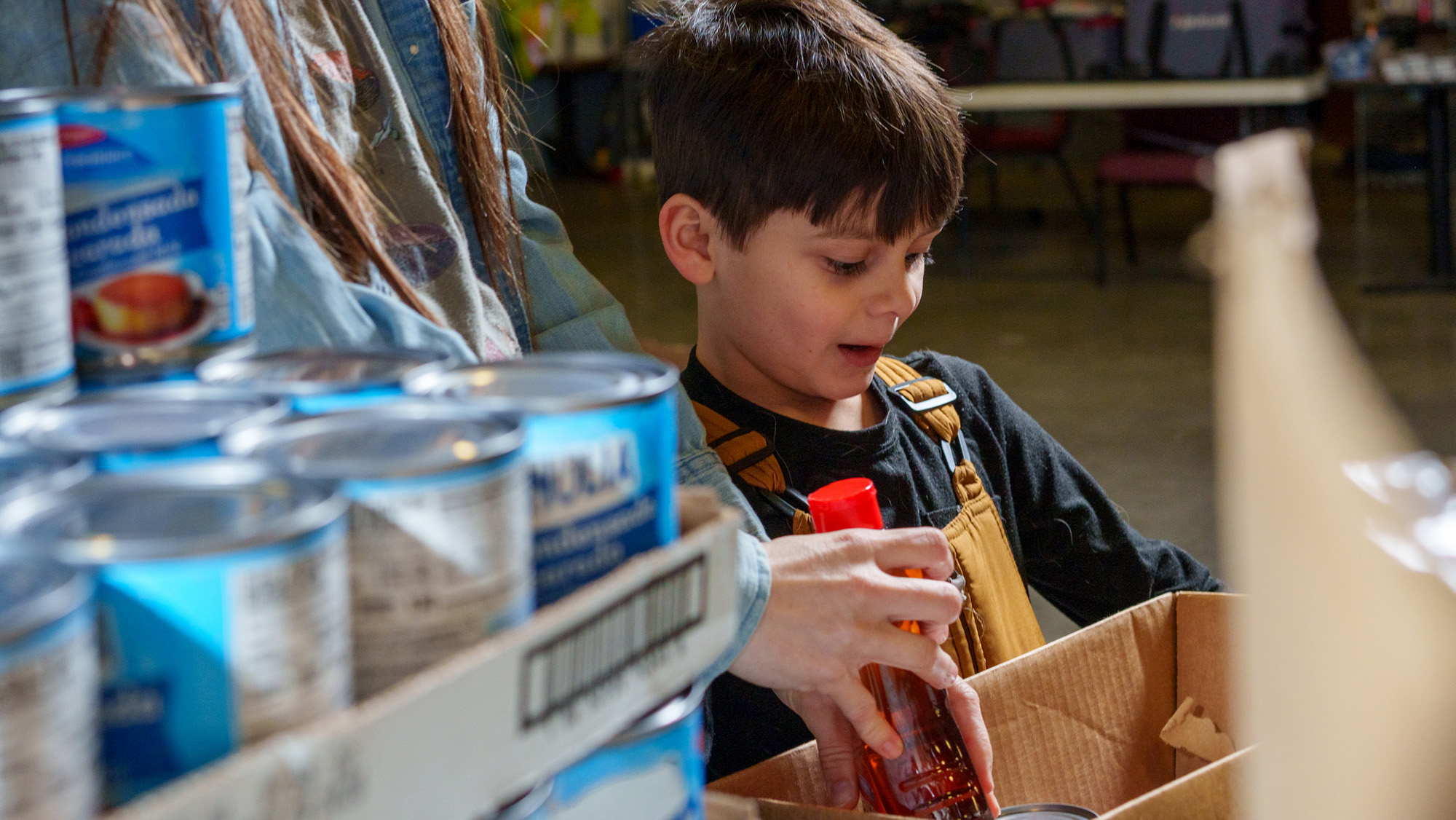
Researchers are beginning to study the full range of changes associated with growing up in dangerous, deprived or unpredictable environments.
Image credit: grandriver via Getty Images
These adaptations may include social and cognitive skills that improve a person’s ability to identify threats, recognize opportunities and respond quickly when circumstances change.
What are stress-adapted skills?
Researchers have identified several abilities that may be enhanced in people raised in stressful or chaotic environments. Early psychologists sometimes referred to them as “hidden talents.” To avoid implying that people who experienced adversity no longer need support, researchers increasingly use the term “stress-adapted skills.”
Possible examples include:
- Remembering faces and other socially important information
- Quickly shifting attention from one stimulus to another
- Recognizing patterns in unpredictable environments
- Identifying who has power or influence in a social situation
- Updating information rapidly when circumstances change
Quickly shifting attention may be useful in an environment where danger can appear without warning. In contrast, sustained attention may be more adaptive for someone who feels safe enough to focus on one task without monitoring the surrounding environment.
Similarly, delaying gratification may not always be useful in an unstable setting where rewards are uncertain or may disappear. Acting on an immediate opportunity can sometimes be more adaptive than waiting for a promised benefit in the future.
However, an adaptation that helps in one setting can create difficulties in another. Being highly alert to possible threats may improve survival in a dangerous environment, but the same hypervigilance can contribute to anxiety when a person later lives in a safer setting.
“It might help a child function in one context but create a challenge in another,” DeJoseph said.
Studies suggest that context can reveal overlooked abilities
The field is still developing, but several studies have begun to examine how context affects cognitive performance.
One area of interest is the ability to remember who has more power in a particular situation. Understanding social hierarchies, including who is more likely to win a physical confrontation, may be especially important in harsh or dangerous environments.
Other research suggests that people raised in unpredictable circumstances may become faster at detecting patterns in their surroundings. That skill could help them anticipate threats or identify opportunities when conditions change quickly.
Researchers have also found that some abilities may appear only when people are tested in a relevant context. In one study involving 372 adults, participants read a news article about either economic uncertainty or computer technology before completing working-memory tasks.
Among participants who reported more unpredictable childhoods, those who read about economic uncertainty tended to perform better at updating information in working memory than people with more stable childhoods. The pattern reversed when participants read about computer technology.
The findings suggested that people with unpredictable childhoods may be particularly prepared to process information when the situation signals change or uncertainty. The advantage did not necessarily appear in every setting.
The design of cognitive tests may matter, too. Many early studies relied on abstract questions involving numbers, colors or geometric shapes. Those tests may not capture skills that are most useful in real-world situations.
A 2022 study found that teenagers exposed to high levels of violence and poverty scored lower than their peers when asked to work with generic shapes such as squares and triangles. But when the tasks used more familiar shapes, including buses, dollar bills and faces, their performance nearly caught up with that of teenagers who had experienced less adversity.

Scampia faces poverty, high crime and institutional neglect. In one study, children from the area showed stronger working and short-term memory than children from a more affluent neighborhood when tasks involved remembering faces.
Image credit: Marco Cantile via Getty Images
A recent study in Naples, Italy, produced a similar result. Children from Scampia, a neighborhood affected by high crime, toxic-waste pollution, economic marginalization and institutional neglect, showed enhanced working memory and short-term memory compared with children from a relatively higher socioeconomic neighborhood. The difference appeared when the tasks involved remembering faces.
Evidence remains mixed — and important questions are unanswered
Because research into stress-adapted skills is relatively new, findings are not consistent across all studies.
Research involving 800 Dutch adults found inconsistent links between current adverse environments and performance on working-memory tasks. Another study by the same research team found that exposure to threats during childhood and adulthood was associated with slower information processing, but not with the ability to suppress impulsive actions or shift attention quickly.
These mixed results make replication especially important. Researchers also do not yet know how stable stress-adapted skills remain throughout a person’s life. Studies in this area have not yet focused on older adults.
Another limitation is that much psychological research has been conducted on so-called “WEIRD” populations: Western, educated, industrialized, rich and democratic societies. People from non-WEIRD populations remain significantly understudied, making it difficult to know whether the findings apply across cultures.
To address that imbalance, developmental cognitive psychologist Tochukwu Nweze has studied these ideas in Nigeria. In a 2020 study, Nweze and his colleagues compared 53 children living in orphanages or foster homes with 51 children raised by their biological parents. The researchers used standard psychological tests to assess working memory and impulse control.
The children living in orphanages or foster homes performed as well as or better than the children living with their biological parents. The findings were surprising because earlier studies had often found that institutionalized children had more difficulty inhibiting impulses.
Similar findings have been reported in Mozambique, where children from a high-stress community outperformed children from a relatively lower-stress town on tests of social memory.
Still, researchers do not yet know precisely how dangerous, deprived or unpredictable childhood environments produce these changes in the brain.
How childhood adversity may shape brain development
Christopher Monk, a professor of psychology, psychiatry and neuroscience at the University of Michigan, is studying how early adversity may be reflected in brain development.
Monk and his colleagues found that 15-year-olds exposed to relatively high levels of adversity throughout childhood had different patterns of neural connectivity than teenagers with low or moderate exposure. The adversity included emotional and physical abuse, as well as violence in the neighborhood or home.
MRI scans showed denser connectivity in the default mode network, which is most active when the brain is not focused on external stimuli, and in the frontoparietal network, which is involved in planning and problem-solving.
The salience network, which includes the amygdala and helps process danger and emotion, was less densely connected.
These differences should not automatically be labeled good or bad, Monk said. The brain is continually adapting to its environment, and the scans show differences in development rather than proof of a beneficial or harmful outcome.
The studies also cannot establish that adversity caused the observed brain differences. Researchers cannot ethically assign children to high- or low-adversity environments, so the findings show correlations rather than causation.
It is also unclear how differences observed in brain scans translate into specific stress-adapted skills. Much neuroscience research has focused on how childhood adversity may contribute to depression, anxiety, impulsivity and aggression, rather than investigating possible strengths.
Can education make better use of these strengths?
Many children who grow up in dangerous or unstable environments later move into settings that are safer and more predictable. The challenge is understanding how their adaptations might help them thrive in those new environments.
Experts caution that the research is not yet strong enough to identify exactly which skills adversity develops or to support broad policy recommendations. More studies are needed before researchers can confidently translate the findings into real-world programs.
Schools may be one of the most promising places to begin. Researchers suggest that educators could use more meaningful, familiar materials instead of relying solely on abstract concepts when evaluating students’ abilities.
Changing how teachers understand students may also make a difference. In sessions held for educators at two U.S. universities, researchers described strengths associated with economic hardship. The educators later held more positive beliefs about economically marginalized undergraduate students.
Students in courses taught by educators who participated in the strength-based learning sessions earned grades that were, on average, more than a quarter of a grade point higher than students in courses taught by educators in a control group. The difference was roughly equivalent to moving from a C+ to a B-.
The improvement did not come from changing the curriculum. It came from helping educators better understand their students’ identities and strengths.
“This perspective change seems so simple,” DeJoseph said, “but it seems to have a real impact.”
The researchers emphasize that recognizing potential strengths should never replace support for children and families facing poverty, violence or instability. Instead, a strengths-based approach could complement existing efforts by reducing stigma, improving education and creating environments where adaptations developed under adversity can become useful rather than limiting.
The larger question — how to reduce disparities in educational and career success between people from poor and wealthy backgrounds — remains open. For now, researchers say that moving beyond the assumption that people from disadvantaged backgrounds are “broken” may be an important first step.
Source: www.livescience.com