


New Image of Pa 30 Nebula Reveals a “Pearl of the Universe”
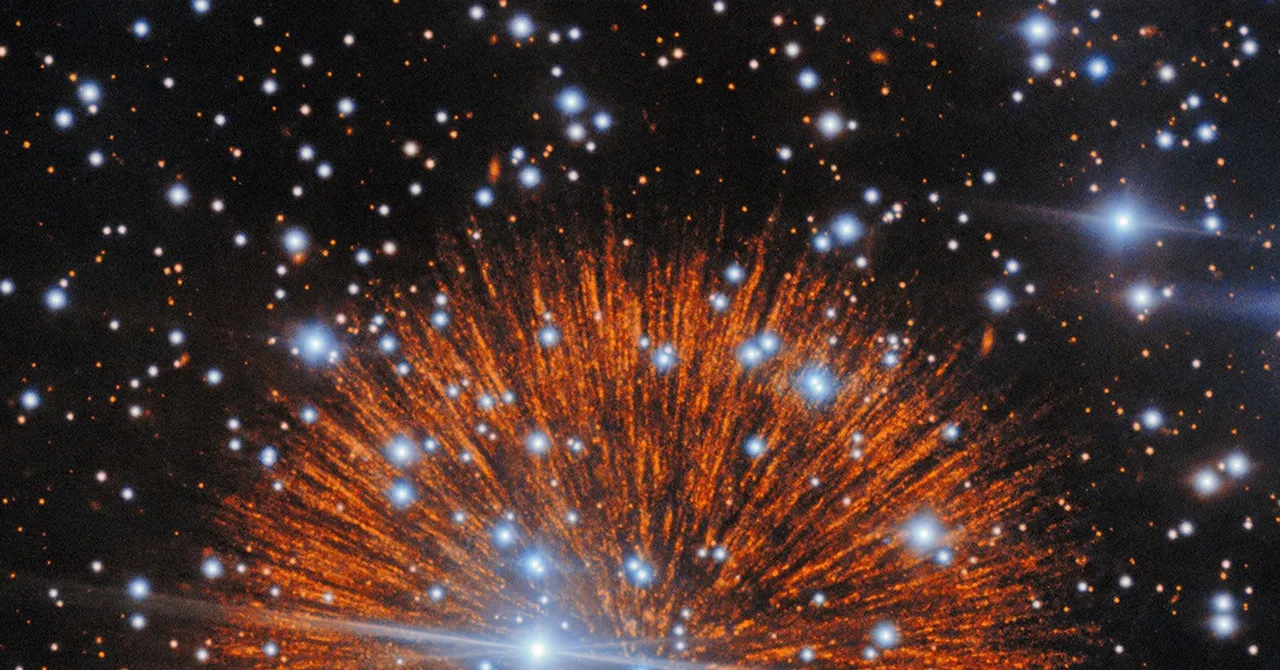
Astronomers have obtained the most detailed image yet of the Pa 30 nebula, a famous supernova remnant that may have been observed and documented from Earth during the Middle Ages. The new view reveals a previously unnoticed structure within the stellar debris.
Gemini North telescope captures unprecedented detail
Earlier images of Pa 30 showed long, filamentous streams of material that collectively resembled fireworks or dandelions. New observations from the Gemini North telescope in Hawaii reveal about 10 times more structure than has ever been observed in a supernova remnant.
With this improved resolution, researchers discovered that the filaments are not continuous. Instead, they are made up of relatively uniform, pearl-like knots of gas arranged like beads on a string.
Each gas “pearl” spans four light-days
The structure is enormous. According to a Astrophysical Journal study, each bead is approximately four light-days across. “The planetary regions of our solar system could comfortably fit into each knot about 10 times,” study co-author Ilaria Caiazzo said in the press release. “The knots are so amazingly uniform. We’re excited to model them.”
Why are the knots so uniform?
Researchers do not yet know exactly how the pearls formed. They are believed to be concentrated material released during the explosion, but their regularity is surprising. After a supernova, astronomers would generally expect to see more irregularly shaped collections of debris.
Instead, the knots in Pa 30 are similar in size and appear to line up along the nebula’s filaments. This newly revealed order could help researchers better understand how stars die and how supernova remnants develop.
Source: www.wired.com