


Vanillin Could Help Advance Treatments for Chronic Wounds and Tissue Damage
The compound responsible for vanilla’s familiar sweet taste and aroma may have an unexpected future in medicine. Scientists at Flinders University have identified antioxidant, anti-inflammatory, and antibacterial properties in vanillin that could make it a promising ingredient in treatments for chronic wounds, infections, ulcers, and damaged tissue.
How vanillin could support wound healing
Researchers at the university’s Institute of Biomedical Nanoengineering found that vanillin combines several properties that could be valuable in wound care. By helping address oxidative stress, inflammation, and bacterial contamination, the compound may support the development of multifunctional materials designed to improve healing.
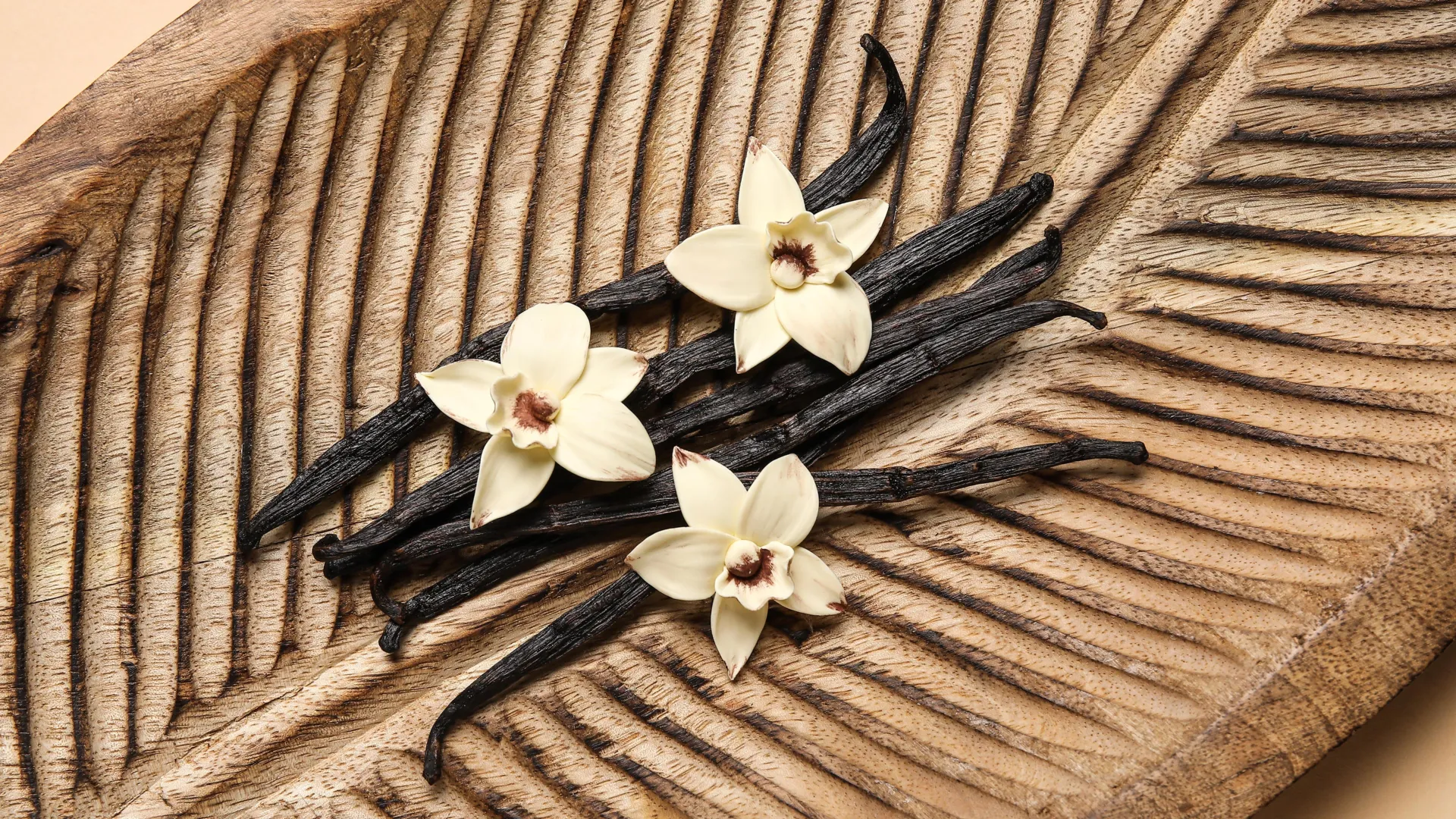
Vanillin is the main flavor and aroma compound found in natural vanilla pods. It can also be manufactured synthetically using materials derived from sources such as clove oil and rice. Although it is best known for giving foods their distinctive vanilla flavor, its chemical properties could make it useful well beyond the kitchen.
Vanillin acts as a dynamic crosslinker, helping bind different components within a material. This ability could be useful in creating specialized medical formulations, including materials that carry drugs or support tissue repair.
Flinders researchers investigated vanillin through a framework linking common food ingredients with real-world medical applications. Their work examines how the same chemical properties that make vanillin useful in everyday products may also contribute to biological effects relevant to human health.
“Vanillin is one of the most widely used flavor compounds in the world’s food systems and is highly valued for its sensory properties, chemical stability and long history of safety, which can be repurposed for other fields such as medical applications,” says Professor Krasimir Vassilev, Professor of Biomedical Nanotechnology at Flinders University and Director of the Flinders Institute of Biomedical Nanoengineering.
Potential applications for chronic wounds and ulcers
One particularly promising application involves chronic wounds and ulcers, which can be difficult to treat because of persistent inflammation, bacterial contamination, and oxidative stress.
Oxidative stress occurs when harmful reactive molecules overwhelm the body’s protective defenses. This can damage cells and interfere with tissue repair. Materials that help combat oxidative stress, inflammation, and bacteria could therefore offer several advantages in wound care.
“As synthetic forms of vanillin are abundant and cost-effective, we believe that vanillin-based formulations have the potential to provide a safe and multifunctional solution for ulcer treatment and targeted drug delivery, especially for hydrophobic compounds.
“Due to its amphiphilic molecular structure, vanillin can interact with reactive oxygen species, cell membranes, and polymer matrices, making it the basis for its incorporation into functional formulations.”
Hydrophobic compounds are substances that are poorly soluble in water. Their properties can make it difficult to prescribe and effectively administer certain drugs. Vanillin’s chemical structure could help researchers design materials that deliver these compounds where they are needed.
Although the findings highlight an interesting possibility, vanillin-based wound treatments still require further development and clinical trials before their efficacy and safety in patients can be established.
From peppermint oil to advanced medical coatings
The vanillin research builds on Flinders University’s efforts to uncover useful medical properties in everyday food ingredients.
In February 2026, the research team published a related study in the journal small, describing a medical coating developed from peppermint oil. The nanoscale-created coating is designed to protect against bacterial infection, inflammation, and oxidative stress while remaining compatible with human tissue.
Because the coating can be applied to medical materials, it could potentially provide a way to add protective properties to products used in medicine.
The inspiration for the peppermint study came from a simple personal experience. Professor Vassilev noticed that eating peppermint leaves in a drink significantly reduced a sore throat. Intrigued by possible biological explanations, he began investigating whether peppermint’s beneficial properties could be incorporated into durable protective coatings.
This idea led him to explore plasma technology, which he has researched for more than 20 years. Plasma processing can modify material surfaces and create thin functional coatings, potentially allowing biologically active compounds to be incorporated into medical products.
Research on peppermint helped establish an approach that the researchers are now extending to vanillin.
Why vanillin could be useful in future medicine
Alongside its potential biological activity, vanillin offers another important advantage: it is inexpensive and readily available.
Because synthetic vanillin can be produced in large quantities, researchers believe it may be easier to incorporate into commercially manufactured medical products than some expensive or difficult-to-obtain compounds.
Its relatively simple molecular structure and compatibility with established manufacturing processes could also support consistent product quality, reliable supply, and large-scale production.
These practical considerations are important when moving promising scientific concepts from the laboratory toward real-world medical applications.
Researchers envision vanillin eventually becoming a component of advanced wound dressings, ulcer treatments, targeted drug delivery systems, and therapies designed to support tissue regeneration.
“With a collaborative effort between academia, clinicians, and industry, vanillin has the potential to evolve from an underutilized bioactive substance to a clinically viable component of next-generation wound and regenerative therapies,” Professor Vassilev said.
Could vanilla’s key compound improve wound care?
The findings suggest that a compound commonly associated with desserts and sweet aromas may eventually have a role in medicine. By combining potential antioxidant, anti-inflammatory, and antibacterial effects with low cost and broad availability, vanillin could help scientists develop new ways to protect damaged tissue and support healing.
The study, “Vanillin as a bioactive component in biomedical preparations for chronic wound healing and tissue regeneration,” was carried out by Borislav Stoilov, Vi Khanh Truong, Christopher Delaney, and Krasimir Vasilev. It was published in the International Journal of Pharmacy.
Source: www.sciencedaily.com