



Hackers Exploit Critical Collabora RCE to Backdoor Nextcloud Servers
Threat actors are exploiting a critical remote command execution flaw in Collabora Online, the built-in CODE Server app for Nextcloud. The vulnerability is tracked as CVE-2026-110447.
Multiple administrators reported that attacks began in mid-September, about a month before the vulnerability was officially disclosed in the security bulletin, GitHub Advisory, and CVE publication.
Critical Nextcloud vulnerability affects built-in CODE Server
CVE-2026-110447 affects richdocumentscode versions before 26.4.303. The flaw exists in the Nextcloud app mechanism used to launch the bundled Collabora server.
The vulnerability only affects the optional built-in CODE Server app. According to Collabora, standalone Collabora Online servers, Docker and RPM/DEB installations, and Nextcloud All-in-One deployments are not affected.
Attackers can exploit the flaw by sending malicious requests to the app’s proxy.php trigger endpoint, resulting in operating system command injection.
A key prerequisite for exploitation is that the embedded CODE Server must be stopped, such as after a reboot, upgrade, or crash. The attack does not require authentication or user interaction.
Attackers deployed PHP web shells
A system administrator reported that multiple endpoints had been targeted beginning September 10. The reported attacks involved attackers deploying a PHP web shell and searching for password databases, password manager artifacts, and cryptocurrency wallets.
Some users also reported that ransomware operators were exploiting the vulnerability. However, BleepingComputer could not independently confirm those reports.
Administrators urged to update or remove the app
System administrators should upgrade richdocumentscode to version 26.4.303 or later, or remove the server app if it is no longer needed. Collabora warned that simply disabling the app is not sufficient.
In addition to the maintainer’s warning in mid-September, a community warning was published on October 3, urging administrators to update immediately because exploitation was continuing.
However, the lack of a CVE identifier made it more difficult for administrators to accurately identify the vulnerability and implement effective defenses.
Delayed CVE publication created a warning gap
A study from cybersecurity firm Second Security highlights the growing gap between security fixes and formal vulnerability notifications.
The company analyzed real-world examples of open-source vulnerabilities and found that the median time between a public fix and CVE publication was 39 days in August, up from 5.1 days in January.
Researchers suggest that the increasing number of AI-assisted vulnerability discoveries is straining CVE processing and contributing to publication delays.
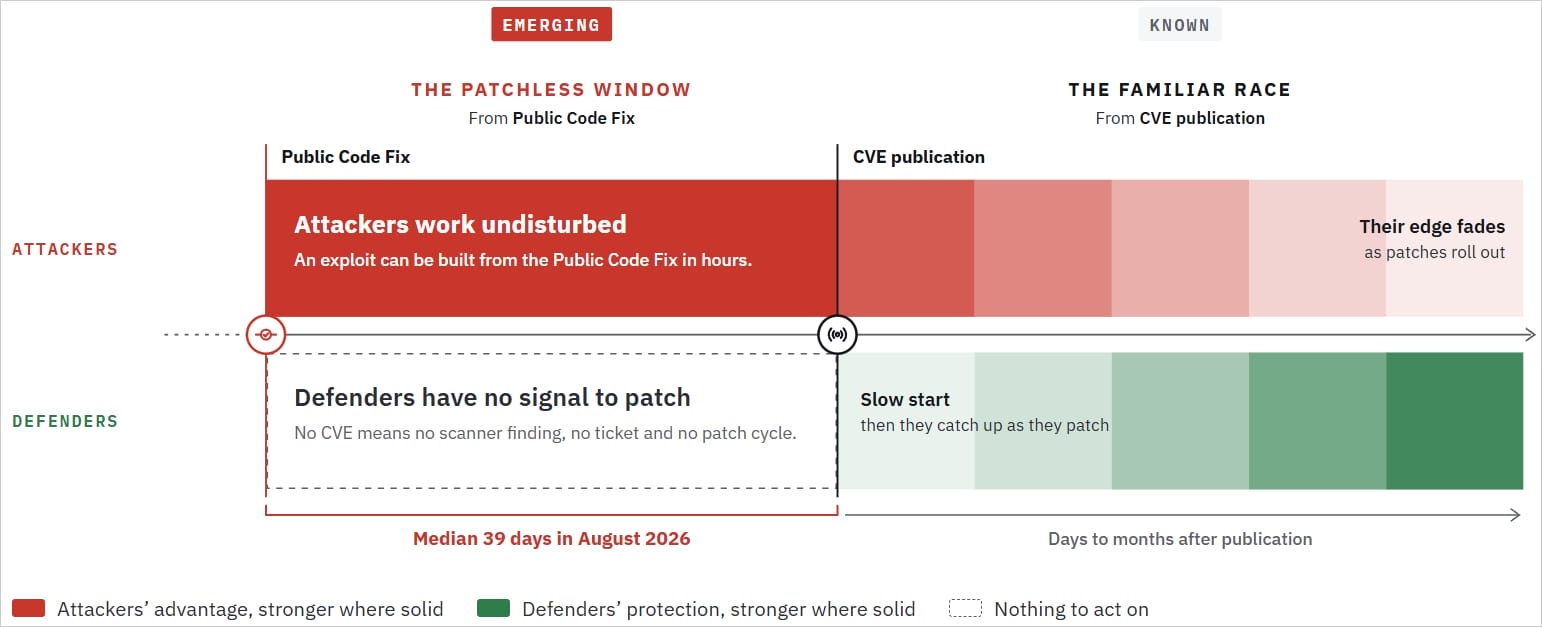
In many cases, researchers found that public exploit code appeared online within hours of a security fix and days before the corresponding CVE was published.
Second Security said that AI tools make it easier for attackers to generate effective exploits for publicly documented patches.
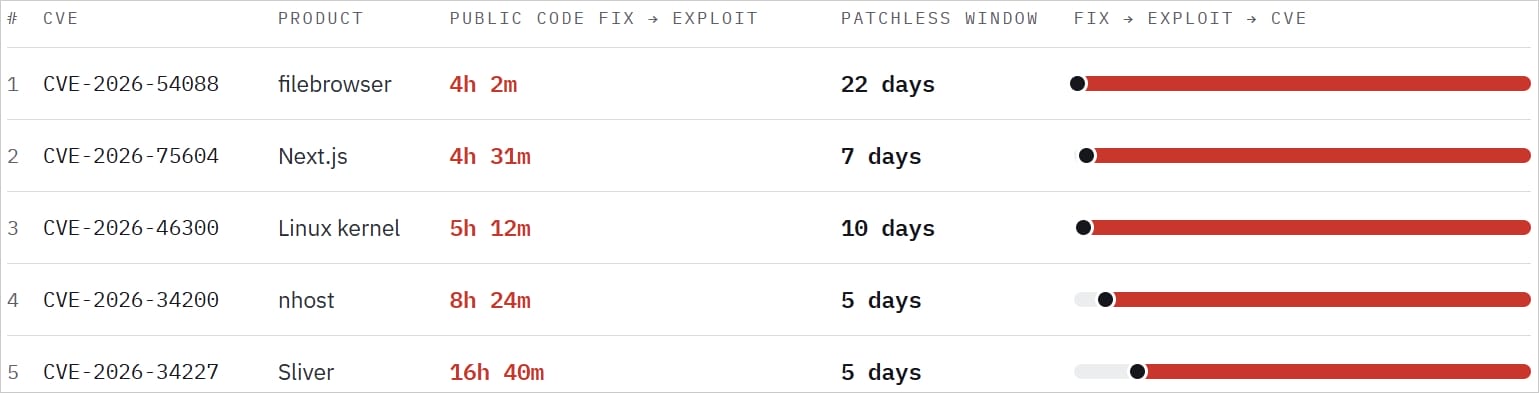
Source: Second Security
Collabora fix released weeks before advisory
For Collabora, the fix was committed on September 9, and version 26.4.303 was released on September 11. The security advisory and CVE were not published until October 14, more than four weeks later.
BleepingComputer contacted Nextcloud for information about its response to the reports of malicious activity, the attacks, and the number of affected systems.
Nextcloud said that Collabora reported the vulnerability in mid-September and that an update is now available in the app store.
The company said the delayed disclosure was intended to give users time to update because it had not observed widespread exploitation.
In a blog post, Collabora said the delayed announcement was primarily caused by GitHub’s CVE processing backlog, which has been strained by the growing volume of AI-driven security reports.

Join Mikko Hypponen and security leaders from the NFL, Chanel, and Atlassian for a two-hour digital summit about what will change with AI-speed attacks, what defenders should stop doing, and how to verify, decide, correct, and revalidate at machine speed.
Source: www.bleepingcomputer.com