


Brain Cells Linked to Myelin May Drive Age-Related Cognitive Decline
Brain cells that normally protect the brain may play an unexpected role in age-related cognitive decline. Scientists have discovered that cells responsible for maintaining the protective membranes around nerve fibers can malfunction with age, potentially contributing to gradual losses in memory and thinking skills.
This research, published in Nature Medicine, challenges the long-held belief that these cells are always beneficial. By examining human brain tissue and conducting experiments in mice, researchers found evidence that dysfunctional support cells can damage nerve fibers and interfere with cognitive function.
The findings also point to a potential new way to protect the aging brain. Drugs that act on related biological pathways are already used to treat other neurological diseases, raising the possibility that existing treatments could eventually help address age-related cognitive decline.
Study links myelin changes to cognitive decline
The study was led by researchers from the University of Edinburgh and the UK Dementia Research Institute. Scientists investigated how changes in the brain are linked to cognitive decline later in life.
Researchers focused on the 1936 Lothian birth cohort, a group of people whose cognitive abilities have been tracked from childhood into old age. This unusually extensive record allowed scientists to examine how memory and thinking changed over several decades.
The participants, who were between 70 and 82 years old, completed assessments measuring memory, information-processing speed and their ability to understand spatial relationships.
Of the 1,091 people enrolled in the cohort, 866 completed additional cognitive testing after age 70. Almost everyone experienced some degree of functional decline, but the extent varied widely. These differences allowed researchers to investigate what might distinguish brains that age more rapidly from those that age more slowly.
When scientists examined postmortem brain tissue from some participants, they found a notable pattern. People who experienced greater cognitive decline tended to have fewer thick nerve fibers and an abnormal accumulation of unhealthy myelin.
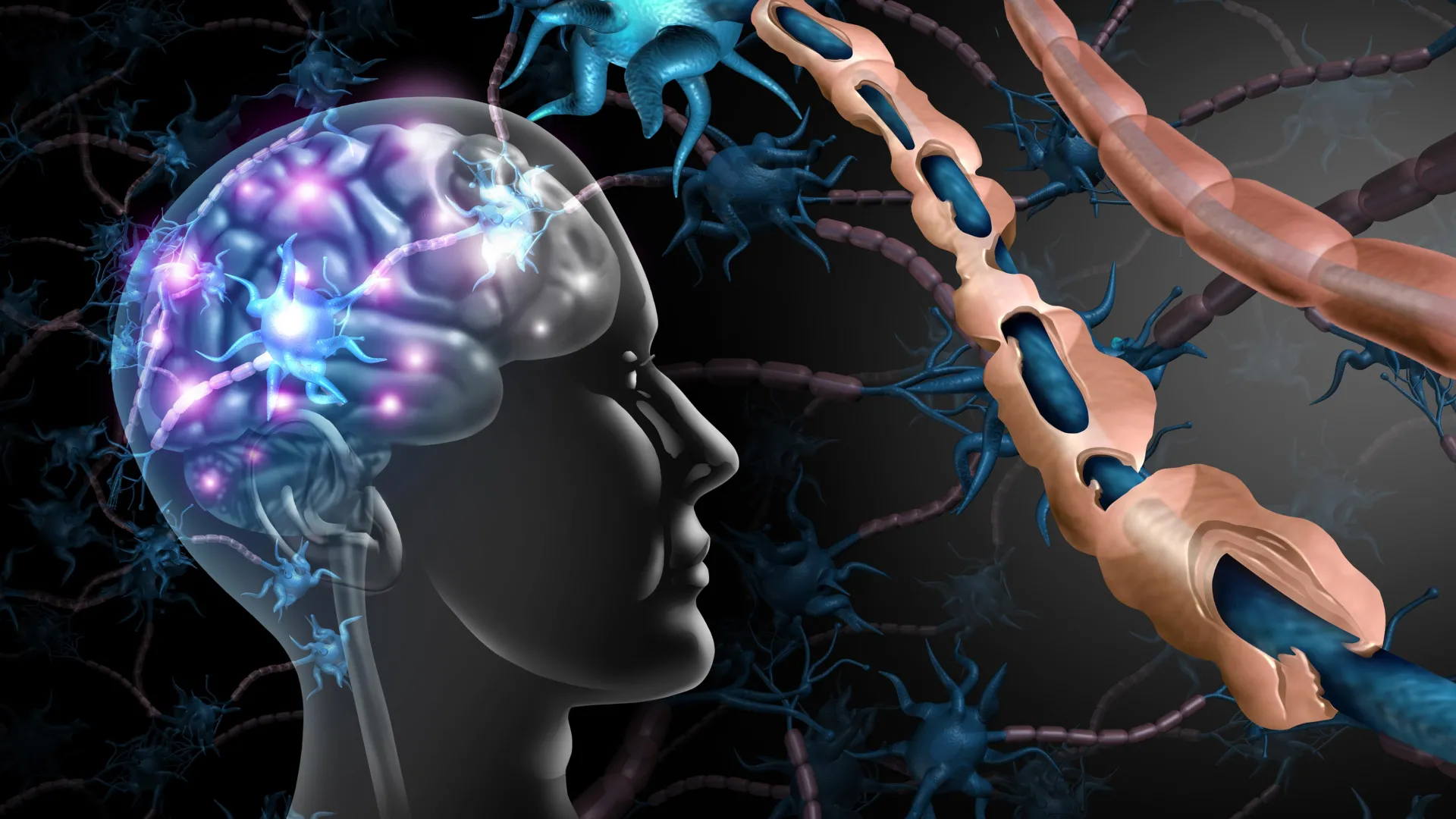
Myelin is a protective membrane surrounding nerve fibers. It helps electrical signals travel efficiently through the brain and is essential for normal brain function. However, the findings suggest that excess or abnormal myelin may contribute to cognitive problems.
The changes were particularly noticeable around the remaining thick nerve fibers. Importantly, these abnormalities were associated with the rate of cognitive decline rather than with how well participants performed on cognitive tests at a particular age.
Oligodendrocytes may become harmful with age
To understand the causes of these changes, researchers examined oligodendrocytes, specialized brain cells that produce and maintain myelin.
Oligodendrocytes have traditionally been considered beneficial because they insulate nerve fibers and help them function properly. The new findings suggest, however, that these cells can become dysfunctional as people age and contribute to the problems they normally help prevent.
Researchers found that people with more severe cognitive decline had lower levels of a protein called NRF2 in their oligodendrocytes.
NRF2 helps protect cells by regulating hundreds of genes involved in defending against damage and maintaining normal cellular function. When NRF2 activity decreases, cells may become less able to protect themselves and carry out their usual tasks.
To investigate whether NRF2 was directly involved in the brain changes, the researchers conducted experiments in mice.
When scientists specifically reduced NRF2 in oligodendrocytes, the animals developed excess myelin and lost large nerve fibers. These changes closely resembled abnormalities observed in human brain tissue. The mice also showed reduced age-related improvements in cognitive performance.
These experiments provided evidence that reduced NRF2 activity can directly disrupt oligodendrocyte function and cause changes in myelin and nerve fibers that contribute to cognitive decline.
NRF2 pathway could offer a new treatment target
The findings could have important implications for developing treatments designed to preserve cognitive abilities in older adults.
One promising aspect is that the NRF2 pathway is already targeted by drugs used to treat other conditions, including multiple sclerosis (MS).
Previous studies have shown that increasing NRF2 activity can improve cognitive function in people with MS. This raises the possibility that drugs acting on the same pathway could eventually be repurposed to address oligodendrocyte dysfunction and age-related cognitive decline.
Further research is needed to determine whether these treatments could benefit older adults experiencing cognitive decline. For now, the findings identify NRF2 and oligodendrocyte function as potentially valuable therapeutic targets.
Veronique Miron, MRC Senior Non-Clinical Fellow and UK Dementia Research Institute Group Leader at St Michael’s Hospital, part of the University of Edinburgh and Unity Health Toronto, said:
“While the prevalence of cognitive decline is increasing as the population ages, and no current treatments exist, we are excited about this study, which suggests a potential new therapeutic strategy to preserve cognitive performance as we age.”
Study changes understanding of brain aging
Beyond its potential medical applications, the research may change how scientists understand the role of oligodendrocytes in the aging brain.
Rather than simply supporting healthy neurological function throughout life, these cells may malfunction with age and contribute to problems with memory and thinking.
Georgina Craig, lead author of the study and a postdoctoral fellow at St Michael’s Hospital in Toronto and Dementia Research UK, said:
“This study fundamentally changes the way we think about these brain cells in aging. We have always thought of oligodendrocytes as purely beneficial, but here we surprisingly discovered that they malfunction with age and may contribute to cognitive impairment.”
The findings suggest that maintaining healthy oligodendrocyte function could be an important strategy for protecting memory and thinking skills as people age.
Published in Nature Medicine, the study was funded by the UKRI Medical Research Council (MRC) and the Canadian Institutes of Health Research (CIHR). It also involved scientists from the University of Edinburgh’s Lothian Birth Cohort Study and Northwestern University.
Source: www.sciencedaily.com