


California Redwoods Struggle to Photosynthesize in Extreme Heat, Study Finds
As temperatures rise, California’s iconic redwood trees may become less efficient at photosynthesis, reducing their ability to grow and store carbon, new research suggests.
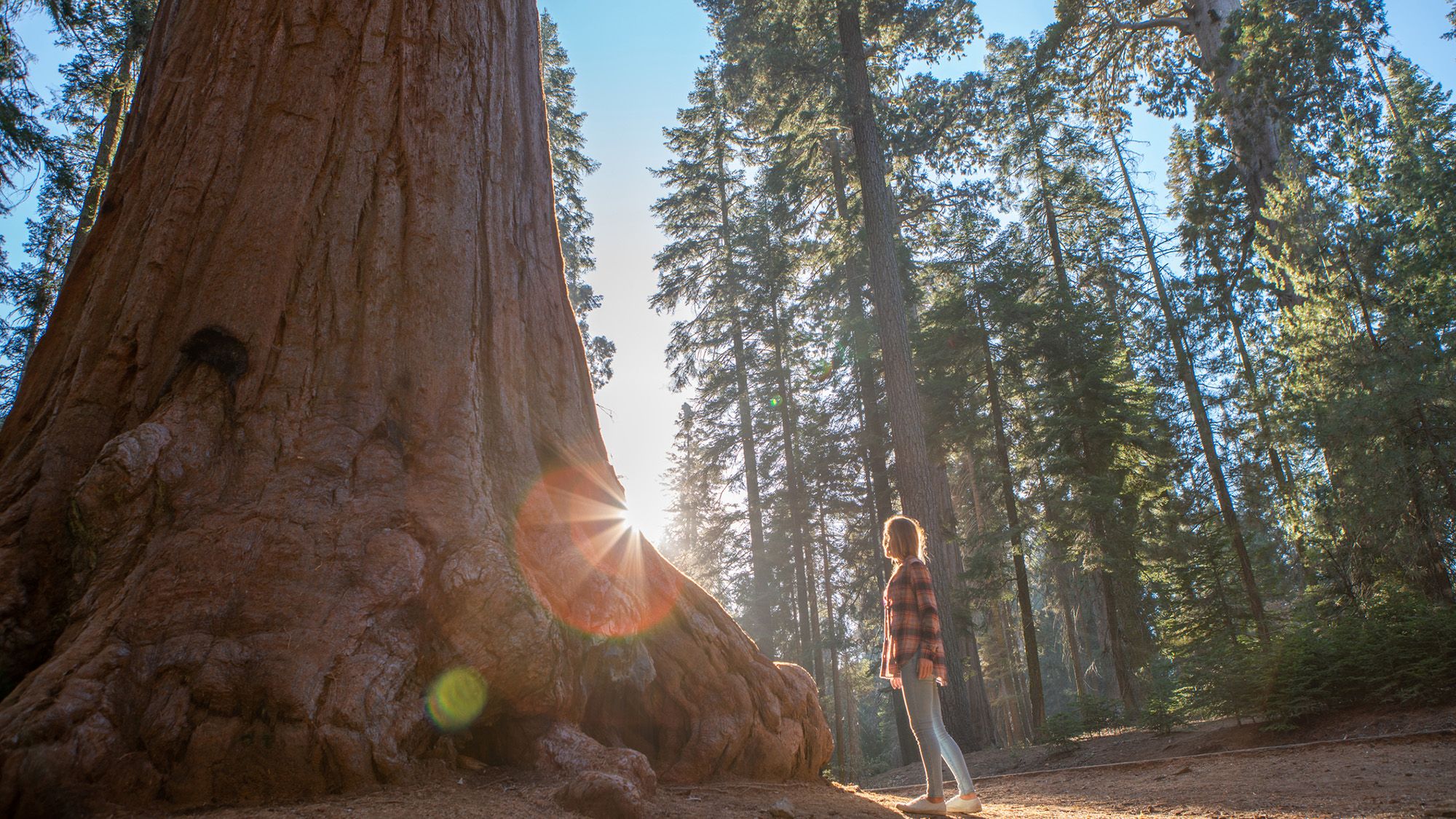
California’s coastal redwoods (Sequoia sempervirens) form one of the largest above-ground carbon stores on Earth. Native to central and northern California, these towering trees evolved in a region known for historically mild weather.
But climate change is altering the conditions in which redwood forests developed. The trees’ range has already been significantly reduced, while California has experienced more extreme heat, including days when temperatures rise above 100 degrees Fahrenheit (37 degrees Celsius).
Heat slows redwood photosynthesis
A study published Sept. 22 in JGR Biogeoscience found that California redwoods struggle to maintain photosynthesis during hot conditions.
Photosynthesis is the process plants use to convert sunlight, carbon dioxide and water into sugar and oxygen. It provides plants with energy and allows forests to remove carbon dioxide from the atmosphere.
“These trees were adapted to grow in very warm environments, so no one had really looked at the effect of heat on photosynthesis,” said lead author Lily Klinek, a doctoral candidate in the Plant Optics Laboratory at the University of California, Davis.
Redwood leaves can become much hotter than the air
From 2022 to 2024, Klinek and her colleagues studied how redwood leaves responded to heat in Mendocino County’s Garcia River Forest. The researchers collected leaf samples from three California redwood species once or twice a month and measured their fluorescence and temperature.
Fluorescence provides an indirect way to assess photosynthesis. When plant molecules absorb sunlight, the energy can be used for photosynthesis, released as heat or reflected as light through fluorescence.
The researchers also wrapped leaves in aluminum foil for 20 minutes before testing them. This allowed the leaves to return to a resting state, enabling the team to measure their maximum photosynthetic rate after exposing them to pulses of light at photosynthesis-related wavelengths.
On hot, sunny days, the researchers found that redwood leaves could become up to 18 degrees Fahrenheit (10 degrees Celsius) warmer than the surrounding air.
“This is a big difference and indicates that the leaves are stressed to the point where they can’t regulate temperature effectively,” Klinek said.
Why redwood leaves close their stomata
Many plants regulate leaf temperature and photosynthesis through microscopic openings called stomata. These pores allow carbon dioxide to enter while oxygen and water vapor leave the plant.
During hot conditions, stomata may close to limit water loss through evaporation. However, closing the pores also reduces the amount of carbon dioxide entering the leaf, which can slow photosynthesis and reduce the energy available to the plant.
The large difference between air temperature and leaf temperature suggested that redwood leaves were closing their stomata to avoid losing water and overheating, Klinek said.
Heat directly limits the trees’ carbon storage capacity
To determine whether stomatal closure was the only cause of reduced photosynthesis, the researchers brought leaf samples into the laboratory. They submerged the samples in water and exposed them to different temperatures while the leaves’ stomata remained open.
Photosynthesis still declined as temperatures increased. This indicates that heat directly limits the redwoods’ photosynthetic ability, rather than reducing photosynthesis only by causing stomata to close.
The finding suggests that rising temperatures could reduce the trees’ capacity to capture carbon and store it in their tissues.
“It’s not just stomatal closure that causes reduced photosynthesis,” said Lucy Rowland, an ecologist at the University of Exeter in the United Kingdom who was not involved in the study.
“These trees are already experiencing the direct effects of heat on their photosynthetic systems.”
Could heat damage redwood forests permanently?
The long-term consequences for redwoods and similar plants remain uncertain. Researchers do not yet know when heat-related stress becomes irreversible, or whether the changes observed in individual leaves can be reversed after temperatures fall.
“At what point this damage becomes irreversible is not yet well understood, but it is very important to understand if we want to predict how future climate will affect plants,” Rowland said.
Klinek’s next step is to study how heat affects entire trees and ecosystems, rather than individual leaves. More research is needed to determine how redwood forests respond to prolonged heat and drought and what those changes could mean for their future role as carbon stores.
Klinek, L., Au, J., Rodriguez-Caton, M., Rao, M. P., Fety, L., Koch, G. W., and Magney, T. S. (2026). “Summer heat stress downregulates photochemistry in coastal redwoods.” Geophysical Research Journal, 131(9).
Source: www.livescience.com