


Japan Launches MMX Mission to Return Samples From Mars’ Largest Moon
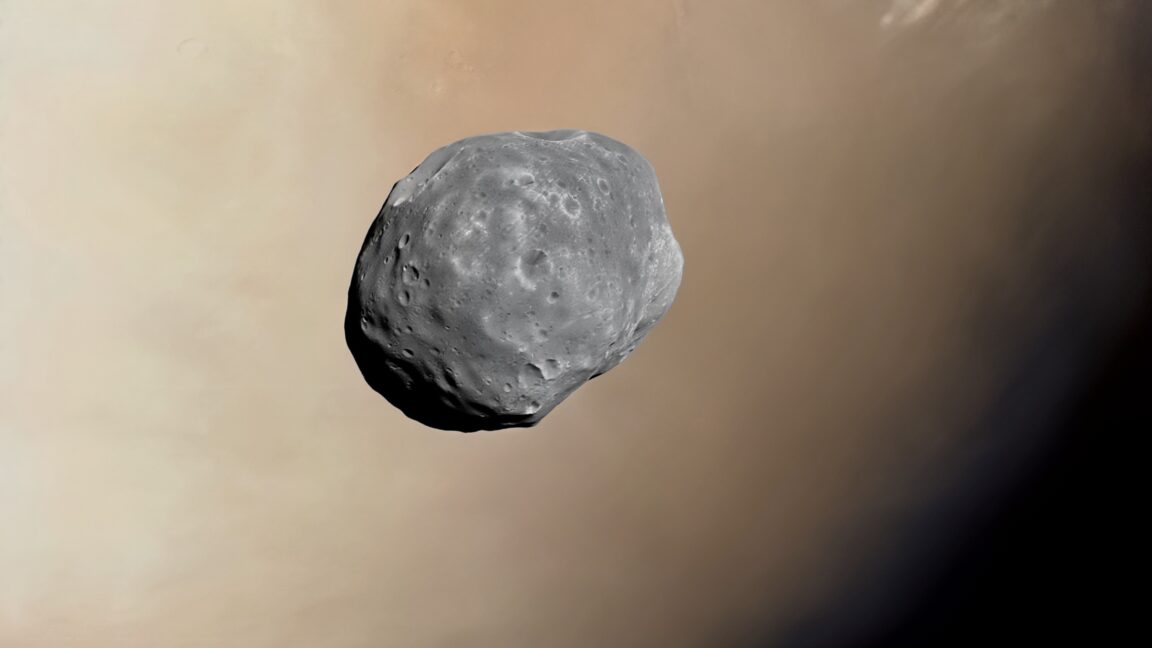
Japan has launched a $578 million, five-year mission to land on Phobos, Mars’ largest moon, and return samples to Earth. The ambitious international project could provide new insights into the formation of the solar system.
The robotic Mars Moon eXploration mission, known as MMX, lifted off from the Tanegashima Space Center in southern Japan at 3:41 p.m. EDT Monday (4:41 a.m. Tuesday JST).
MMX launched aboard Japan’s 207-foot (63-meter) H3 rocket, the country’s flagship launch vehicle. The rocket used for the mission featured a new configuration with four strap-on solid rocket boosters, a full-throttle main engine and an expanded payload shroud designed to accommodate Japan’s heaviest and most ambitious interplanetary mission to date.
The rocket’s upper stage accelerated the MMX spacecraft to more than 24,000 miles per hour, fast enough to escape Earth’s gravity during its 10-month journey to Mars. The spacecraft weighs approximately 9,900 pounds (4.5 metric tons), with propellant accounting for about two-thirds of its mass. MMX separated from the H3 rocket approximately 71 minutes after liftoff.
Japan’s H3 rocket launched from Japan’s Tanegashima Space Center on an MMX mission.
Credit: JAXA
MMX spacecraft is in stable condition after launch
Hiroshi Yamakawa, chairman of the Japan Aerospace Exploration Agency (JAXA), declared the launch a success.
“This long five-year journey has just begun,” Yamakawa said.
JAXA mission project manager Yasuhiro Kawakatsu said MMX was in a “very stable state” after establishing contact with ground controllers, deploying its solar panels and separating from the H3 rocket.
“So far, so good,” Kawakatsu said.
Japan’s Minister of Science, Yoshihiro Seki, described MMX as a challenging mission that aims to become the world’s first to return samples from a moon of Mars.
“I hope that the results obtained through this mission will contribute to the development of space science and exploration technology in Japan,” Seki said.
MMX builds on Japan’s asteroid-sample-return legacy
The mission builds on Japan’s success with the Hayabusa and Hayabusa2 spacecraft, the world’s first two missions to return pristine samples from asteroids.
Scientists believe Phobos may itself be an asteroid captured by Mars billions of years ago. One of MMX’s primary scientific goals is to determine whether that theory is correct.
Source: arstechnica.com