


Orionid Meteor Shower Peaks This Week: How to See Shooting Stars From Halley’s Comet
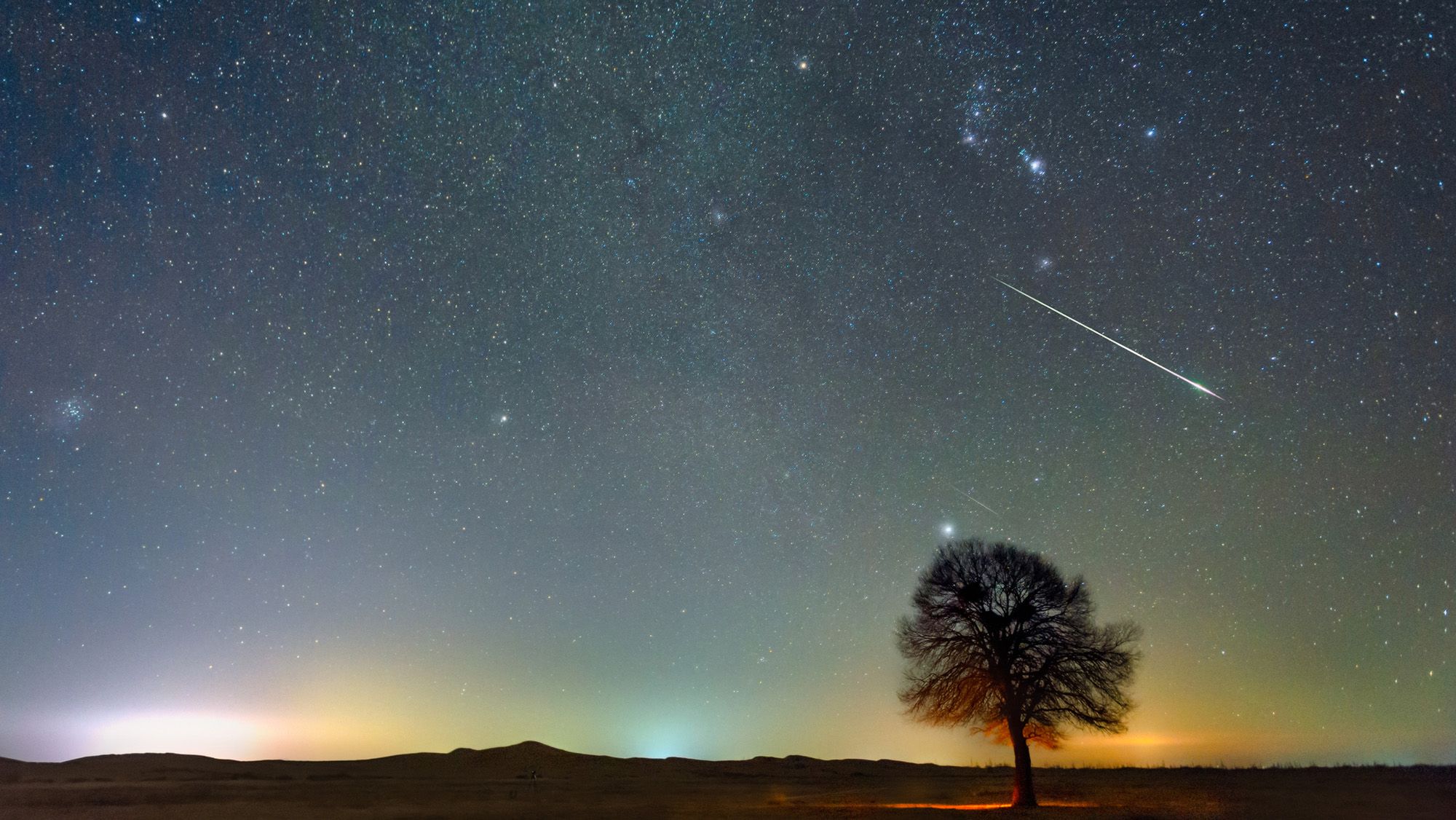
The Orionid meteor shower, one of autumn’s best annual meteor displays, will peak overnight from Wednesday, October 21, into Thursday, October 22. Under dark skies, skywatchers could see about 20 meteors per hour as fragments of Halley’s Comet streak through Earth’s atmosphere.
The Orionid meteor shower occurs when Earth passes through debris left behind by Halley’s Comet. The famous comet last passed through the inner solar system in 1986 and is expected to return in 2061.
What causes the Orionid meteor shower?
Halley’s Comet is currently beyond the orbit of Neptune, according to The Planets Today. However, the comet does not need to be close to Earth for its debris to create a meteor shower.
Whenever a comet travels through the inner solar system, heat from the Sun releases dust and rocky particles along its path. When Earth passes through one of these debris streams, the particles collide with and vaporize in the atmosphere, producing the bright streaks commonly called shooting stars.
Why the Orionids are worth watching
The Orionids are among the fastest meteor showers visible from Earth. Their meteors enter the atmosphere at about 41 miles per second, or 66 kilometers per second.
That speed can produce bright streaks, occasional fireballs and persistent trains—glowing trails that remain visible briefly after a meteor has disappeared. The shower is best observed with the naked eye, although binoculars or a small backyard telescope can add to the stargazing experience.
When and where to watch the Orionid meteors
This year’s peak comes with a challenge: the Moon will be about 71% illuminated, brightening much of the night and making fainter meteors harder to see. However, the Moon is expected to set early Thursday morning, creating a short window of darker skies before dawn.
The constellation Orion will also be high in the sky during the hours before sunrise. The Orionids appear to radiate from the direction of Orion, which is why the meteor shower has its name. You do not need to look directly at Orion, however. Meteors farther from the radiant can create long, dramatic streaks across the sky.
Halley’s Comet creates two meteor showers
The Orionid meteor shower is not the only annual meteor display associated with Halley’s Comet. Earth encounters the comet’s debris twice each year as its orbit intersects Earth’s orbit at two different points.
The first encounter produces the Orionids in late October. The second creates the Eta Aquarid meteor shower in early May. Each meteor is a tiny fragment of Halley’s Comet, continuing a journey that began centuries ago.
Quick tips for viewing the Orionids
- Watch before dawn on Thursday, after the Moon has set.
- Choose the darkest location available.
- Use your unaided eyes to take in as much of the sky as possible.
- Look around the sky near Orion rather than focusing only on the constellation itself.
- Be patient: meteors may appear sporadically, even during the shower’s peak.
Source: www.livescience.com