


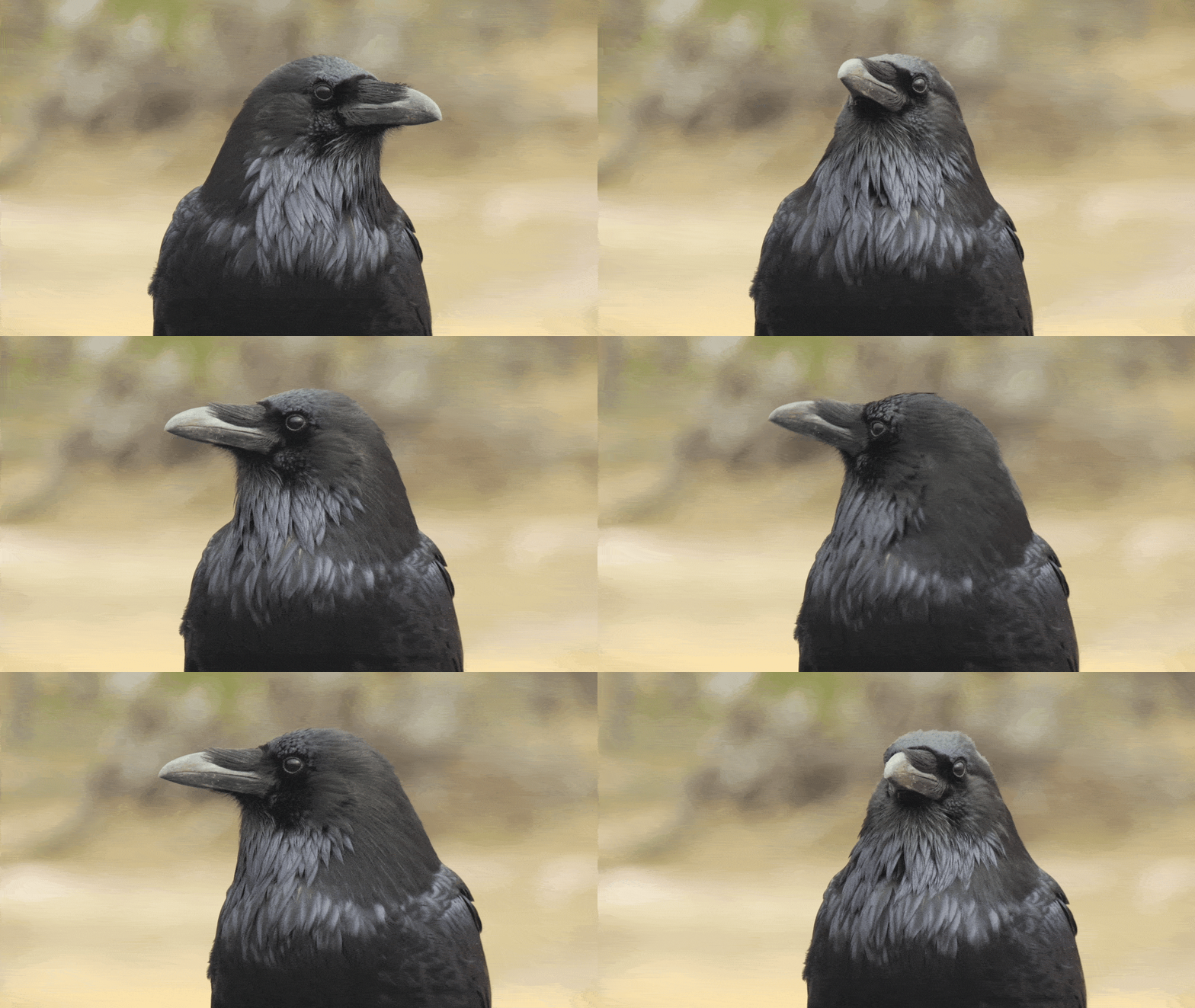
Crows Make Split-Second Decisions Faster Than Humans and Monkeys, Study Suggests
Crows are known for using tools, remembering individual people and even gathering around dead members of their species. New research suggests these highly intelligent birds can also make certain visual decisions remarkably quickly—potentially faster than humans and monkeys.
In a study published in the journal Science, researchers found that two carrion crows (Corvus corone) could identify the direction of moving dots on a screen in an average of 235 milliseconds—less than a quarter of a second.
The experiment did not directly compare crows with humans or monkeys performing the exact same tasks. However, previous research suggests that people and monkeys take approximately twice as long to complete comparable self-paced visual movement tasks.
How crows made decisions in less than a quarter of a second
Researchers trained two carrion crows to complete visual tasks on a touchscreen. The birds saw a cloud of white dots moving across a black background. Some dots moved to the left or right, while others moved randomly.
The crows had to identify the overall direction of movement and peck the corresponding target on the screen to receive a mealworm reward.
By changing the proportion of dots moving together, the researchers made the decisions easier or more difficult. When most of the dots moved in the same direction, the correct answer was obvious. When only a small number moved together, the visual evidence was less clear.
When many dots moved clearly in the same direction, the crows achieved nearly 100% accuracy. Even when only 3% of the dots moved in unison, the birds performed far better than chance, answering correctly about 50% of the time.
The crows maintained high accuracy across different rounds of the experiment, suggesting that they did not sacrifice judgment for speed.
What happens inside a crow’s brain?
To investigate how the birds made decisions so quickly, the researchers recorded activity from 248 neurons in the crows’ brains.
The study focused on the nidopallium caudolaterale, or NCL. This region is considered functionally comparable to the prefrontal cortex in humans and other primates.
Birds do not have the layered cerebral cortex found in mammalian brains, but the NCL performs similarly sophisticated functions. In primates, neurons accumulate sensory information until their activity reaches a critical threshold and the brain makes a decision. The new findings suggest that crows may use a similar process.
“The larger implication is that the brain does not need the mammalian neocortex to perform advanced calculations,” study co-author Andreas Nieder, a professor of animal physiology and director of the Institute of Neurobiology at the University of Tübingen in Germany, told Live Science.
The researchers were able to predict the crows’ eventual choices from their neural activity as early as 70 milliseconds after the dots appeared. That was approximately 170 milliseconds before the birds made their behavioral response by pecking the screen.
Why might crows make decisions so quickly?
The crows’ rapid decision-making may reflect the demands of their everyday lives.
“Flight places tremendous demands on visual processing and sensorimotor abilities,” Nieder said. Birds must navigate a three-dimensional environment, avoid obstacles and react quickly to moving objects. Finding food and catching prey may also require fast, accurate judgments.
These pressures may have helped birds evolve rapid information-processing abilities. However, scientists do not yet know why crows appear to outperform primates in this particular type of decision-making.
What the study reveals about animal intelligence
The study included only two birds and did not directly compare them with primates under identical experimental conditions. Further research will be needed to confirm the findings and determine how crow decision-making compares with that of humans and monkeys.
Still, the results raise broader questions about how scientists define intelligence. Rather than assuming that the mammalian brain is the blueprint for intelligent behavior, researchers can compare different species to identify which computational principles are shared—and which reflect adaptations to specific environments.
Are you a bird expert? Test your knowledge with our bird quiz.
Source: www.livescience.com