


The Age of Alchemy: How Ancient Discoveries Shaped Modern Chemistry
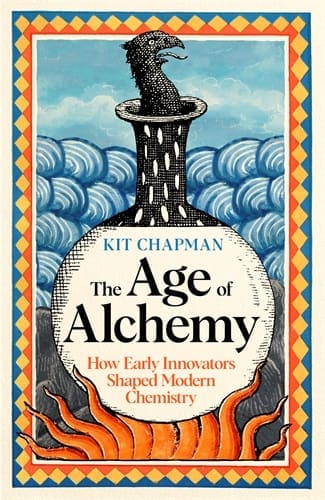
Centuries before chemistry became a formal science, people experimented with fire, minerals, plants, metals and other substances to solve practical problems, treat illness and create valuable products. In his book The Age of Alchemy: How Early Innovators Shaped Modern Chemistry (Profile Books, 2026), author Kit Chapman explores how ancient alchemy laid the foundations for modern chemistry.
From the earliest human use of fire to spectacular and sometimes dangerous experiments in the 14th-century French court of Charles VI, Chapman follows the global history of alchemy. His book shows how artisans, healers, traders and scholars developed techniques that eventually transformed the way we understand matter.
Live Science spoke with Chapman about The Age of Alchemy, which has been shortlisted for the 2026 Royal Society Trivedi Science Book Prize.
Kit Chapman
Kit Chapman is an award-winning science journalist and adventurer who has visited more than 100 countries while researching historic discoveries and innovations. His first book, Superheavy, was a finalist for the AAAS SB&F Prize. His second book, Racing Green, was named the RAC Motorsport Book of the Year in 2023. His latest book, The Age of Alchemy, has been shortlisted for the Royal Society Trivedi Science Book Prize. Chapman holds a master’s degree in pharmacy from the University of Bradford and a PhD in the history of science from the University of Sunderland. A former editor at Chemistry World, he is currently an honorary researcher at Falmouth University in the U.K.
The accidental discovery of phosphorus
Hannah Osborne: Your book is filled with fascinating stories that place major alchemical discoveries in their historical context. Which story is your favorite?
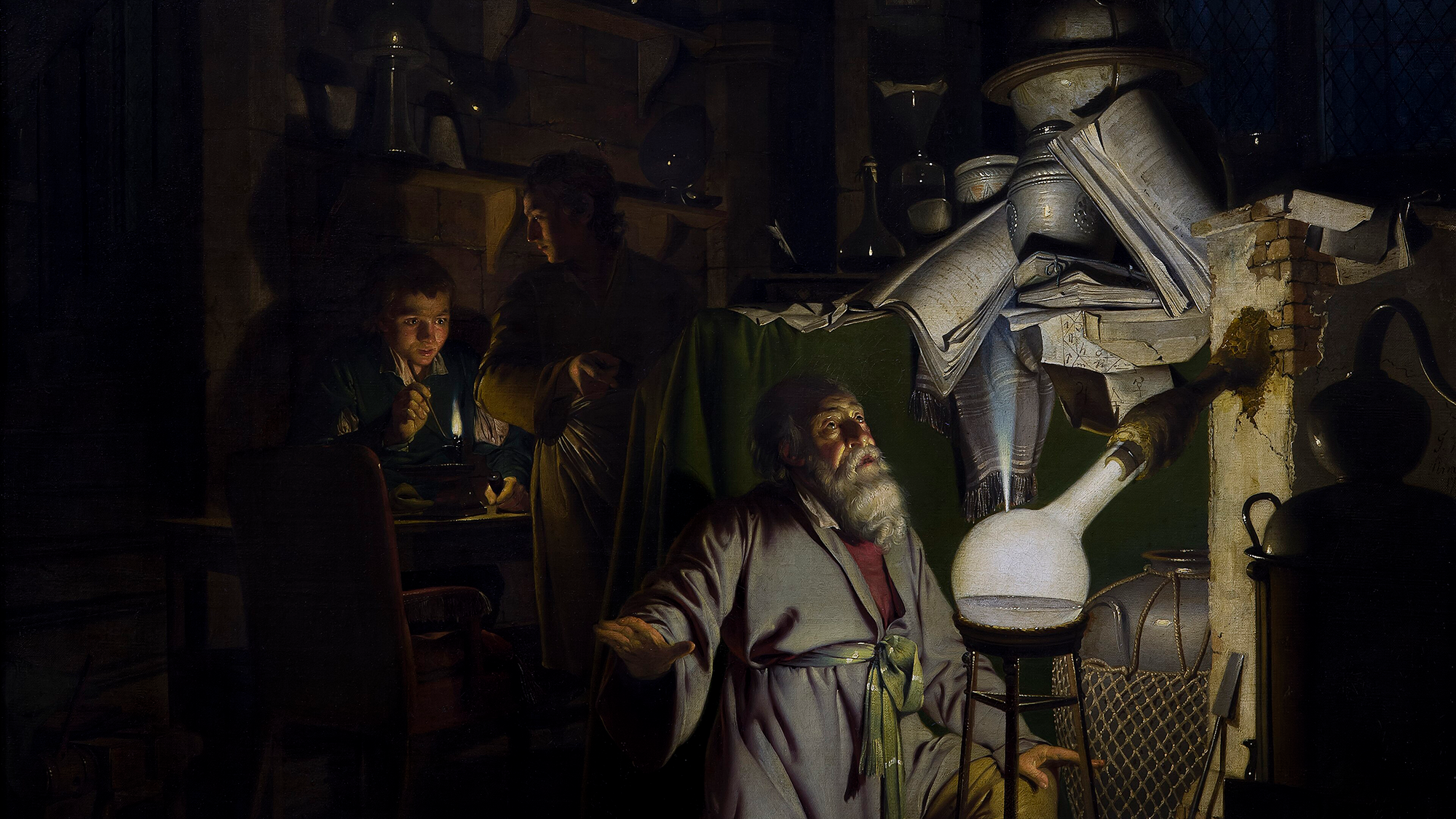
Kit Chapman: You cannot go far wrong with a man trying to turn his own urine into gold. Hennig Brand, who accidentally discovered phosphorus in the 17th century, was one of the stories that helped shape the book.
Brand had heard that gold might be produced through unusual chemical processes. He spent a fortune pursuing the idea and used around 1,500 gallons, or 5,700 liters, of urine in his experiments. He even bankrupted two wives while trying to fund his work. Against all odds, he produced phosphorus: a substance that glowed in the dark and seemed almost magical.
This was one of the first discoveries of a chemical element that can be linked to a named individual. Brand initially kept the process secret, but eventually sold the information to a friend. His glowing phosphorus was displayed to European kings and queens before the chemist and philosopher Robert Boyle worked out what was happening.
The story captures the central themes of alchemy: human ambition, secrecy, mythology, commerce and genuine experimentation. Brand did not understand the chemistry behind his process, but his practical work produced a discovery that would influence science for centuries.
Alchemy was part of everyday life
HO: Early experimenters were not thinking of themselves as chemists. Why is that distinction important?
KC: It is essential. We often treat science as something separate from ordinary life, but science has always been present in homes, workshops, farms, markets and human bodies. People were experimenting whenever they baked bread, made pottery, dyed textiles, brewed drinks, prepared medicines or worked with metals.
Science is a way of understanding the world. It is not separate from culture, religion, trade, globalization or survival. That is why I wanted to include potters, weavers, bakers, artisans and even the people who sold urine for experimental purposes. Their work shows that the history of chemistry did not begin in a modern laboratory.
Early chemical techniques were also driven by beauty and creativity. People developed pigments, perfumes, cosmetics, glass, ceramics and metalwork not only to survive, but also to create objects and experiences that were visually and emotionally powerful. Some of the most important discoveries emerged while people were pursuing art, luxury or personal expression.
Tappūtī Bēlet-ekallim: an ancient female perfumer
HO: One chapter focuses on Tappūtī Bēlet-ekallim, a female perfume maker in ancient Assyria. What makes her story so significant?
KC: Tappūtī Bēlet-ekallim is one of the earliest named people associated with practical chemistry. We know her name because she recorded a perfume recipe in cuneiform. She worked in a palace and may have been enslaved, as many perfume makers were. Another woman worked alongside her, although that colleague’s name has been lost.
The recipe is remarkably detailed. Tappūtī documented the process of producing a complex fragrance, yet we know nothing about the ruler or aristocrat who commissioned it. Her story shows how the technical achievements of working people, including women and enslaved people, often survive more clearly than the names of those who paid for their work.
Why ancient alchemical knowledge was hidden
HO: Many ancient texts were deliberately kept secret, while others disappeared when civilizations collapsed. How much knowledge was lost?
KC: Both secrecy and political upheaval played a major role. Craftspeople treated successful recipes as trade secrets because they did not want competitors to copy their techniques. The title of one of the earliest known alchemical works, Physika Kai Mystika, can be translated as “natural and secret questions” or “trade secrets.”
Alchemical writers also used symbolic language and code words. References to a fiery sword in the belly of a dragon, for example, could describe a chemical process in a way that was memorable but difficult for outsiders to understand.
Politics created another threat. The Roman emperor Diocletian is said to have ordered the destruction of alchemical texts in Alexandria around 300 A.D. The fear was that a process for creating gold could undermine the currency and destabilize the empire. The episode demonstrates how alchemy was connected not only to science, but also to power, economics and human anxiety.
Ancient remedies still influence modern medicine
HO: Could ancient alchemy still lead to new discoveries?
KC: There is almost certainly more to learn, especially from natural products and historic medical recipes. We may not uncover a single ancient formula that changes the world overnight, but old texts can point researchers toward useful compounds and forgotten techniques.
A powerful example is the discovery of artemisinin. Nobel Prize-winning chemist Tu Youyou developed an important malaria treatment by studying traditional Chinese medical texts, including a recipe connected to the qinghao plant. That medical knowledge had roots in an alchemical herbal remedies book written around 1,700 years ago.

Nobel Prize winner Tu Youyou
(Image credit: STR / Stringer via Getty Images)
Researchers are still piecing together how ancient alchemists understood materials and chemical reactions. Greek fire is another example. Historians have a strong idea of how the Byzantine weapon may have worked, but its precise formula remains unknown.
Scientific secrecy can slow progress
HO: Modern researchers also protect information through patents and competition. Is that similar to ancient scientific secrecy?
KC: There are similarities. Modern science has a “publish or perish” culture, and researchers may compete to publish first, secure a patent or receive recognition. There have even been cases in which researchers delay the review or release of another scientist’s work.
However, modern science depends on collaboration. The idea that scientific progress is driven only by one exceptional individual is outdated. Research teams, shared data and international cooperation are essential. One of the clearest lessons from the history of alchemy is that hiding knowledge delays progress.
“Every continent was making scientific discoveries and developing new technologies. Science has always been a global endeavor.”
The printing press helped accelerate this process by making ideas easier to share. The Renaissance and the development of modern chemistry were made possible, in part, by the wider circulation of practical knowledge. Science is not limited by nationality, ethnicity, gender or social class; it is an activity open to everyone.
Alchemy and the global history of science
HO: Why are so many chemistry textbooks focused on Europe?
KC: Traditional accounts often credit European figures with discoveries that were actually based on knowledge developed elsewhere. Platinum is a useful example. A Spanish conquistador described Indigenous people working with the metal, but that does not mean he discovered platinum. Indigenous populations already knew how to identify and use it.
The same pattern appears in the histories of zinc, metallurgy, medicine and materials science. Major innovations emerged in India, Africa, China, Mesoamerica, South America and North America, as well as Europe. These developments did not always lead directly to modern chemistry, but they solved important social, medical and technological problems in their own historical contexts.
To understand the history of alchemy, we must look beyond familiar European names and recognize the contributions of Indigenous peoples, women, artisans and working communities around the world.
Paracelsus and the birth of experimental medicine
HO: Which historical breakthrough impressed you most considering the limited tools available?
KC: Paracelsus is a fascinating example. He was an unconventional physician who challenged the prevailing theory of humors, the belief that health depended on four bodily fluids: blood, phlegm, black bile and yellow bile.
Paracelsus held some strange beliefs, including the idea that mermaids were real and wanted to steal men’s souls. Yet he also argued that doctors should examine patients and test treatments rather than rely solely on observation and inherited theories. At the time, some physicians believed they could diagnose illness without physically examining the patient.

A painting of Paracelsus.
(Image credit: GL Archive via Alamy)
By combining the traditions of herbal medicine with direct observation and experimentation, Paracelsus helped move medicine toward a more evidence-based approach. That shift ultimately saved countless lives and helped establish the principles of modern medical science.
Lavoisier and the transformation of chemistry
Another major turning point came with Antoine Lavoisier during the French Revolution. Lavoisier helped establish the principle that matter is conserved during ordinary chemical reactions: substances can change form, but they are not created from nothing or simply destroyed.
He also contributed to a more systematic understanding of chemical elements and helped replace the language of alchemy with precise measurement and scientific classification. Lavoisier was executed by guillotine during the Revolution, but his work marked the point at which the mysteries of alchemy began to give way to modern chemistry.
Science belongs to everyone
HO: What was your most important takeaway from researching and writing the book?
KC: My biggest takeaway is that science happens everywhere, all the time and through everyone. I traveled across the world while researching this book, and everywhere I went I found people developing ways to improve their lives and solve local problems.
Science is not reserved for an elite group. Even people who believe science is not for them are using observation, testing ideas and learning from results every day. Those are scientific activities.
The research also highlighted how often women have been excluded from the traditional history of science. Figures such as Tappūtī Bēlet-ekallim, Mary the Jewess, Caterina Sforza and Queen Christina of Sweden demonstrate that women played important roles in alchemy, medicine and scientific experimentation.
One particularly revealing example is The Secrets of Isabella Cortese, a science and alchemy book attributed to a woman, although its author was actually a man using a female identity. The story exposes the assumptions and barriers that have shaped the way scientific knowledge was recorded and remembered.
This interview has been condensed and lightly edited for clarity.
Profile Books
The Age of Alchemy (Hardback)
The Age of Alchemy is an engaging exploration of chemistry before chemistry existed. Kit Chapman reveals how early innovators across cultures used natural materials, practical experimentation and creative problem-solving to shape the science of the modern world.
TOPICS
Source: www.livescience.com