


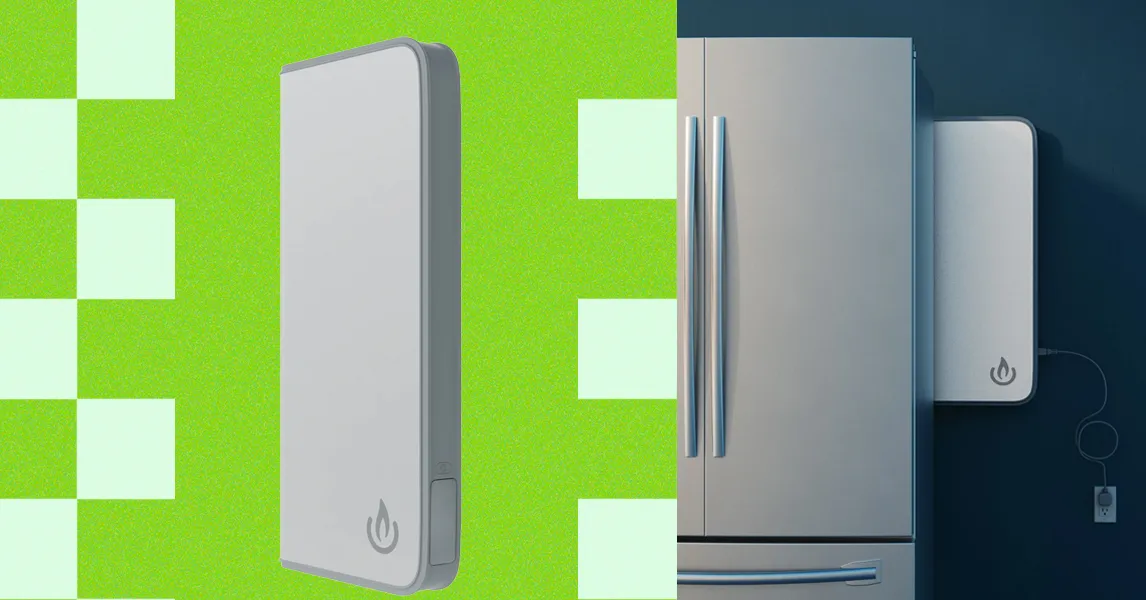
BioLite’s home battery backup system can do more than keep essential appliances running during a power outage. When paired with a utility’s Time of Use (TOU) electricity plan, it can charge from the grid during cheaper periods and power household devices when rates are higher. However, limited scheduling options, a lack of energy-use logging and the system’s high price mean its strongest justification remains emergency backup rather than everyday savings.
Using a battery with Time of Use billing
After living in the house for four years on a traditional fixed-rate electricity plan, the owner researched whether the utility offered TOU billing. It did, making it possible to switch plans and test whether the BioLite batteries could reduce electricity costs by avoiding peak afternoon and evening rates.
Creating a schedule in the backup app is straightforward. Users can choose when the battery should begin operating and when the system should switch back to grid power. The app also allows charging to be paused during specific periods and lets users set a minimum limit to prevent the battery from running completely empty. Weekend schedules can be excluded if desired.
Those controls are limited, however. The app cannot create multiple charge-and-discharge cycles in a single day, which would be useful for utilities with two winter peak periods. It also cannot apply different schedules during different parts of the year, despite the utility using three separate billing schedules depending on the month. One bug appeared while saving a schedule, although force-quitting and restarting the app resolved the problem.
No detailed energy-use history
The backup app also lacks a proper logging system. Users cannot review how long the battery ran each day, how much energy was consumed during each discharge cycle, how much electricity was needed to recharge it or how much money might have been saved. The only available records are brief entries for outages, errors and software updates.
The potential savings can still be estimated. In the fall, four hours of refrigerator use between 5 and 9 p.m. would normally cost 8.6 cents per kWh. Shifting that usage to BioLite batteries charged during off-peak hours at 4.3 cents per kWh allows about 680 Wh of consumption to move from the higher rate to the lower rate each day.
Because energy losses between the grid, battery and appliances vary, the calculation is not exact. Based on those figures, the savings are about 3 cents per day, or roughly $1 per month. During the summer, when the peak rate reaches 16.2 cents per kWh, the savings could rise to as much as $3 per month. That is not a major financial return, but it is still a reduction in electricity costs.
Useful backup power during outages
BioLite also includes a power strip with optional magnetic backing, allowing it to be attached to the side of a refrigerator. The strip connects to a second backup outlet and provides three standard outlets, two USB-A ports and two USB-C ports. Although it was not used because there was no convenient place to install it or device to connect, it could be useful during a winter outage when additional equipment needs power.
With an output of 1,800 watts, the battery can run appliances ranging from a microwave to an air fryer. That gives the system value beyond protecting refrigerated food during an outage, since it can also support cooking while the rest of the home is without electricity.
At $1,999 for one battery or $3,499 for a pair, the economics are difficult to justify through TOU savings alone. In practical terms, the system’s main benefits are emergency-related: it can help prevent hundreds of dollars’ worth of groceries from spoiling during an unexpected ice storm and keep essential cooking appliances available when the power is out.
Source: www.wired.com