


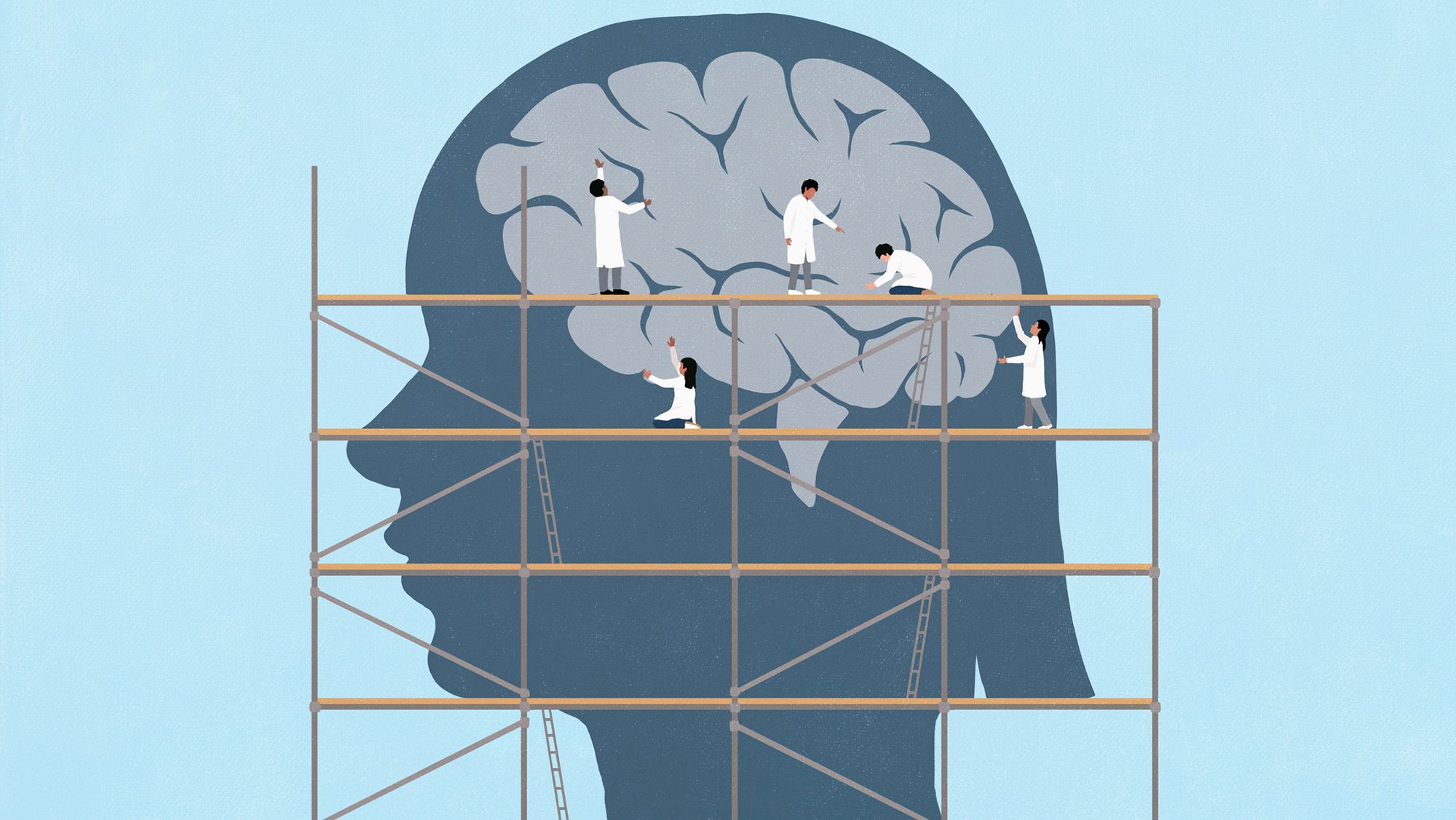
The next edition of the Diagnostic and Statistical Manual of Mental Disorders, DSM-6, may expand psychiatric diagnosis beyond symptoms and clinical interviews by incorporating biological information. Dr. Anand Kumar, a psychiatrist at the University of Illinois at Chicago and a former member of the DSM Strategy Committee, says the framework could eventually include genetic risk, immune-system activity and other biological factors. These measures are not expected to replace clinical diagnosis, but they could provide a fuller explanation of mental disorders and help clinicians tailor treatment.
For decades, psychiatrists and other mental health professionals have used the Diagnostic and Statistical Manual of Mental Disorders, or DSM, to diagnose conditions including major depression, anorexia and post-traumatic stress disorder (PTSD). Clinicians typically identify symptoms and build a clinical picture through interviews, medical histories, questionnaires and observation.
In DSM-6, scientists plan to consider additional elements. One of the most significant potential changes is the introduction of biological factors into the diagnostic framework, including findings from hundreds or thousands of genome-wide association studies, signs of inflammation and immune-system dysfunction, and information from blood tests or brain scans.
Moving beyond symptom-based categories
Dr. Anand Kumar, who served on the DSM Strategy Committee for two years, said the current system largely divides conditions according to clinical evidence: patients who meet one set of criteria receive one diagnosis, while those who meet another set of criteria receive another. Kumar is chair of the Department of Psychiatry at the University of Illinois at Chicago. He is not currently a member of the DSM committee, but he has contributed to discussions about incorporating biology into DSM-6.
“The current effort, one of the major efforts for the next DSM, is to introduce biological elements into the manual,” Kumar said.
The idea is not new. Researchers and clinicians have debated it in the past, but it has been difficult to reach agreement about which biological findings should be included. Kumar said there is now broader recognition that the DSM can begin incorporating biology, even if the process remains incomplete.
“At the end of it, it is very likely that there will be meaningful change in a positive sense,” he said. “There will be gaps, but the idea is to improve them step by step and make them more modern as we go along.”
Most psychiatric conditions lack definitive biomarkers
Unlike some neurological diseases, most psychiatric conditions do not currently have a single diagnostic biomarker. There is no blood test or brain scan that can definitively show that a person has depression, PTSD or schizophrenia.
Kumar said the DSM committee has therefore discussed a broader concept: biological factors that may reflect pathways or mechanisms involved in a disorder, even when those discoveries have not yet become clinical tests.
Immunology is one example. Research suggests that immune-related processes are involved in approximately 30% of cases of major depression. However, there is currently no single clinical test that can diagnose immune-mediated depression. For now, such findings would be considered biological factors rather than definitive biomarkers.
Alzheimer’s disease provides a contrast. There are now FDA-approved protein blood tests for biomarkers including tau and amyloid. When a patient has a clinical picture and cognitive-test results consistent with intellectual decline, a positive biomarker test can support a definitive Alzheimer’s disease diagnosis.
That level of precision was not available 10 or 15 years ago. At the time, doctors could use brain scans or a lumbar puncture to look for proteins in spinal fluid, but those procedures are invasive. Blood testing offers a less invasive way to detect the same types of biological signals.
“However, this level of precision is not available in other fields of psychiatry,” Kumar said. “Nevertheless, there are clues that other pathways and mechanisms are involved.”
Genetics may describe risk, not destiny
Genetics is another major area under consideration. Kumar said the public often thinks of a mutation as a single abnormal gene that directly causes a disease. That model can apply to some conditions, but complex diseases such as heart disease and diabetes usually involve many genes, along with environmental and physiological factors.
In these conditions, a genetic variant may not cause disease on its own. Instead, it may increase a person’s risk. Mental disorders are even more complex: hundreds of genes may each contribute a small amount to the risk of depression, schizophrenia or anxiety disorders.
There is no single genetic test for these conditions. However, recent research has identified many genetic variants that are strongly associated with particular disorders. Kumar said the complexity of these patterns should not be a reason to disregard them.
“Just because it’s complicated doesn’t mean we throw up our hands and say, ‘That’s too much,’” he said.
Genetic profiles are better understood today than they were 20 years ago. Kumar said the DSM committee is considering how this information could be incorporated into diagnostic categories without turning it into a simple biological test.
Biological information would supplement diagnosis
Kumar does not expect genetic information to replace clinical diagnosis. Mental disorders, like many other medical conditions, tend to run in families, and genetics is the most plausible explanation for at least part of that pattern.
“Although the diagnosis is still clinical, this provides a biological background very similar to things like diabetes and heart disease,” Kumar said.
He compared the approach with the way cardiologists assess heart-disease risk. A risk profile may include genetics, body mass index (BMI), diet and environmental factors rather than a single gene or measurement. Psychiatry does not yet have an equivalent level of classification, but the inclusion of biological information could be an initial step toward a more detailed understanding of why mental disorders develop.
Kumar said he does not see major risks in adding these factors, provided clinicians do not treat genetic findings as definitive tests. Biological information would be used to add context to a diagnosis, not to determine a person’s identity or future with certainty.
Shared risks could influence treatment
Biological information could also help clinicians account for comorbidities, or conditions that occur together. People diagnosed with depression may also have an anxiety disorder, while people with anxiety disorders may also develop substance-use or alcohol-use problems.
These overlaps may partly reflect shared genetic and psychological risks. Approximately 45% of patients diagnosed with a severe mood disorder also have an anxiety disorder. Conversely, approximately 45% of patients diagnosed with an anxiety disorder — including generalized anxiety disorder, PTSD or a phobia — also have a mood disorder.

Rather than treating these conditions as entirely separate diseases, clinicians could consider how they share psychological and genetic risk factors. Patients with mood disorders may develop anxiety disorders later, while people with anxiety disorders may be at increased risk of substance use.
“Therefore, treatment may need to be tailored a little more extensively,” Kumar said. He hopes clinicians will consider these connections when discussing treatment with patients and their families.
A conceptual shift for psychiatry
Kumar said his own perspective is particularly focused on biology. Other factors, including culture and cognitive changes such as working memory and attention, are already being evaluated and better characterized. Cognitive tests, however, are not specific to any one disorder.
Biology would be a qualitatively new element if it is introduced into the DSM. Kumar said the change would not make the manual perfect, but it could provide explanations for phenomena that have previously been difficult to account for.
“I think introducing the idea that genetics, immunology and other factors are very important in the causes of mental illness, and explaining some of the phenomena for which no explanation has been found until now — I don’t want to use the word ‘leapfrog’ — is what it’s all about,” he said.
He described the change as a conceptual progression for psychiatry rather than a small, incremental adjustment. Whether and how these proposals appear in the final version of DSM-6 remains uncertain, but Kumar said incorporating biological information could represent an important step forward.
About Anand Kumar: Dr. Kumar is the Lizzie Gilman Professor and chair of the Department of Psychiatry at the University of Illinois at Chicago. His research focuses on mental disorders in older adults, including late-life depression and Alzheimer’s disease. He served as treasurer, program chair and president of the American Geriatric Psychiatry Association from 2004 to 2005. He is an associate editor of the American Journal for Geriatric Psychiatry and serves as a reviewer on numerous NIH review committees.
Help us improve Live Science Pro: We are always striving to improve our content. Leave your feedback about Pro here.
Source: www.livescience.com