


Humanity is extracting natural resources at an unprecedented rate, damaging ecosystems and threatening access to water, food and other essentials. Two 2026 books—Kerstin Hoppenhaus’s The Elements of Life and James Crawford’s A Vanishing Earth—examine how the extraction of nitrogen, phosphorus, potassium, lithium, sand, fossil fuels and other resources is reshaping the planet, and argue that societies must move beyond unsustainable consumption.
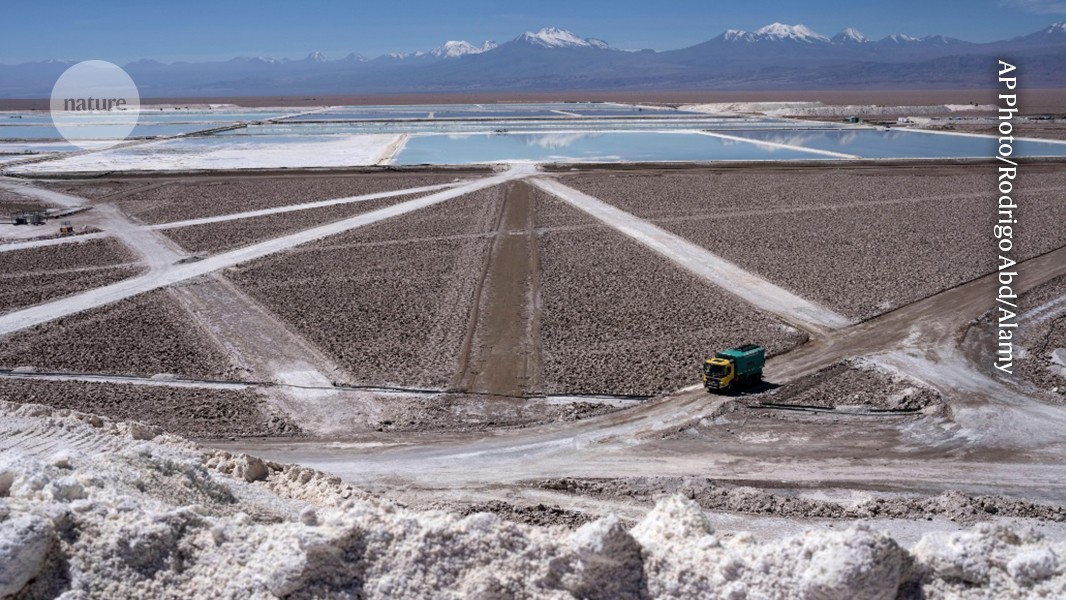
A large-scale lithium mining operation in Chile’s Atacama Desert.Credit: AP Photo/Rodrigo Abd/Alamy
The Elements of Life: How Nitrogen, Phosphorus and Potassium Nourish Us and Threaten the Planet
Kerstin Hoppenhaus
Greystone (2026)
A Vanishing Earth: Dispatches from the Harvesting Frontier
James Crawford
Bloomsbury (2026)
For much of human history, people have treated Earth as an inexhaustible source of raw materials. In the past half-century, humanity has extracted more resources from nature than in all of recorded history. As the global population grows, the rate of extraction is increasing as well.
Both books argue that unsustainable resource use must be brought to an end. In A Vanishing Earth, historian and journalist James Crawford describes his journeys through five landscapes transformed by drilling and mining.
In The Elements of Life, science journalist Kerstin Hoppenhaus examines nitrogen, phosphorus and potassium, three elements essential for plant growth. Together, the books offer an informative, non-technical introduction to humanity’s increasing use of Earth’s resources.
Unsustainable extraction
The son of a mechanical engineer who worked in extractive industries around the world—from coal seams in Scotland and copper mines in Zambia to oil rigs in the North Sea—Crawford developed an early interest in the effects of mining. He is not the first to raise such concerns. The first-century Roman naturalist Pliny the Elder wrote that mining was “driving us to ruin” and asked, “when will the earth be so exhausted?”
Today’s industrial mining operations are on a scale that Pliny could never have imagined. They create vast, sometimes uninhabitable and toxic areas known as sacrificial zones. Crawford saw the consequences firsthand when he visited the salt flats of Chile’s Atacama Desert, home to one of the world’s largest lithium reserves. Lithium batteries power technologies ranging from smartphones to electric cars, and demand for the element is expected to increase 50 times by 2040, far beyond current extraction capacity.
In Chile, the brine that supplies lithium salts has already been depleted. Crawford reports signs that the wider ecosystem is at risk of collapse, while Indigenous communities in the region are seeing their water sources depleted as mining drains reserves held in underground aquifers. The vast Salar de Atacama wetland, which is home to three species of flamingo, could soon become a dead zone without aquatic life.
The authors argue that some of the most common resources are also among the most abused. Global demand for clean water has doubled since 1960, and nearly two-thirds of the world’s population is expected to experience water stress by mid-century as intensive agriculture depletes aquifers and climate change makes droughts more frequent.
In cities, particularly in arid regions, these pressures can be intensified. Almost all of China’s major cities are sinking because of land subsidence caused by depleted aquifers. Water shortages are also putting cities from São Paulo in Brazil to Cape Town in South Africa at risk. Plans have been proposed to tow icebergs from polar regions in response to water stress, but none has yet been implemented.
If these problems are not addressed, the consequences could be devastating. Conflicts over water are predicted to become a source of global conflict, and investment firm Goldman Sachs once called water the “oil of the next century.”
Sand is the world’s second most widely used resource after water. Crawford describes how it is being overextracted as beaches around the world are mined to meet demand for sand-based construction concrete. In Vietnam’s Mekong River Delta, intensive sand removal has caused entire areas of coastal farmland to collapse into the river and sea.
Sand extraction in Sri Lanka damaged the coast, compounding the effects of rising sea levels and increasing the destructive power of the deadly 2004 tsunami. In India, illegal sand-mining operations have become so lucrative that they have become a mainstay of organized crime.

The end of Nauru’s phosphate mining left behind a barren landscape of spires.Credit: Auscape/UIG/Getty
Although oil and other fossil fuels are unlikely to run out soon, continued drilling threatens biodiversity and human health. In Ecuador’s jungles, Crawford explains how chemicals released during drilling caused cancer rates to soar in the most polluted areas.
Ecuador became the first country to vote to keep oil in the ground in a 2023 referendum, after becoming the first country to recognize legal rights for nature. Nevertheless, drilling continues in Ecuador for now. Crawford writes that this is “tying Ecuador’s entire destiny to oil.”
What can be done? Although some environmental damage is inevitable when natural resources are extracted, Crawford calls for a “restoration revolution” to repair degraded landscapes. There is no such thing as “sustainable mining”, he writes, but there must be “life after mining”.
Plant food
Source: www.nature.com