


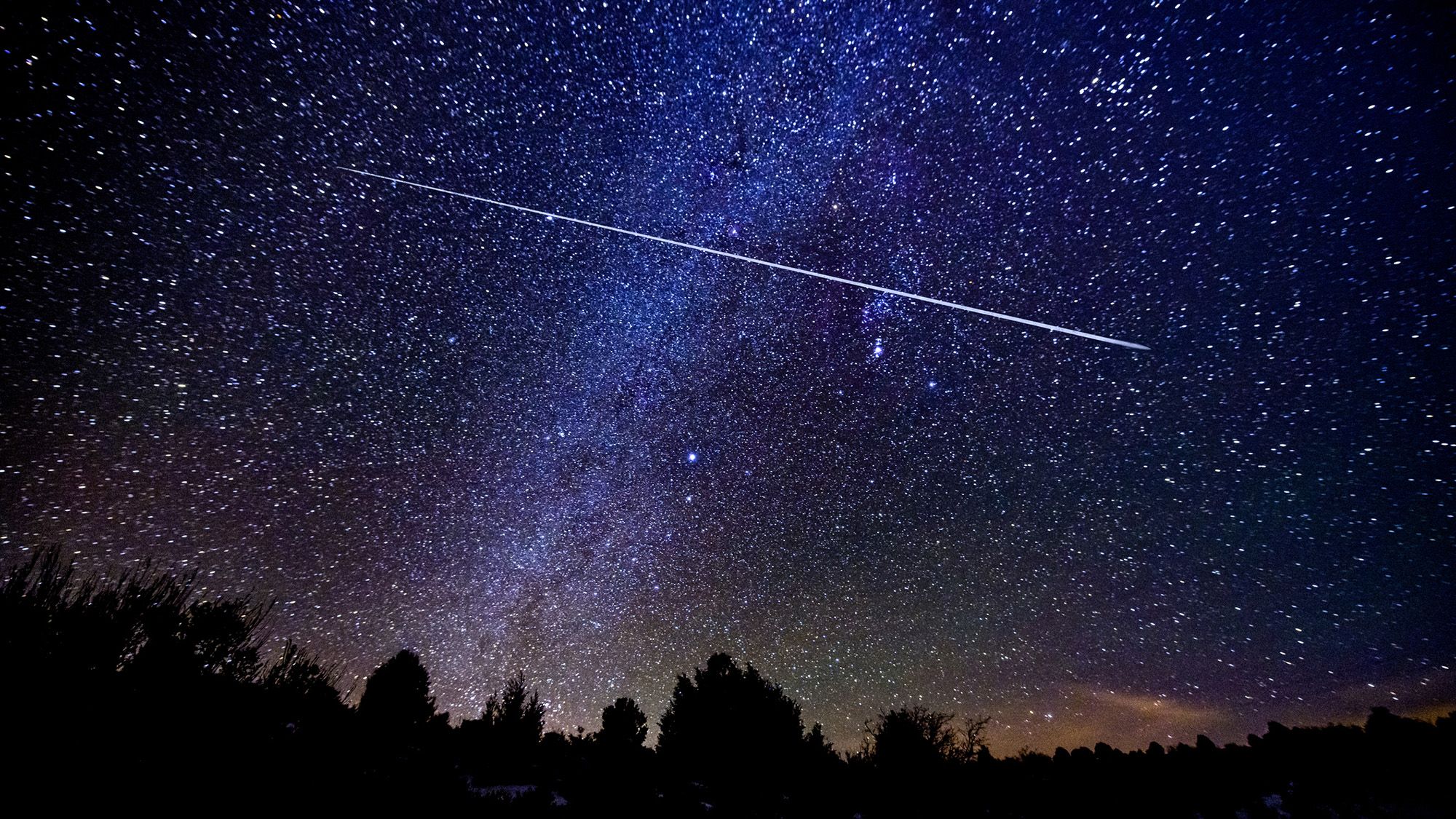
The Southern Taurid meteor shower offers one of fall’s best chances to see bright “fireballs” on the nights of Wednesday and Thursday, November 4–5. Although the shower produces only a few meteors per hour, some can briefly blaze across the sky with exceptional brightness.
When and where to watch
The Southern Taurid meteor shower remains active for several weeks in the fall and reached its broader peak on October 14, according to the American Meteor Society. Its “fireball component” is expected to peak around November 4 or 5.
Meteors can appear anywhere in the sky, but Southern Taurid meteors seem to radiate from the constellation Taurus. Taurus rises in the eastern sky during the evening and climbs higher as the night progresses, making around midnight the best time to look for shooting stars.
Unlike major meteor showers such as the Perseids, which peak on August 12–13, and the Geminids, which peak on December 13–14, the Southern Taurids have a broad peak. That means observers do not need to be outside at one precise time to see the shower.
Why the Taurids produce fireballs
The Southern Taurids are a small meteor shower, producing only a few shooting stars per hour. Occasionally, however, they generate extremely bright meteors known as fireballs, which can illuminate the night sky for a brief time. According to NASA, a fireball is at least as bright as Venus.
The Southern Taurids are the first of two fireball-rich meteor showers visible this month. The Northern Taurid meteor shower will peak on the night of November 11–12, giving stargazers another opportunity to spot bright meteors.
Both showers are produced by dust and debris left in the inner solar system by Comet 2P/Encke. When this material enters Earth’s atmosphere, it heats up and produces the streaks of light seen as meteors.
Comet Encke’s unusual orbit
Discovered in 1786, Comet Encke is about 4.8 kilometers in diameter—roughly one-third the size of the object thought to have caused the extinction of the nonavian dinosaurs, according to NASA.
Encke orbits the Sun every 3.3 years, giving it one of the shortest known orbital periods of any comet in the solar system. Scientists theorize that it may be one of many fragments of a much larger comet that broke apart 20,000 to 30,000 years ago.
More meteor showers ahead
After the Southern and Northern Taurids, the next major meteor shower will be the Leonids, which peak on November 17–18 and can produce about 15 shooting stars per hour. The Geminids will follow, peaking on December 13–14 and producing up to 120 shooting stars per hour near their peak.
Meteor showers are best viewed with the naked eye, so a telescope is not necessary. A good backyard telescope may still be useful for observing other celestial objects in the coming months. As the long winter nights begin in the Northern Hemisphere, skywatchers will also have opportunities to observe four consecutive supermoons from November 2026 through February 2027.
Source: www.livescience.com