


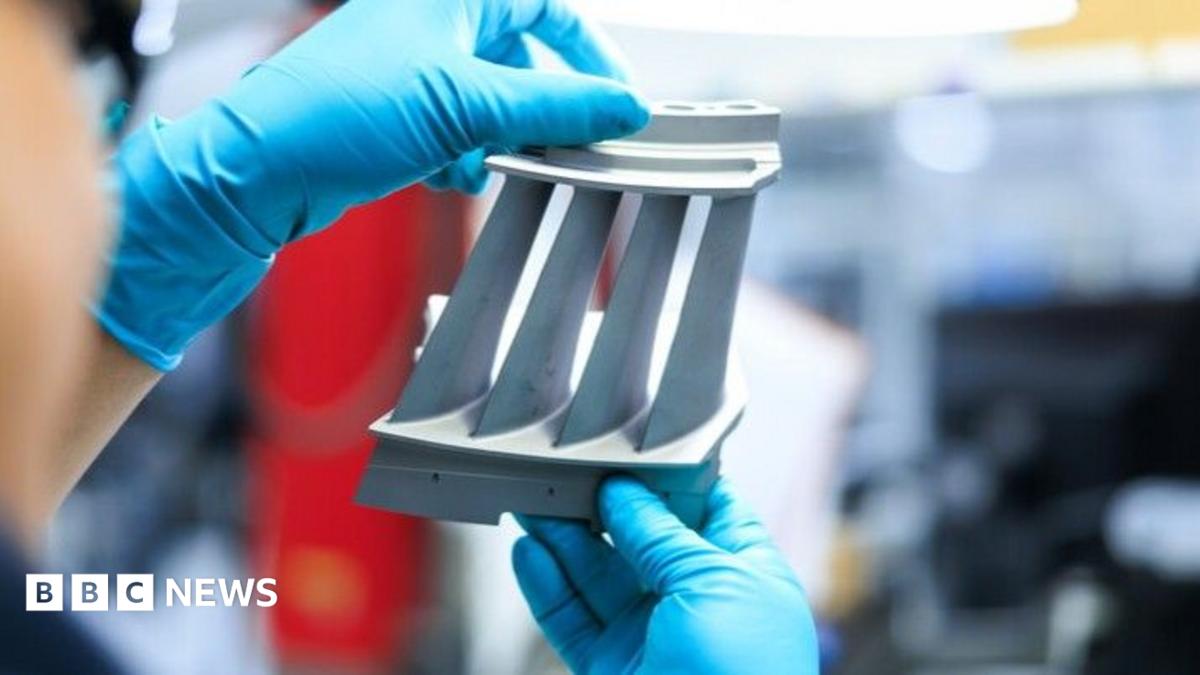
Aircraft engines endure extreme mechanical stress and temperatures above 1,500 degrees Celsius during every flight. Hidden inside the engine’s outer nacelle, hundreds of turbine blades withstand these conditions thanks to a manufacturing process that produces them as single crystals rather than carving them from solid material.
How turbine blades become single crystals
In the 1960s, engineers developed a method for casting molten metal alloy into the shape of a turbine blade and then cooling it gradually from one end to the other over several hours. During this carefully controlled solidification process, the alloy forms a single crystal, or grain, instead of many smaller crystals.
The process is similar to turning a cup of water into one large snowflake of a chosen design, rather than allowing it to freeze into a mass of countless small snowflakes. This structure helps the blades withstand the intense conditions inside an aircraft engine.
“Manufacturing is becoming increasingly complex,” said Ben Fihut, a manufacturing engineer at Rolls-Royce, which makes turbine blades in the UK. “It really motivates me to get out of bed in the morning.”
A highly specialised manufacturing process
Only a small number of companies worldwide can produce monocrystalline turbine blades. The complete process has been carried out in only five countries, including the US and UK, and engine manufacturers are continually competing for access to the technology.
Rolls-Royce, GE and France’s Safran are among the few companies to have perfected the process.
Source: www.bbc.co.uk