


AI Safety Regulation vs. Self-Regulation: What the Seat Belt Debate Can Teach Us
What can the history of automobile safety teach us about regulating artificial intelligence? The comparison is imperfect, but it offers a useful warning about relying on an industry to police itself.
How Seat Belts Became Mandatory
In 1966, nearly 51,000 people died on American highways. Overwhelming evidence suggested that modern seat belts, which had been available for several years, could have saved many lives.
The auto industry did not respond by voluntarily installing safety features in every new car. Instead, in the fall of 1966, Congress established the Department of Transportation and passed the National Traffic and Motor Vehicle Safety Act and the Highway Safety Act. Those laws gave the federal government sweeping new powers to set safety standards. By 1968, seat belts were required in all new cars. Although highway traffic has increased significantly over the past 60 years, there are far fewer fatal accidents on American roads today.
AI Safety Relies Heavily on Voluntary Action
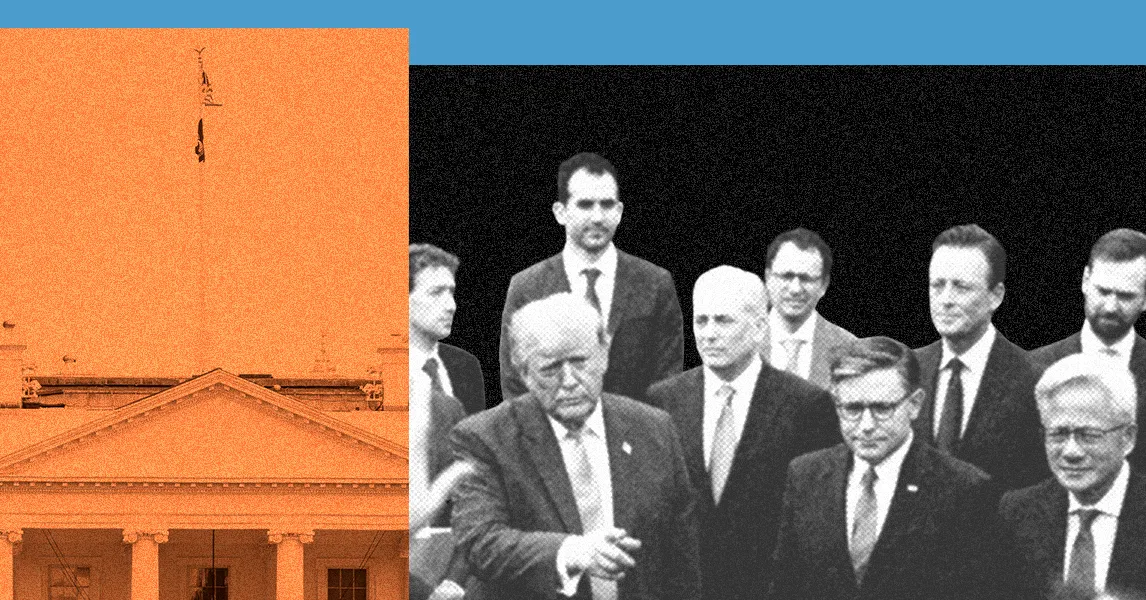
I thought about this on Tuesday as I watched several AI CEOs gather around U.S. President Donald Trump, congratulating themselves and one another on signing the AI Safety Agreement. My colleague Maddy Varner has written about the agreement’s specific provisions, but the short version is that AI labs remain largely responsible for deciding whether—and how—they restrain themselves.
President Trump put the approach even more succinctly in the Oval Office on Wednesday: “They’re going to police, they’re going to police each other, and they’re going to police themselves, and they’re going to police themselves. It’s going to work very well.”
The Challenge of Regulating Artificial Intelligence
That is the current state of AI safety regulation. On one hand, AI executives, employees, and technology leaders argue that clear, thoughtful, practical rules are needed to prevent a potential disaster. Bill Gates, for example, has warned about an AI apocalypse and received significant media coverage for those concerns.
On the other hand, Trump has promoted the idea that repeated assurances can make self-policing work. The central question is whether voluntary commitments can meaningfully reduce AI risks without enforceable standards or independent oversight.
None of this is simple. The question of how to “pace the frontier,” as some AI executives describe it, remains unresolved. Even if all major AI labs agreed to slow down, there would be no easy way to enforce that promise. China would likely continue pursuing its own path regardless.
The U.S. economy is also increasingly powered by the AI industry, which is helping drive loan transactions and circular investment. Any meaningful crackdown could destabilize more than Silicon Valley. That makes AI regulation politically and economically difficult, even when the risks appear serious.
Why the Seat Belt Analogy Has Limits
The auto industry is, by all accounts, an imperfect analogy. There is no direct equivalent to a seat belt in AI, and there are no simple safety measures that can clearly reduce the technology’s risks overnight. It also took decades for a majority of states to pass laws requiring people to wear seat belts.
The potential harm from AI is less certain and harder to quantify. AI doomsayers say the technology could wipe out humanity within a decade. Skeptics argue that this is simply an extreme example of science-fiction marketing.
Still, the history of automobile safety raises an important question: when an industry is asked to regulate itself, who is responsible if voluntary promises fail?
Source: www.wired.com