


How Bacteria Detect Viral Attacks—and What It Means for Phage Therapy
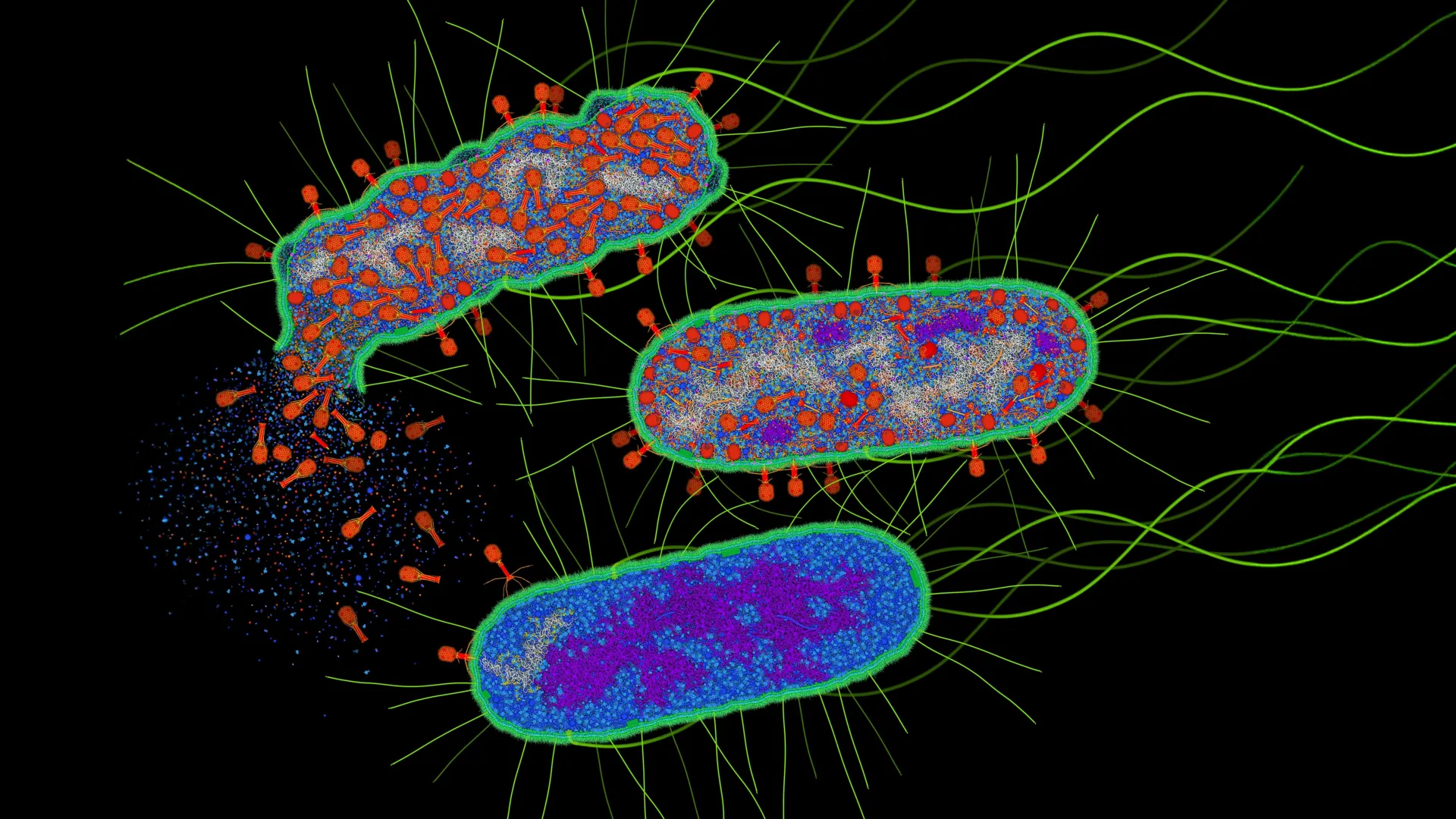
Scientists searching for new treatments for bacterial infections are increasingly studying viruses known as bacteriophages, or phages. These viruses specifically target bacteria and can kill harmful microorganisms without damaging human cells. Phages can also attack bacteria that have developed resistance to antibiotics.
However, phage therapy faces major obstacles. Bacteria are not defenseless against viruses. They have evolved their own immune systems, and understanding these defenses could help scientists develop therapeutic phages that are better able to overcome them.
New research has identified an important way bacteria recognize viral attacks. Scientists discovered that viral enzymes cleave key sensor molecules inside bacterial cells. This damage acts as an alarm, activating the bacterial immune response. The discovery could ultimately help researchers develop more effective phage therapies that evade bacterial immune defenses.
“This is one of the most common forms of bacterial immunity, so when we finally figured it out, it was quite a eureka moment,” said Sam Hobbs, Ph.D., assistant professor of biochemistry at the University of Utah Health and lead author of the study.
The study was published in Science under the title “Phage protease activates CBASS antiphage immunity.”
Bacteria’s last-resort defense against viruses
The study focused on a bacterial immune system called CBASS. When activated, CBASS can trigger an extreme “last resort” response in which infected bacteria kill themselves before an invading virus can spread to nearby cells.
Because activating this defense is lethal to the bacterium, the system must recognize genuine viral threats with high accuracy.
Hobbs and his colleagues found that this detection process relies on something the virus itself needs. Certain phages produce enzymes that act as signals alerting bacteria to attack.
“Certain types of phages have proteins called proteases that break down other proteins,” Hobbs explained. “We discovered that the phage’s protease actually acts directly on the host protein, which is the signal that turns on the entire signaling pathway.”
Viral enzymes trigger the bacterial immune response
This form of virus detection is markedly different from related antiviral immune systems. Some of these pathways directly recognize viral genetic material. In CBASS, the trigger is the activity of a viral protein acting on a protein belonging to the bacterial host.
“This is a completely new mechanism for how these host proteins are activated,” Hobbs said. “I never expected it to work out like this.”
The discovery reveals how bacteria protect themselves from phages and could also provide insights into human immunity.
An ancient immune system with connections to human immunity
CBASS is associated with immune pathways found in humans, suggesting that this aspect of antiviral defense has survived across vast periods of evolutionary history. The connection indicates that the origins of this pathway date back at least as far as a common ancestor shared by bacteria and humans.
Bacteria also provide researchers with a useful experimental system for studying fundamental questions about immunity. Their fast life cycle allows scientists to study immune processes quickly and test what they learn in biological models that more closely resemble humans.
“The fact that these systems are conserved between bacteria and humans suggests that they have been maintained within these different organisms throughout their evolutionary trajectory,” Hobbs said. “The cells tell us that this is a really important pathway because they’ve been maintaining it for billions of years. This is incredibly fascinating and a great window into what’s important in maintaining our ability to fight viruses.”
Research support
This research was supported by the Pew Biomedical Scientists Program, the Burroughs Wellcome Fund, the G. Harold and Leila Y. Mathers Foundation, the Cancer Research Institute (CRI3996), the Parker Institute for Cancer Immunotherapy, the Massachusetts Consortium on Pathogen Response, and the National Institutes of Health’s National Institute of General Medicine (1DP2GM146250-01).
The content is solely the responsibility of the authors and does not necessarily represent the official views of the National Institutes of Health.
Source: www.sciencedaily.com