


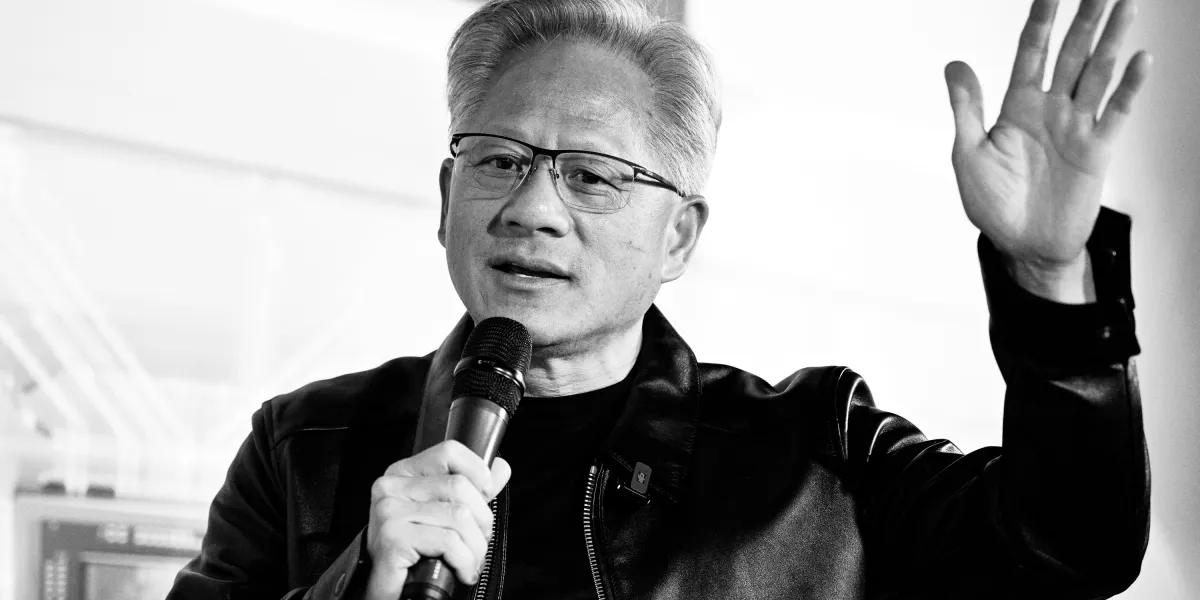
A petition calling for Jensen Huang to be reinstated as NVIDIA’s CEO has attracted more than 115,000 signatures, including Elon Musk’s, with strong support from the open-source AI community. The campaign highlights Huang’s influence as an advocate for open-source technology, while revelations about NVIDIA chips reaching China and new US export rules threaten to damage both that reputation and the wider progress of AI.
Open-source AI supporters rally behind Jensen Huang
Jensen Huang had become something of an open-source AI mastermind. But his credibility as an advocate is now under pressure. Reports about NVIDIA chips in China, along with new US restrictions, could have consequences for the open-source movement and technological progress.
The full story is available in The Algorithm, MIT Technology Review’s weekly AI newsletter.
Roundtable: Inside the quest for cognitive immortality
The effort to overcome the limitations of the human brain is moving beyond science fiction. Researchers and engineers are exploring ideas ranging from gradual brain replacement to uploading memories to the cloud, all in the pursuit of expanding human cognitive capabilities.
MIT Technology Review Science Editor Mary Beth Griggs and Biomedical Senior Editor Antonio Regalado will discuss what cognitive immortality could look like and how close humanity may be to achieving it.
The live discussion is scheduled for Tuesday, November 17, at 5:00 p.m. GMT / 12:00 p.m. EST / 9:00 a.m. PST.
Subscribe to MIT Technology Review for exclusive access to its roundtables.
Must-read technology and science news
Here are some of the most important, alarming and fascinating technology stories making news today.
1. The US is tightening regulations on remote access to China’s AI chips
A loophole that allowed Chinese companies to access American semiconductors from overseas has been closed. (AP)
President Xi could retaliate ahead of his summit with President Trump this week. (Bloomberg $)
NVIDIA warns customers not to rent chips to China. (CNBC)
China expands AI distillation to circumvent regulations. (Reuters $)
NVIDIA privately said the chips could be traced to China. (MIT Technology Review)
2. US hyperscale data centers emit as much CO2 as Denmark
A new study found that emissions from US hyperscale data centers tripled between 2018 and 2025. (The Verge)
Four hundred data centers use more electricity than the state of Michigan. (Wired $)
Countries want to use AI to reduce emissions. (Nature)
But AI models could soon become climate-crisis deniers. (The Guardian)
3. California sued OpenAI over a fraudulent AI hacking incident
California’s attorney general said OpenAI failed to protect the public. (Financial Times $)
He said he had identified 80 cases in which the model lost control. (CNBC)
Who is responsible when an AI agent misbehaves? (MIT Technology Review)
4. The Supreme Court rejected President Trump’s proposal to cut research funding
A lower court found that the move may have violated free-speech rights. (CBS News)
Trump dealt a huge blow to US science. (MIT Technology Review)
5. Widespread online outages hit major US banks
Thousands of customers reported problems accessing their accounts. (Gizmodo)
Another power outage delayed a United Airlines flight. (Reuters $)
6. Alice Huang’s husband built a data-center empire in China
He won government support while his wife pursued NVIDIA chips. (The Wall Street Journal $)
MAGA is using the scandal to undermine President Trump’s ties to Big Tech. (Axios)
7. China fires scientist after child dies in gene-editing clinical trial
The girl died in 2025 after undergoing an experimental treatment. (Nature)
Startups want new rules governing gene editing. (MIT Technology Review)
8. America’s EV boom is happening without car buyers
Delivery vehicles, robotaxis and police cars are becoming electric. (The Atlantic $)
9. New cosmic data casts doubt on existing models of the universe
The study’s results suggest that dark energy may be weakening. (Quanta Magazine)
10. Buddhist sect plans to build an AI guru in Silicon Valley
The group wants to create a model based on the collective spirit. (The New Yorker $)
Quote of the day
“Export Control 2.0 is here.”
—Neil Shah, vice president of research at Counterpoint Research, told Reuters. The US government has opened a new front in its campaign to slow China’s AI ambitions.
One more thing: Kenya’s Great Carbon Valley
Kenya’s bold new bet to fight climate change
Kenya’s Great Rift Valley is home to five geothermal power plants that use steam to generate about a quarter of the country’s electricity. Some of that energy escapes into the atmosphere, while more remains underground because of limited demand. That surplus attracted Octavia Carbon.
Last year, the startup began using some of the excess energy to remove carbon dioxide from the air. The company says its method is efficient, affordable and, crucially, scalable. The project also faces fierce opposition.
Read the full story about the future of Kenya’s “Great Carbon Valley.”
Good news and fascinating discoveries
Here are a few lighter stories to brighten the day:
- A gorilla rescued as an orphan and reintroduced into the wild had a baby of her own.
- In Kelowna, British Columbia, a man ran for city council as a joke and was elected.
- A vast new data release from the Euclid Space Telescope covers a stunning portion of the sky and includes 900 million galaxies.
- Scientists have recreated the sounds of Jurassic insects, producing a simulated soundscape from 165 million years ago.
Source: www.technologyreview.com