


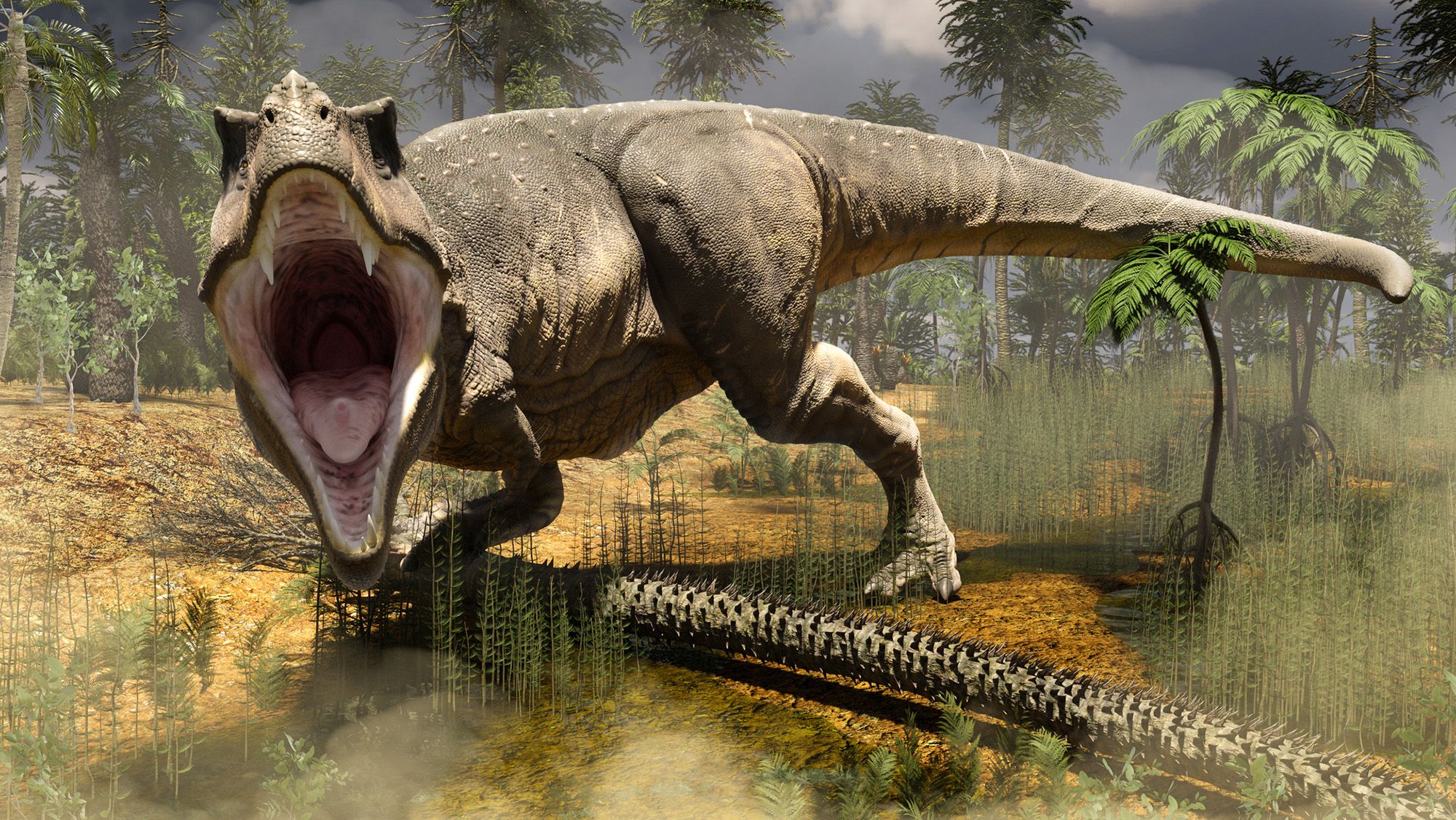
Dinosaurs dominated Earth for more than 160 million years before an asteroid struck the planet 66 million years ago. They first appeared during the Triassic period, about 230 to 240 million years ago, and went on to evolve into hundreds of species adapted to environments ranging from snowy Arctic regions to the hot equatorial areas of Gondwana.
Dinosaurs across a changing planet
Dinosaurs emerged when Pangea had brought much of the world’s land together. After the supercontinent began to break apart, dinosaurs continued to inhabit continents around the globe. During the Cretaceous period, even Antarctica was home to a temperate rainforest.
Living in such varied ecosystems, dinosaurs developed distinctive defenses and adaptations that helped them survive in their environments. Evidence of these animals has been found in settings ranging from the snowy Arctic to the hot equatorial regions of Gondwana, a supercontinent in the Southern Hemisphere.
From island dwarfs to giant long-necked dinosaurs
Researchers have discovered hundreds of dinosaur species, including remarkably small and enormous animals. These include a dwarf dinosaur that lived on an island in Transylvania and a huge, long-necked dreadnought from Argentina.
How well can you identify dinosaurs? Take the quiz to find out. Log in to see your name on the leaderboard, and select the yellow button if you need a hint.
More animal quizzes
- Animal quiz: Test your knowledge with these fun trivia questions
- Test your understanding of natural selection with an evolution quiz.
- Explore what you know about crocodiles with a crocodile quiz.
Source: www.livescience.com