


How Many Building Blocks of Life Have Scientists Found in Space?
Scientists have discovered many of the building blocks of life in space—from asteroids and meteorites to Mars and the clouds surrounding young stars. These findings suggest that the chemical ingredients needed for life may be widespread throughout the universe, although no evidence of life beyond Earth has been confirmed.
Recent missions and astronomical surveys have detected amino acids, nucleobases, sugars and other carbon-based compounds. But exactly how many potential ingredients for life have scientists found so far?
To answer that question, scientists first need to define what they mean by the “building blocks of life.” Researchers typically search for molecules similar to those found in living organisms on Earth, including proteins, RNA and lipids—the fatty molecules that form cell membranes.
Latest videos fromLive Science
What Are the Building Blocks of Life?
Asteroid samples have provided some of the clearest evidence that prebiotic chemistry is not limited to Earth. NASA’s OSIRIS-REx mission returned material from asteroid Bennu, where researchers found all five nucleobases used in DNA and RNA. They also identified 14 of the 20 amino acids commonly used by life on Earth.
Japan’s Hayabusa2 mission found related organic compounds in samples collected from the asteroid Ryugu, including uracil, a nucleobase found in RNA. These discoveries do not show that asteroids contain life. Instead, they demonstrate that important organic ingredients can form in space and survive for long periods inside primitive planetary material.
Radio astronomy provides another way to search for these compounds. By studying the light emitted or absorbed by molecules in distant clouds of gas and dust, astronomers can identify chemical signatures across the Milky Way.
How Many Organic Molecules Have Been Detected?
Astronomers classify many of the carbon-based compounds found in space as complex organic molecules, or COMs. In astronomy, COMs are generally defined as molecules containing six or more carbon atoms. This is a practical classification rather than a strict measure of how complex a molecule is.
Of the roughly 350 molecules identified in space, approximately 180 are classified as complex organic molecules, according to Sergio Ioppolo, an astrochemist and associate professor at Aarhus University in Denmark. However, the exact total can change as researchers confirm new detections and refine how molecules are classified.
Sign up for our newsletter
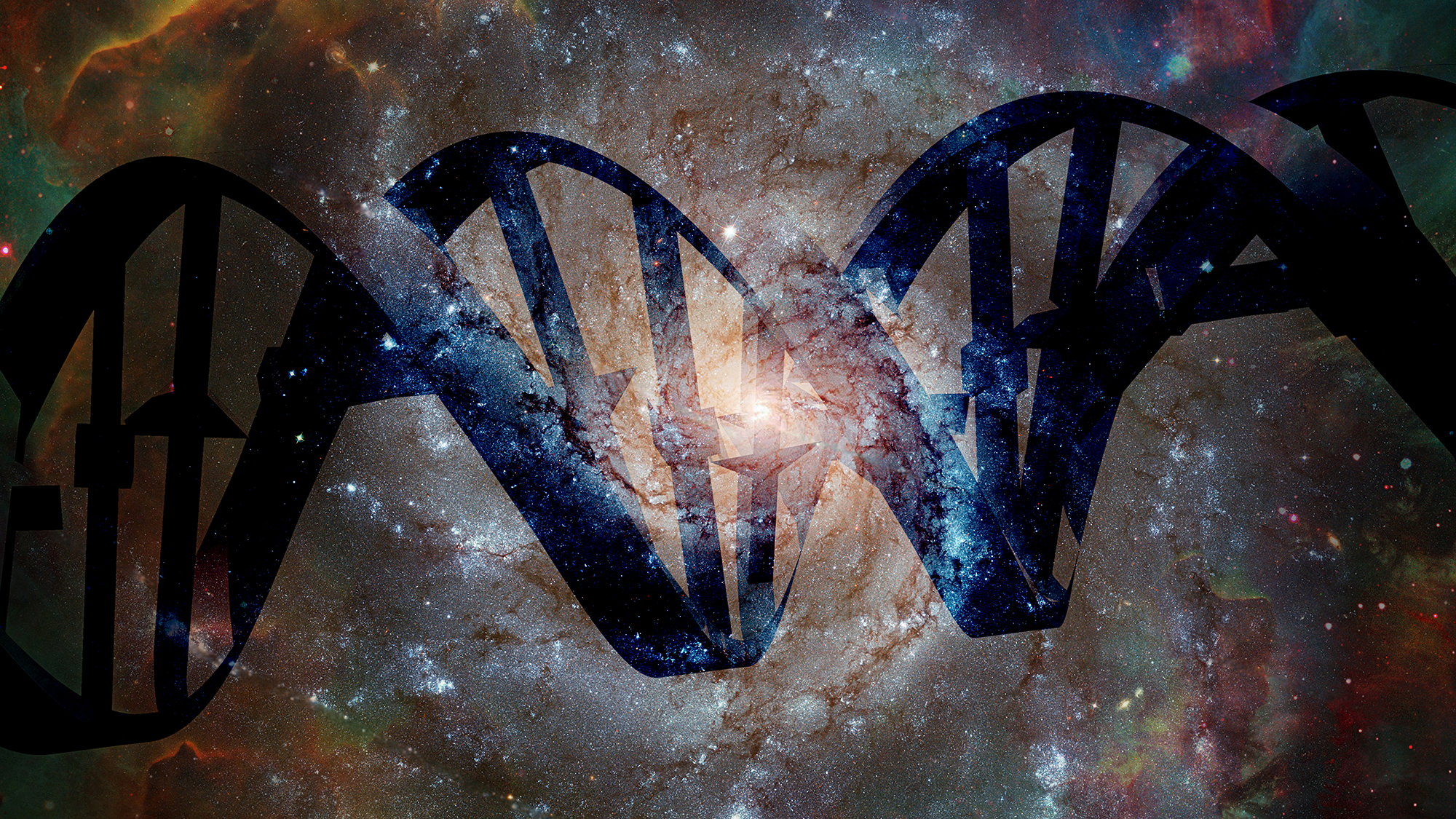
(Image credit: Marilyn Perkins / Future)
Sign up for our weekly Life’s Little Mysteries newsletter to receive the latest science mysteries and discoveries.
What Are Prebiotic Molecules?
Not every complex organic molecule is related to the origin of life. A smaller group, known as prebiotic molecules, may have acted as building blocks, precursors or intermediates in chemical pathways that could eventually lead to life.
There is no single universal list of prebiotic molecules. Scientists generally consider a molecule a strong prebiotic candidate if it can be reliably detected, could form and remain stable without life, and has a possible role in a proposed pathway toward biological chemistry.
Using that definition, researchers estimate that approximately 30 prebiotic candidates have been detected in space. The number remains uncertain because scientists draw the boundaries of “prebiotic” chemistry in slightly different ways.
Where Are These Life-Building Molecules Found?
Some of the richest environments for finding organic compounds are molecular clouds—cold, dense regions of gas and dust where new stars are born.
Using radio telescopes, researchers can identify molecules inside these clouds by analyzing their spectral fingerprints. Astronomers have detected more than a dozen prebiotic compounds in the molecular cloud at the center of the Milky Way, including sugar-related molecules such as tetracarbon compounds.
These observations are important because they show that organic chemistry begins before stars and planets form. The same material may later become part of asteroids, comets and planets.
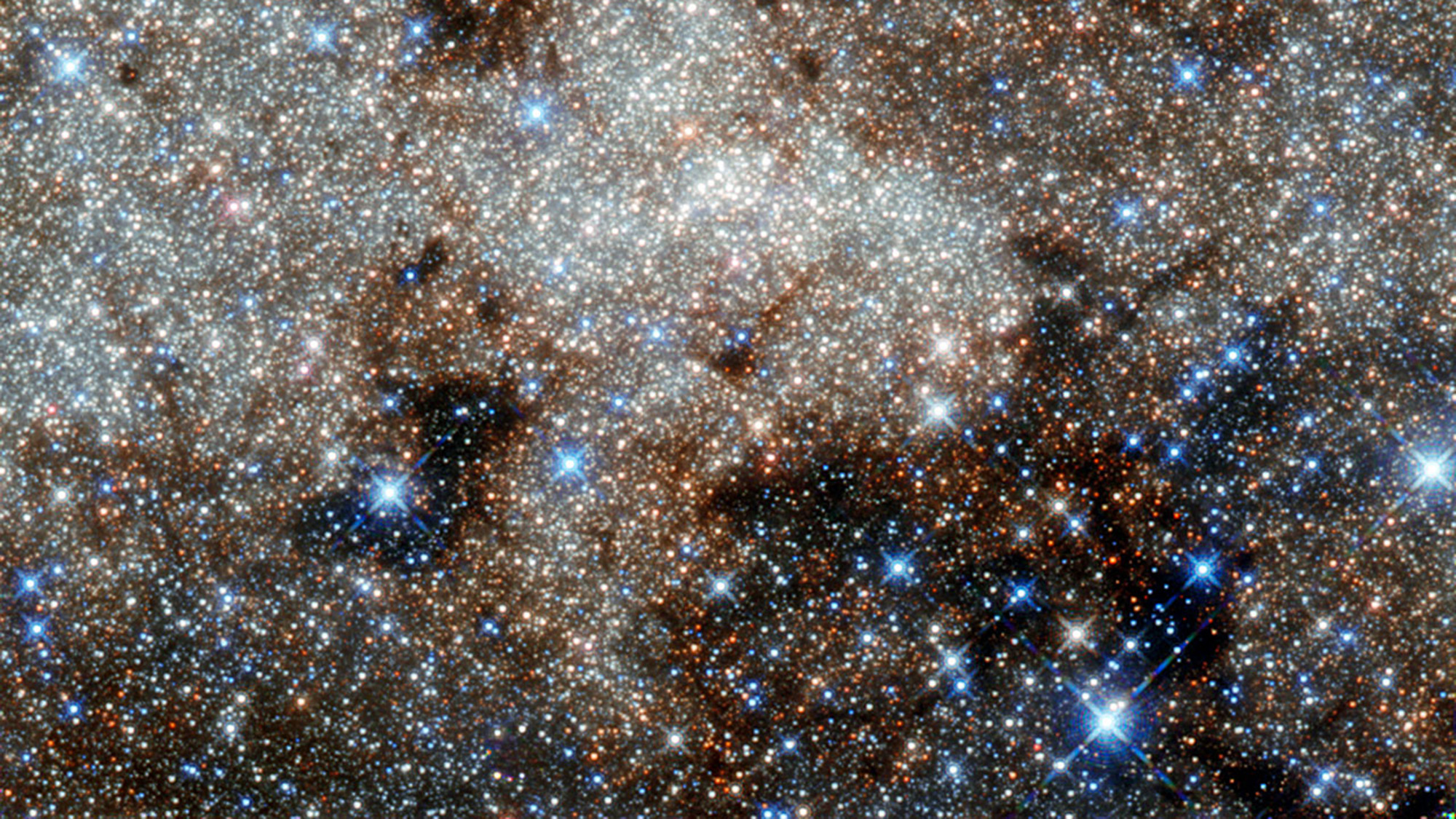
A Hubble image of the center of the Milky Way in the constellation Sagittarius.
(Image credit: NASA, ESA, G. Brammer)
How Do Astronomers Identify Molecules in Space?
Scientists detect molecules by examining how they interact with light. Each molecule absorbs or emits energy at specific wavelengths, creating a distinctive pattern known as a spectral fingerprint.
Simple molecules are relatively easy to identify because their spectral lines are clear. Larger molecules are more difficult to distinguish because their absorption bands can overlap. As a result, some compounds may remain hidden in astronomical data even if they are present in large quantities.
This limitation means the number of prebiotic molecules detected so far is probably only a fraction of the total number found throughout the universe.
Why Finding Amino Acids on Mars Would Still Be Important
The repeated discovery of organic compounds in asteroids and interstellar clouds does not make a future detection on Mars insignificant. Conditions on a planet can destroy or alter delicate molecules over time.
High temperatures, cosmic rays, X-rays and ultraviolet radiation can break apart complex organic compounds. Finding preserved amino acids or other prebiotic molecules on the Martian surface would therefore provide valuable information about how these compounds formed, traveled through space and survived planetary environments.
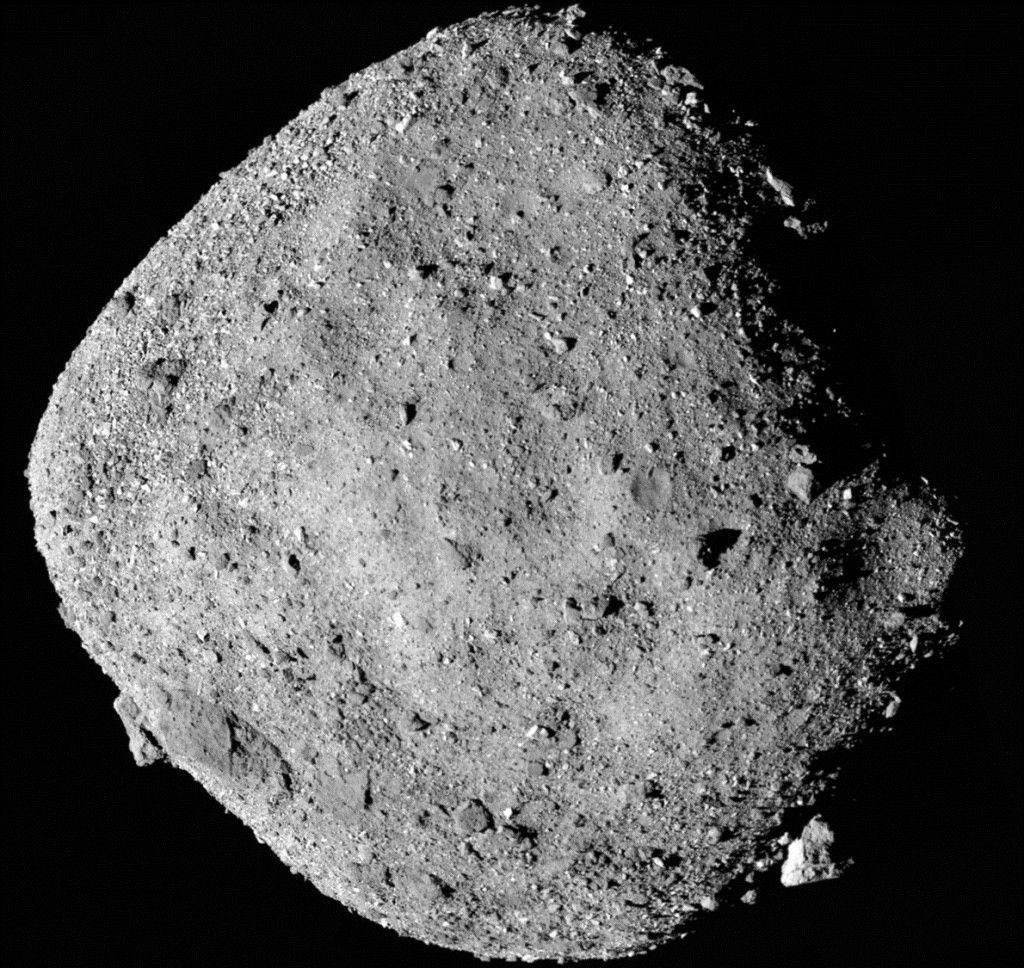
Samples from asteroid Bennu contained all five nucleobases found in DNA and RNA, along with 14 of the 20 amino acids used by life on Earth.
(Image credit: NASA/Goddard/University of Arizona)
Which Molecules Are Scientists Still Searching For?
Researchers are especially interested in finding larger and more complex compounds, including ribose, a sugar that forms part of RNA. Detecting ribose would help scientists understand whether key components of RNA can form in space before stars and planets exist.
Radio astronomers continue to scan molecular clouds for new compounds. At the same time, sample-return missions are investigating asteroids and other rocky bodies, where organic molecules may be preserved more effectively than they are on exposed planetary surfaces.
Future missions could reveal additional amino acids, nucleobases, sugars and other complex molecules. Some researchers even hope that samples from asteroids, comets or Mars may contain molecules approaching the complexity of RNA. However, discovering these compounds would not be the same as discovering life.
The widespread presence of prebiotic molecules suggests that the raw materials for life may be common in star-forming regions. The major unanswered question is whether those ingredients regularly combine into living systems—or whether Earth is an exceptional case.
Are you fascinated by UFOs and the search for extraterrestrial life? Test your knowledge with our extraterrestrial life quiz!
Topics
Source: www.livescience.com