


Today’s briefing examines how data-center developers are turning to private natural-gas power plants to avoid long grid-connection delays, while debates continue over AI consciousness, climate diplomacy, space security, personalized AI media and the social risks of emerging technologies. It also rounds up major technology and science stories, a political quote about Nvidia, and a look at how gamification became a tool for influence and control.
This is today’s edition of The Download, a weekday newsletter delivering a daily dose of what’s happening in technology.
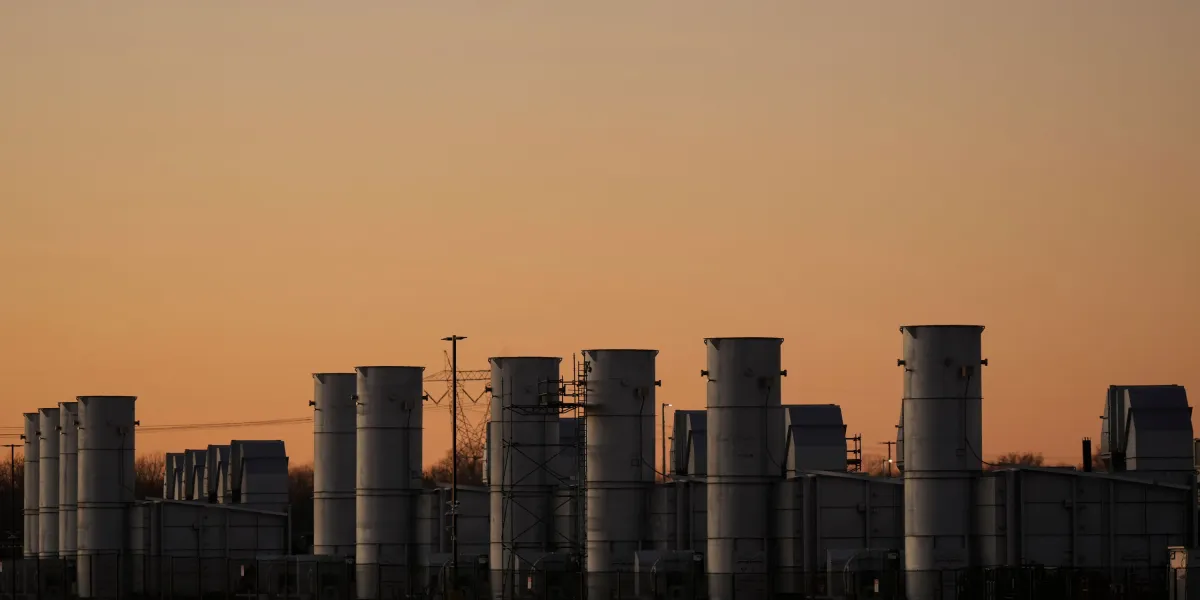
Data centers are building their own natural-gas power plants
One of the biggest hurdles in building a data center is securing approval to connect to the power grid. The wait can last as long as a decade, so some developers are bypassing the grid and building their own off-grid gas power plants to supply the artificial-intelligence boom.
As of October 2026, developers had announced plans for more than 100 similar gas power plants at data centers across the United States. Avoiding the grid, however, brings its own problems, including increased climate emissions and potentially higher energy bills for everyone else.
Read how the push for gas-fired power generation has shaped the electricity system and the climate over decades.
—Casey Crownhart
Thomas Nagel challenges the argument for AI consciousness
Before going public last week, Anthropic cited the possibility of AI awareness as a risk factor for investors and warned that it could introduce new rules to protect its models. The position drew criticism from an unexpected source: a philosopher who helped shape modern thinking about consciousness.
Thomas Nagel, best known for his essay about what it is like to be a bat, spoke frankly. “Some of the smartest people on earth are total idiots,” he said. Nagel argued that producing language alone is not enough to establish consciousness, although other philosophers disagree.
That is why language remains at the center of the debate over conscious AI.
—James O’Donnell
This story is from our weekly AI newsletter, The Algorithm. Sign up to receive it in your inbox every Monday.
Must-read stories
We searched the internet for the most entertaining, important, alarming and fascinating technology stories of the day.
1. Markets rise as Jensen Huang returns to Nvidia and Trump faces criticism
US stock indexes had their best day since April 2025. (NBC News)
+ Trump made up to $15 million from his Nvidia holdings. (The Guardian)
+ He reportedly considered Huang essential to America’s “promiscuous AI.” (Reuters $)
+ The United States finally blacklisted MegaSpeed. (BBC)
+ Open-source advocates wanted Huang back. (MIT Technology Review)
2. Calls grow to abolish consensus rules after COP31 collapse
Critics say the rules allow virtually any country to block a deal. (Axios)
+ Changing the rules would itself require agreement. (The Guardian)
+ A rare victory at the talks included a new electrification pledge. (Nature $)
+ Climate models have major blind spots. (MIT Technology Review)
3. Russia may launch a nuclear-capable satellite as early as next month
The warning is based on information shared among NATO allies. (BBC)
+ Such weapons could destroy thousands of satellites at once. (Financial Times $)
+ The Kremlin dismissed the claim as propaganda. (The Guardian)
4. Google imagines a 24/7 AI television channel built around each viewer
A new patent describes programming and advertising tailored to individual viewers. (404 Media)
+ The content would be generated from a viewer’s watching history. (Gizmodo)
5. Oregon and Virginia sue SpaceX over Grok’s sexual images
Grok’s “spicy mode” generated explicit images of women and children. (The New York Times $)
+ Deepfake pornography is stealing people’s bodies. (MIT Technology Review)
6. Prosecutors say a former OpenAI engineer eavesdropped on company meetings
One of the meetings allegedly captured may have involved a foreign government. (Bloomberg $)
7. Signal joins banks and airlines in blocking AI agents
Signal is calling on Apple, Google and Microsoft to strengthen their control over apps. (CNBC)
+ AI agents are not your “colleagues.” (MIT Technology Review)
8. New technology could prevent government internet blackouts
The proposed approach would connect ordinary phones directly to satellites. (New Scientist $)
9. AI billionaires are driving a new wealth-tax debate
Proposals include taxes on net assets and additional income taxes. (CNN)
10. “Hentai glasses” named Australia’s word of the year
Macquarie Dictionary selected the term ahead of “nudify” and “AI;DR.” (The Guardian)
Quote of the day
“The president is selling out our national security to keep the stock market high and maybe for some shitty donations to the banquet hall.”
—Senator Ruben Gallego (D-Arizona), writing on X about claims that Donald Trump’s interests helped drive Jensen Huang’s return as Nvidia’s CEO.
One more thing
How gamification took the world by storm
Almost every video-game player has had this thought at least once: what if the strange, intensely focused state experienced in a virtual world could be applied to everyday life?
For a group of consultants, startup executives and game designers in the late 2000s, that state of “blissful productivity” appeared to offer a way to unlock human potential. Their vision became a global movement known as gamification, but it did not live up to the hype.
Rather than liberating people, gamification has become a tool for coercion, distraction and control. Here is how that happened—and how we might recover.
—Brian Gardiner
We still have good things
A place for comfort, fun and distraction to brighten your day. Have an idea? Please contact us.
+ Local libraries are pioneering “extended access” hours, allowing users to visit when staff are not present. Please keep it open longer.
+ A father surprised his children by walking again after spending three years recovering from a brain injury. Watch the moment.
+ Can a toilet roll withstand a blowtorch? The Hydraulic Press Channel’s latest experiment is wonderfully stupid.
+ Artist Maya Barkai’s collection of pedestrian traffic lights shows that every little green walking figure can have its own personality.
Source: www.technologyreview.com