


Recent genetic studies have uncovered that an early Bronze Age metalsmith and shaman, unearthed from a lavish burial site near Stonehenge over 200 years ago, previously believed to be male, is actually female.
Ancient Achievements DNA analysis of Upton Lovell Sherman conducted by researchers at the Francis Crick Institute in London has significantly challenged established stereotypes about women in the early Bronze Age. According to a statement from the Wiltshire Museum, which houses the remains and burial artifacts.
“Previous assumptions will be entirely dismantled.” David Dawson, director of the Wiltshire Museum, stated: “We have long accepted the notion that men were the primary leaders, the skilled artisans, and the metalsmiths. This evidence provides a new perspective, showcasing that a female metalsmith was indeed a reality. Metalworking during this era was a sophisticated craft, akin to a science.”
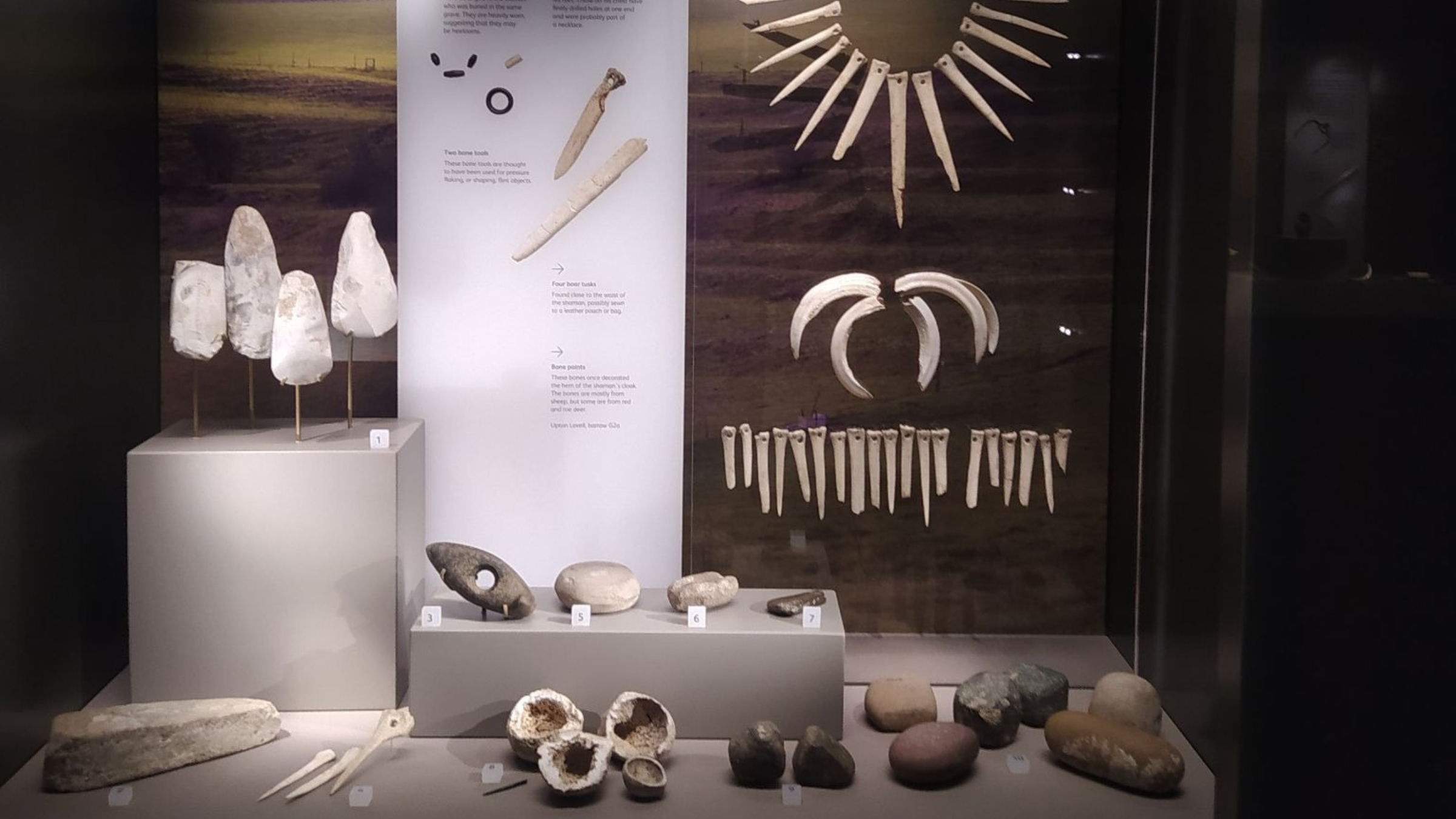
The burial, dated approximately 4,000 years ago, was excavated in 1801 near the village of Upton Lovell, close to Stonehenge. Surrounding the body were an exceptionally rich array of tools, including a stone axe, metalworking implements showing traces of gold, and a touchstone for assessing metal purity. Remnants of what appear to be bone fragments suggest they may have adorned clothing as decorations, indicating possible ceremonial usage.
The combination of elaborate metalworking tools and objects believed to hold ritual significance led archaeologists to classify the individual as a spiritual leader, hence the nickname “Upton Lovell Sherman.”
British archaeologist William Cunnington, who excavated the barrow, noted that “the size of the bones” suggested a strong individual, leading to the lasting assumption of a male burial. For nearly 200 years, the figure was depicted as male, often illustrated with a beard in museum displays.
The grave goods included four cup-shaped sponge fossils, indicating the owner’s likely background as a craftsman.
(Image source: Wiltshire Museum)
The DNA testing, initially aimed at tracking ancestry, surprised researchers when results showed XX chromosomes instead of the expected XY. The team conducted DNA analyses on teeth and other skeletal remains, consistently yielding the same results with no evidence of multiple individuals interred.
Discover the world’s most captivating findings delivered directly to your inbox.
Further examination of the skeleton provided additional insights. The individual was approximately 5 feet 4 inches (165 cm) tall, relatively tall for a Bronze Age woman, and passed away at around 45. Notably, she exhibited a strong physique and carried arthritis in her right wrist, indicative of years of engaging in metalworking tasks, as noted in the statement.
Research conducted in 2022 indicated that she was likely a skilled goldsmith, creating gold ornaments. This proficiency, which may have seemed enchanted in the Bronze Age, was highlighted by Susan Greaney, an archaeologist at the University of Exeter, who did not participate in the research.
“The ability to transform materials through the meticulous method of gold plating may have been deemed a mystical or ceremonial practice, a closely guarded secret among a select few.” Greaney commented in a 2022 email. “This study illustrates the profound link between metalworking, magic, rituals, and spiritual beliefs.”
This isn’t the first instance of misattributing ancient elites as male. For instance, high-ranking Swedish Viking figures buried with weapons were later identified as female, as was a notable Bronze Age figure from Spain.
“We’re gaining a fresh perspective on these burials, rewriting narratives, dismantling stereotypes, and placing women at the forefront of our understanding of early Bronze Age societies.” Lisa Brown, curator at Wiltshire Museum, stated in her remarks.
The findings will be presented in a new exhibition centered around ancient DNA opening on Thursday (July 16) at the We Go Way Back exhibition at the Francis Crick Institute.
Source: www.livescience.com