


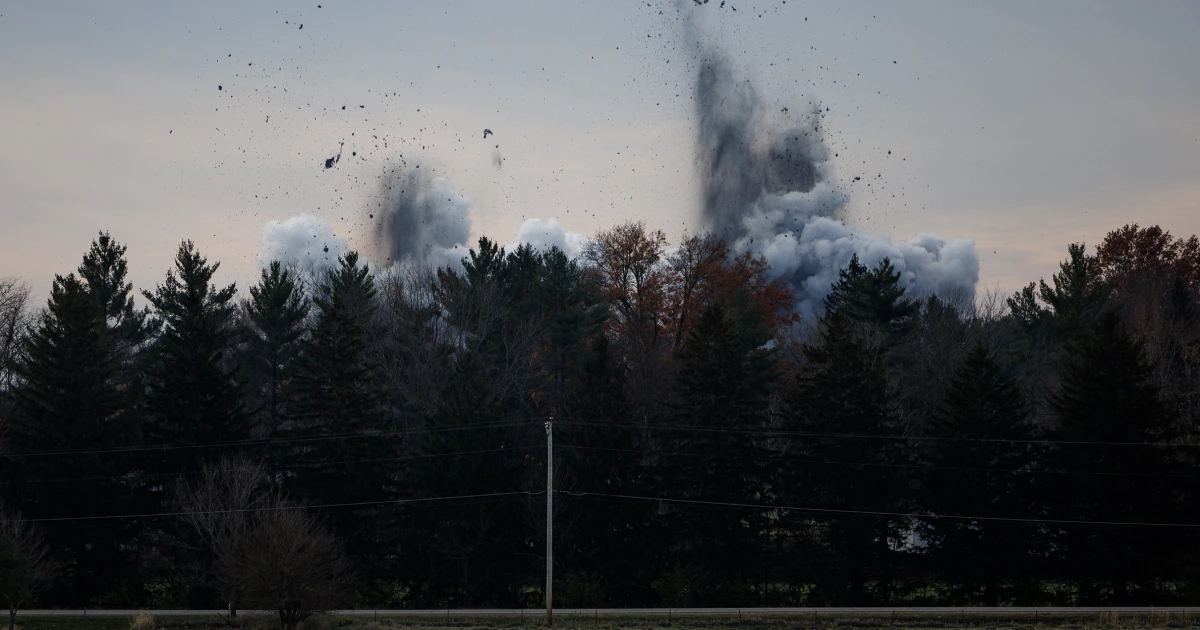
Researchers and EPA scientists are collecting and analyzing air, soil, water and dust samples across Iowa to determine how far lead contamination may have spread after the explosion. Although the EPA’s initial real-time air monitoring detected no lead, experts and residents say laboratory testing of particles deposited on the ground will be essential, and the full risks may remain uncertain for days.
Experts call for laboratory testing
Lead is a highly dangerous neurotoxin, and no level of exposure is considered safe. Dr. Joel Kaufman, a professor of medicine, epidemiology and environmental health sciences at the University of Washington who studies air pollution, said the EPA’s initial real-time air monitoring was a promising sign but needed to be supported by laboratory-based chemical analysis of dust collected on the ground.
“This is a reasonable way to test for lead in the environment in real time,” Kaufman said, adding that it would be important to analyze samples from different locations.
“Is it possible that they’re right that the amount of lead that’s being put into the environment is virtually zero? Yes, it is,” Kaufman said. “Do you have any reason to doubt that? Yes.”
Andrew Welton, a professor of civil, environmental and ecological engineering at Purdue University in Indiana, also said that studying physical samples was essential.
“The deposited particles have to be collected and sent to a laboratory for chemical analysis,” he said.
EPA reports extensive sampling
The EPA said Wednesday that 300 employees and contractors were on the ground in Iowa and had collected 1,200 air, land and water samples before the explosion.
“We are working very diligently to immediately return new samples to the EPA laboratory following an event,” the agency said on X.
Garrett Anthony, a Burlington resident whose home is about 11 miles from the explosion site, was evacuated earlier this week.
“I’m really excited to see live monitoring by the EPA showing zero lead in the air, but ground testing is still very, very important to me and I’m looking forward to seeing what happens next,” he said. “I place great importance on the sustainability of effects.”
Anthony said soil had been stored in advance to provide a baseline for testing if necessary.
Plume maps and expected results
In a letter to Iowa Gov. Kim Reynolds, Jim Macy, the EPA’s regional administrator, said Friday that the Army’s permit required plume estimates to be updated and distributed within six hours of the explosion.
The Army published sediment and atmospheric-dispersion maps at 3 p.m. local time, but provided few immediate details. The atmospheric-dispersion maps showed no plumes because sensors had not detected lead.
One map stated: “Post-explosion sampling underway.” It added: “The results will be announced as soon as they are known.”
Macy said the EPA expected to have initial results from dust-wipe samples “within days after the explosion,” although reviewing the complete data would likely take longer.
The Army Corps of Engineers and the EPA will also contact public water systems immediately to identify bodies of water that may have been affected by the plume. The agencies will provide lead-sampling resources, drinking-water assessments and household filtration equipment.
Earlier criticism of testing plans
Days before the explosion, Welton criticized the EPA and the Army for not publicly disclosing details of their lead-testing programs.
“There are no plans to apply an evidence-based approach to determining whether people’s homes, schools, and businesses are safe,” he said in Army permit documents submitted to the EPA.
Source: www.nbcnews.com