


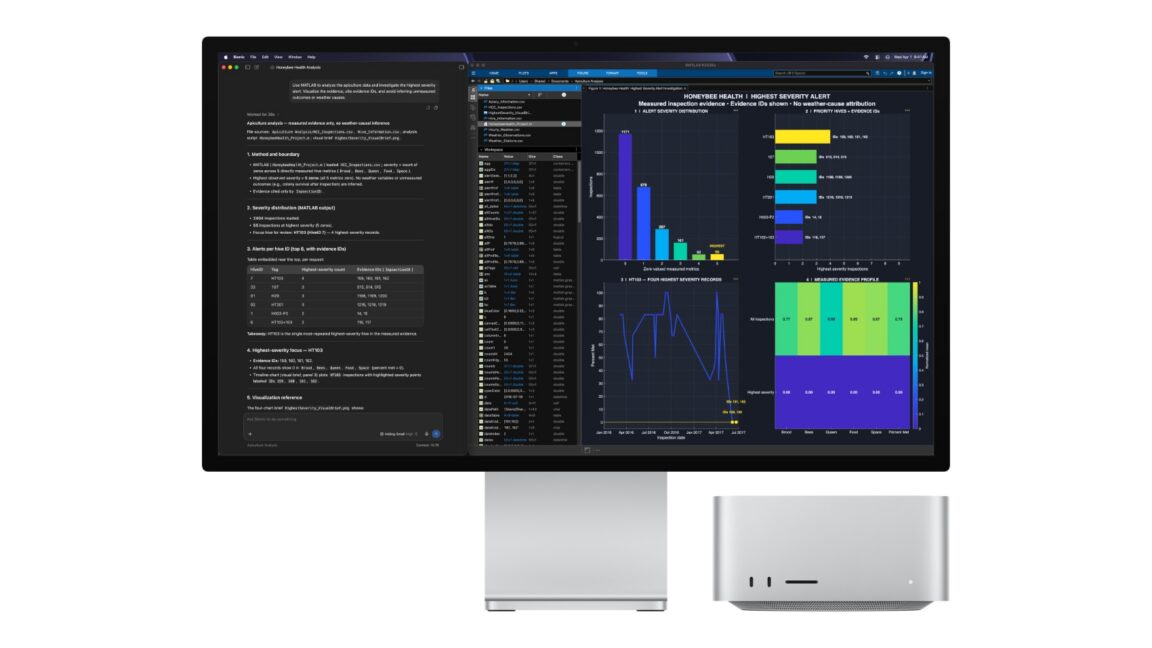
Apple’s updated Mac mini and Mac Studio could make local AI development more accessible to developers using AI coding agents. Powerful frontier large language models and advanced tools such as Claude Code and OpenAI Codex are transforming software development, but cloud-based AI services can become expensive as usage increases.
Open-weight AI models, including newer Qwen and DeepSeek releases, offer a lower-cost alternative. Because these models can run locally, developers can use their own hardware and electricity to complete many coding, research, and automation tasks without paying ongoing cloud token fees.
However, most consumer computers—including standard MacBook Pro configurations—remain limited in the size and performance of the AI models they can run. This has led some developers to build Mac mini and Mac Studio clusters, combining multiple Apple computers to increase available computing power for local AI workloads.
Local AI performance is the headline benefit of these updates, but the new Mac mini and Mac Studio also deliver conventional hardware improvements for everyday users. Both systems feature Apple’s N1 chip, Wi-Fi 7, and Bluetooth 6. Apple says storage performance can reach up to 15GB/s—twice the speed of previous configurations. The Mac mini includes 2.5Gb Ethernet as standard, with an optional upgrade to 10Gb Ethernet.
The new Mac mini with M6 starts at $899 with 16GB of memory, while M5 Pro configurations begin at $1,699. The Mac Studio with M5 Max starts at $2,499, and models powered by the M5 Ultra start at $5,499. Higher memory, storage, and performance configurations can raise the price significantly.
Apple is accepting pre-orders now, with the new Mac mini and Mac Studio scheduled to ship on September 22. The Mac Studio with an M5 Max and 512GB memory configuration is expected to ship in late October. Both computers will launch with macOS 27 Golden Gate, suggesting that Apple’s annual operating system update could become available to other compatible Mac devices around the same time.
Source: arstechnica.com