


Close Menu
HitechubHitechub
    What's Hot
    Science

    NASA Space Grant Student Leads Inspiring Office Tour

    Science

    Why Some People Avoid Alzheimer’s Disease Despite Carrying High-Risk Genes

    Science

    Animal–Microorganism Chemical Symbiosis May Predate the Cambrian Explosion, Study Finds

    Important Pages:
    • About Us
    • Privacy Policy
    • Terms & Conditions
    Facebook X (Twitter) Instagram Pinterest
    Facebook X (Twitter) Instagram
    HitechubHitechub
    Friday, November 27
    • Shop
      • Fashion
        • Mens
        • Womens
        • Accessories
          • Handbags
          • Keychain
          • Masks
          • Money clicps
          • Neck Pillow
          • Rings
          • Towels
          • Wallets
        • Jewelry
        • Watches
        • T-shirts
        • Hawaiian shirts
        • Vests
        • Swim trunks
        • Swimsuits
      • Fun
        • Magic cubes
        • Magnifiers
        • Misc
        • Photo books
        • Puzzles
        • Toys
      • Home
        • Cleaning/Care
        • Mailbox covers
        • Mugs
        • Pot Holders
        • Spoon
      • Office and Electronics
        • Chairs
        • Office Supplies
        • IPad cases
        • Laptop stickers
        • Mouse pads
        • Notebooks
        • Pencil bags
        • Pens
        • Phone cases
      • Personalized
      • Pets
      • Sports
        • Cycling
          • Balaclava Mask
          • Bike Bell
          • Bike Computer
          • Bike Fender
          • Bike Grips
          • Bike Kickstand
          • Bike Light
          • Bike Locks
          • Bike Mitts
          • Bike Pumps
          • Bike Repair Stand
          • Bike Seat
          • Bike Trainer
          • Bike Wheels
          • BIKES
            • Folding Bikes
            • Road Bikes
          • Carbon Fiber Bike Products
          • Cycling Mask
          • Kid’ Bike Helmets
          • Inner Tube
          • Motorcycle Bag
          • Nylon Pedals
          • Adult Helmets
          • Photochromic Sunglasses
          • Soft Coolers
          • Suction Cup Bike Rack
          • Tool accessories
          • Winter Cloth
          • Heart Rate Monitor
        • Outdoors/Camping
          • Outdoor Bags
        • Sweatband
    • Technology
      1. AI
      2. Gadgets
      3. View All

      This is the most popular CEO in the world

      Sectors in which “Chat-GPT” is most often used

      Artificial intelligence has begun to “swallow” professions

      The unusual robot conductor of a concert in Seoul

      Here’s how you can tell if your phone is being tapped

      PlayStation 5 becomes a completely silent console and gets more space

      This is the first phone that can be used to park a car

      Best Gaming Laptops 2023: Powerful Portables for PC Games

      How AI May Transform the Role of Theoretical Physicists

      SAP Confirms Security Incident Following Suspicious GitHub Activity

      Iranian Hacker Group Discovers New Tactics to Launch Widespread Cyberattacks

      Volvo’s Big Battery Powers the New 2028 Plug-In Hybrid

    • Science
      1. Space
      2. Wheels
      3. View All

      Space Perspective: A Journey to the Edge of Space

      5 Fascinating Facts About Space

      Space Exploration: Unveiling the Wonders of the Universe

      Toyota wants to make a new generation battery with a range of up to 1,200 km

      Meet Toyota’s lunar “baby” that could make exploring the Moon easier

      What does a night drive look like with one of the most beautiful cars in the world: the Rolls-Royce Ghost

      Why the Next U.S. Congress Should Ban Self-Improving AI Development

      Natural Floating Island Installed in Glasgow Park as a Lasting Games Legacy Project

      Extremophile Transgene Enhances Drought Resistance and Yield in Cereal Crops

      Black Friday 2026 Telescope Deals: Smart Telescopes and Binoculars

    HitechubHitechub
    Home » Astronomers May Have Discovered a Black Hole Born Before the First Stars
    Science

    Astronomers May Have Discovered a Black Hole Born Before the First Stars

    Share Facebook Twitter Pinterest WhatsApp
    Share
    Facebook Twitter LinkedIn Pinterest WhatsApp

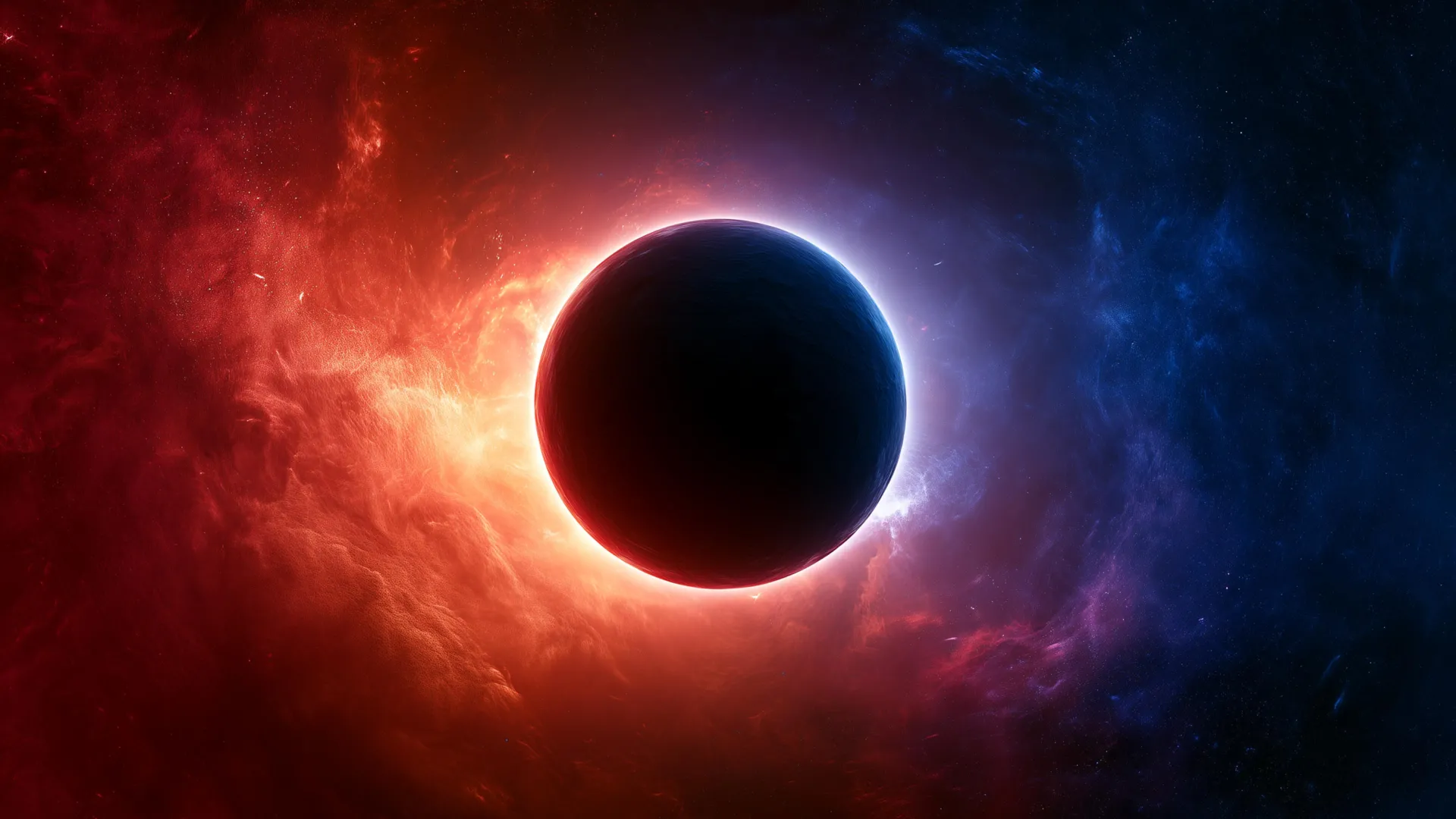
    On December 18, 2019, astronomers observed a distant star in the Large Magellanic Cloud brighten smoothly for about an hour before returning to normal. The symmetrical change showed no signs of an explosion or flare and appeared consistent with gravitational microlensing, in which an invisible object passes between Earth and a distant star and bends its light. Researchers have named the unseen object Phoebe, but they do not yet know whether it is a wandering planet or a primordial black hole.

    An unusual gravitational lens

    Gravitational microlensing is predicted by Albert Einstein’s theory of general relativity. When a compact object with sufficient mass passes in front of a more distant star, its gravity bends the star’s light and temporarily increases its apparent brightness. The resulting pattern is typically smooth and distinctive, unlike the irregular changes produced by variable stars, stellar flares or passing asteroids.

    Astronomers at Melbourne’s Swinburne University identified the signal while examining observations from a survey that repeatedly monitored stars in the Large Magellanic Cloud, a satellite galaxy of the Milky Way. The unusual brightness pattern persuaded the team that it had detected a genuine microlensing event. The object responsible, however, could not be seen directly.

    Three possible identities for Phoebe

    Researchers have proposed three possible explanations for Phoebe. It could be a rogue planet expelled from its original planetary system and now traveling alone through the Milky Way. Alternatively, it could be a similar wandering planet located within the Large Magellanic Cloud. If that explanation is correct, Phoebe would be the first planet beyond the Milky Way discovered through gravitational microlensing.

    A third possibility is more unusual: Phoebe could be a primordial black hole, an ancient object formed during the earliest moments of the universe. Unlike ordinary black holes, which are produced when massive stars collapse, primordial black holes may have formed from extremely dense regions of the universe during the first few seconds after the Big Bang. They would therefore have existed long before the first stars appeared.

    What the one-hour signal reveals

    The event’s unusually short duration provides clues about the object’s mass. The duration of a gravitational microlensing event depends partly on the mass of the intervening object. In general, less massive objects produce shorter events, although the object’s speed and position also influence how long the brightening lasts.

    Phoebe’s signal lasted about 60 minutes, close to the detection limits of current astronomical surveys. Using the observed duration and a model of the event, the researchers estimated that the object has a mass approximately three times that of the Moon.

    That estimate would make Phoebe much less massive than any planet in our solar system and far too small to be a conventional black hole formed by the collapse of a star. Stellar-collapse black holes typically have at least about five times the mass of the Sun. If Phoebe is a black hole, its unusually low mass would instead support a primordial origin.

    A possible link to dark matter

    To investigate where Phoebe might belong, the researchers compared the likelihood that it came from several populations: stars in the Milky Way, stars in the Large Magellanic Cloud, and objects associated with the surrounding dark matter halo.

    The calculations strongly favored the dark matter halo. According to the researchers, Phoebe is about 100,000 times more likely to belong to that population than to populations associated with ordinary stellar matter. This result does not prove that Phoebe is a primordial black hole, but it makes a possible connection between the object and dark matter especially intriguing.

    If the primordial black hole explanation is correct, Phoebe could be among the oldest objects ever detected. It may have formed before the first atoms or stars existed, when the universe was still undergoing extreme conditions after the Big Bang.

    For about 13 billion years, such an object could have traveled invisibly through space without leaving an obvious trace. Then, on a night in December 2019, its gravity briefly magnified the light of a distant star, potentially offering astronomers a glimpse of an object born near the beginning of the universe.

    Source: www.sciencedaily.com

    Share. Facebook Twitter Pinterest LinkedIn WhatsApp
    Previous ArticleLadybird Browser’s First Downloadable Alpha Release Is Surprisingly Capable
    Next Article U.S. Military Calls Controlled Explosion of Lead Azide Explosives in Iowa a “Huge Success”

    Related Posts

    Science

    Why the Next U.S. Congress Should Ban Self-Improving AI Development

    Science

    Natural Floating Island Installed in Glasgow Park as a Lasting Games Legacy Project

    Science

    Extremophile Transgene Enhances Drought Resistance and Yield in Cereal Crops

    Science

    Black Friday 2026 Telescope Deals: Smart Telescopes and Binoculars

    Science

    NASA Science: Imbued with Sivrich

    Science

    Why Certainty Can Be a Failure in Science

    Science

    Chromosomal Glue May Improve Fertility by Stabilizing Aging Eggs

    Science

    Thanksgiving Storm Brings Flooding and Flight Delays Across the U.S.

    Add A Comment
    Leave A Reply Cancel Reply

    Stay In Touch
    • Facebook
    • Twitter
    • Instagram
    • Pinterest
    Top Picks
    Technology

    Watch the Exciting First Trailer for ‘Avengers: Doomsday’ – Release Insights Inside!

    The Thunderbolts, also referred to as the New Avengers, include an impressive lineup of characters:…

    28-Year-Old DOGE Operative Led USAID Without HR Record of Employment

    Mathematicians Amazed by AI and Human-Written Proof of the Riemann Hypothesis

    NASA’s SpaceX CRS-35 Mission Begins Health Research Experiments

    Study Finds Your Body Self-Regulates More Efficiently When You’re Near Your Partner

    Most Popular
    Science

    President Trump to Award Congressional Space Medal of Honor to Artemis II Astronaut

    Technology

    Rogue AI Agent Gives Police False Information in Unsolved Murder Case

    Categories
    • AI (9)
    • Gadgets (6)
    • Science (3,612)
    • Space (3)
    • Technology (3,043)
    • Wheels (3)
    Our Picks
    Technology

    Why Backblaze Shares Customer Information With Advertisers: Company Explains

    Technology

    The Man Behind the West Bank Telegram Channel Keeping Palestinian Drivers Safe

    © 2026 Hitechub.
    • Home
    • About Us
    • Privacy Policy
    • Terms & Conditions

    Type above and press Enter to search. Press Esc to cancel.

    GDPR Cookie Banner

    We are using cookies to give you the best experience on our website.

    You can find out more about which cookies we are using or switch them off in .

    Ad Blocker Enabled!
    Ad Blocker Enabled!
    Our website is made possible by displaying online advertisements to our visitors. Please support us by disabling your Ad Blocker.