


Close Menu
HitechubHitechub
    What's Hot
    Science

    Atom-Based Quantum Computers: Accelerating Towards Practical Applications

    Science

    Astronomers Detect Alien Radio Signals from Interstellar Object 3I/ATLAS

    Science

    The Mona Lisa reveals another secret

    Important Pages:
    • About Us
    • Privacy Policy
    • Terms & Conditions
    Facebook X (Twitter) Instagram Pinterest
    Facebook X (Twitter) Instagram
    HitechubHitechub
    Sunday, June 14
    • Technology
      1. AI
      2. Gadgets
      3. View All

      This is the most popular CEO in the world

      Sectors in which “Chat-GPT” is most often used

      AI Pioneer Expresses Concern About Potential for AI to Surpass Humanity

      Artificial intelligence has begun to “swallow” professions

      What’s new in Android 14

      Europeans have about 700 million old mobile phones in their drawers

      Here’s how you can tell if your phone is being tapped

      “Sneaker X” – computer case in the shape of a sneaker

      Russian Gamers Unite to Prevent Nuclear War: Join the Fight Online

      Challenges of Space Travel: Why Journeying to Space is So Difficult

      NASA Astronaut Casts Historic Vote from Space

      Discover the Future of Comfort: What If You Could Wear a Chair?

    • Science
      1. Space
      2. Wheels
      3. View All

      Galaxies in the universe are growing more slowly than they should

      “Espace” presented the new lander “Apex 1.0”

      The largest asteroid sample ever collected has arrived on Earth

      (VIDEO) Incredible flight of the Parker Solar Probe

      Toyota wants to make a new generation battery with a range of up to 1,200 km

      Meet Toyota’s lunar “baby” that could make exploring the Moon easier

      Microlino – Is this the perfect city car?

      Alfa Romeo 4C gets an electric successor

      Reversing Aging: Experts Share New Findings That Changed Their Perspective

      Harvard Study Challenges the Five-Meal-A-Day Diet: Time to Rethink Your Eating Habits

      20-Year-Old Director Achieves Success with Sci-Fi Horror Film ‘Backrooms’

      Can Lab-Grown Sperm Help Infertile Men Conceive Their Own Children?

    HitechubHitechub
    Home » After the asteroid hit that wiped out the dinosaurs
    Science

    After the asteroid hit that wiped out the dinosaurs

    Share Facebook Twitter Pinterest WhatsApp
    asteroid hit
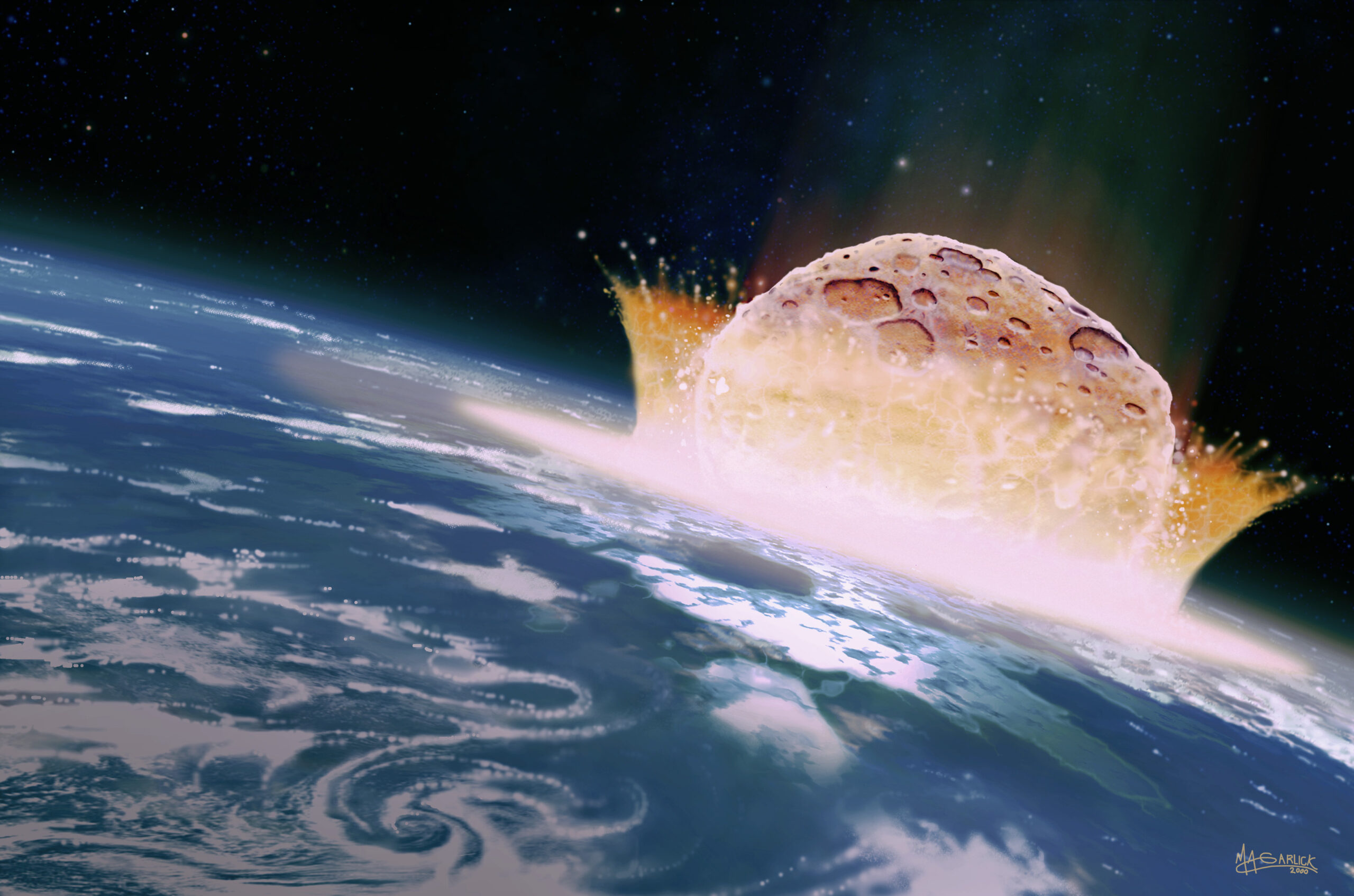
    A computer illustration of a large asteroid colliding with Earth. (Size may not be to scale.) Such an impact is believed to have led to the death of the dinosaurs some 66 million years ago.
    Share
    Facebook Twitter LinkedIn Pinterest WhatsApp

    It was, to put it mildly, a bad day for Earth when an asteroid hit Mexico’s Yucatan Peninsula 66 million years ago and triggered a global catastrophe that wiped out about three-quarters of Earth’s species and ended the age of the dinosaurs.

    The immediate consequences were forest fires, earthquakes, huge shock waves in the air and in the seas. But the death blow for many species was a potential climate disaster in the years to come, when clouds of debris darkened the sky and temperatures plummeted.
    Scientists have recently discovered the powerful role that dust thrown into the atmosphere from an asteroid impact site can play in causing extinctions, choking the atmosphere and blocking the process of photosynthesis. They calculated that the total amount of dust is about 2,000 gigatons, which is 11 times heavier than Mount Everest.
    The scientists conducted paleoclimate simulations based on sediment excavated at the Tanis paleontological site in North Dakota, which preserved evidence of conditions following the fatal impact, including an incredible amount of dust.

    Simulations showed that this fine-grained dust can block photosynthesis for up to two years and remain in the atmosphere for 15 years – said scientist Jem Berk Senel from the Royal Observatory of Belgium, lead author of the study published in the journal “Nature Geoscience”.
    Previous research has pointed to two other factors, sulfur released after the impact and soot from wildfires. But this study found that dust played a bigger role than previously thought. The dust, or silicate particles of about 0.8-8.0 micrometers in size, that made up the global cloud layer, originated from granite and gneiss, broken off in the powerful impact that created the Chicxulub crater in the Yucatan, 180 km wide and 20 km deep. Earth subsequently suffered a drop in surface temperature of about 15 degrees Celsius.

    For years it was cold and dark – says the scientist and co-author of the study Philip Kleis.
    Earth fell into winter, with a drop in global temperatures and a collapse in primary productivity, the processes that terrestrial and aquatic plants and other organisms use to produce food from inorganic sources, leading to a chain reaction of extinction. As plants died, herbivores starved, carnivores ran out of prey and disappeared. In marine areas, the disappearance of tiny phytoplankton caused the collapse of food chains.
    – While the sulfur remained for about eight or nine years, the soot and silicate dust were in the atmosphere for about 15 years after the impact. Full recovery from the long winter took even longer, and temperature conditions returned to pre-impact levels after about 20 years, said Ozgur Karatekin, a scientist and co-author of the study at the Royal Observatory of Belgium.

    Share. Facebook Twitter Pinterest LinkedIn WhatsApp
    Previous ArticleThe end of passwords
    Next Article How much does it really cost to make an iPhone?

    Related Posts

    Science

    Reversing Aging: Experts Share New Findings That Changed Their Perspective

    Science

    Harvard Study Challenges the Five-Meal-A-Day Diet: Time to Rethink Your Eating Habits

    Science

    20-Year-Old Director Achieves Success with Sci-Fi Horror Film ‘Backrooms’

    Science

    Can Lab-Grown Sperm Help Infertile Men Conceive Their Own Children?

    Science

    Ancient Anesthetic Unearthed in Chinese Doctor’s Grave: A Historical Breakthrough

    Science

    Space Storm Threatens Train Signals, Potentially Leading to Serious Accidents

    Science

    First Quantum Grandfather Clock: Exploring the Origins of Gravity

    Science

    Nasa’s Ambitious Lunar Base Project: A Massive Facility Covering Hundreds of Square Kilometers

    Add A Comment
    Leave A Reply Cancel Reply

    Stay In Touch
    • Facebook
    • Twitter
    • Instagram
    • Pinterest
    Top Picks
    Science

    Boost Your Brainpower: Essential Tips for Strengthening Your Cognitive Health in Middle Age

    To understand brain changes throughout life, neuroscientists have primarily examined the early and late stages:…

    Vulture Discovered Hiding Medieval Treasure in Its Nest

    Rapid Melting of Glaciers on the Roof of the World: Causes and Impacts

    New Scientist Book Club Reviews ‘Luminous’ by Sylvia Park: An Insightful Exploration of Robotics

    Hurricane Season Kicks Off: Below-Average Forecast Highlights First Time in a Decade

    Most Popular
    Science

    The 6 Most Common Poop Problems and Expert Solutions from a Harvard Doctor

    Science

    Iron Age Britons: The Practice of Removing Brains from the Deceased

    Categories
    • AI (13)
    • Gadgets (10)
    • Science (228)
    • Space (9)
    • Technology (37)
    • Wheels (9)
    Our Picks
    Science

    The Arrival of Killer Robots: Time to Decide Our Acceptance

    Science

    Vulture Discovered Hiding Medieval Treasure in Its Nest

    © 2026 Hitechub.
    • Home
    • About Us
    • Privacy Policy
    • Terms & Conditions

    Type above and press Enter to search. Press Esc to cancel.

    We are using cookies to give you the best experience on our website.

    You can find out more about which cookies we are using or switch them off in .

    Ad Blocker Enabled!
    Ad Blocker Enabled!
    Our website is made possible by displaying online advertisements to our visitors. Please support us by disabling your Ad Blocker.
    Go to mobile version
    Hitechub
    Powered by  GDPR Cookie Compliance
    Privacy Overview

    This website uses cookies so that we can provide you with the best user experience possible. Cookie information is stored in your browser and performs functions such as recognising you when you return to our website and helping our team to understand which sections of the website you find most interesting and useful.

    Strictly Necessary Cookies

    Strictly Necessary Cookie should be enabled at all times so that we can save your preferences for cookie settings.