


Researchers at the University of Oxford have developed a groundbreaking class of “cat states”—quantum superpositions created from unique, non-classical components rather than traditional wave packets. This innovation paves the way for more resilient quantum computers.
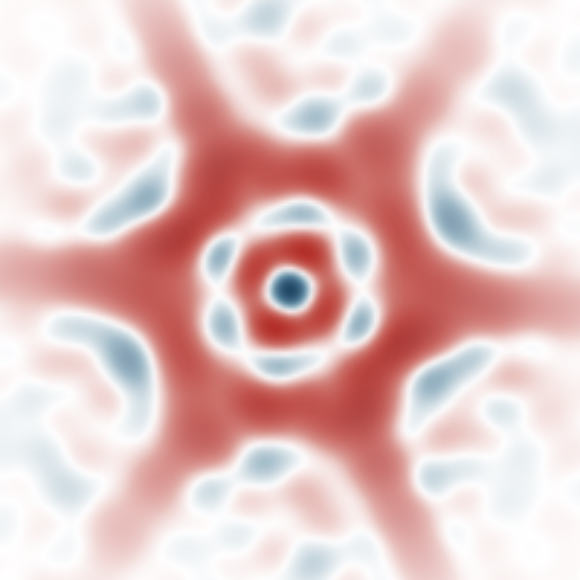
Quantum mechanics challenges classical intuition, prominently illustrated through Schrödinger’s cat, where systems inhabit superposition of contradictory states. Such superpositions form the backbone of quantum technology. While quantum “cat” states have been realized in harmonic oscillators, most implementations have scarcely ventured beyond Fock states, displacement states, or Gottsman-Kitaev-Preskill states. A novel type of macroscopic superposition was theorized, wherein the oscillator is squeezed along orthogonal axes, showcasing property distributions that simultaneously exceed and fall below the Heisenberg limit. Zahner et al. have successfully engineered a trapped ion hybrid spin oscillator system to manifest these “variations” of Schrödinger’s cat. Image credit: Saner et al., doi: 10.1103/k1xk-yt42.
“In contrast to classical physics, quantum mechanics permits objects to exist in multiple states simultaneously,” explained Dr. Sebastian Zahner of the University of Oxford and his team.
“This principle is epitomized by Schrödinger’s cat, which is paradoxically both alive and dead until observed.”
“In practice, physicists can simulate a less dramatic but equally profound version by placing atoms, light, or motion in two distinct quantum states concurrently.”
“Creating and managing these superpositions is critical for applications ranging from quantum computing to precise timekeeping.”
“For instance, a quantum bit, or qubit, represents a superposition of both states 0 and 1. However, quantum systems extend well beyond these binary options.”
“Quantum harmonic oscillators demonstrate a broader spectrum of possibilities, capable of occupying various energy levels.”
“These oscillators are instrumental in modeling a plethora of physical phenomena, such as light, vibrations, and the motion of confined particles, facilitating the formation of diverse quantum superpositions.”
“A notable illustration is the cat state, where an oscillator exists in a superposition of two wave packets moving in opposing directions.”
“These wave packets, termed coherent states, closely resemble classical motion as dictated by the limits of quantum mechanics.”
In a recent study, Dr. Zaner and colleagues have showcased a new class of quantum superpositions.
Rather than constructing cat-like states from coherent state wave packets, they innovated a technique for generating superpositions using a diverse array of highly non-classical components.
In scenarios like superpositions of squeezed states, quantum uncertainty is differently allocated across each portion of the state.
“The experiment harnessed the motion of a single trapped ion,” the researchers stated.
“A trapped ion merges two distinct types of quantum systems: its internal state functions as a qubit, while its motion embodies a quantum harmonic oscillator capable of existing in numerous motion states.”
“This combination renders it a robust platform for engineering quantum states surpassing conventional qubits.”
To fabricate these states, the researchers first implemented engineered interactions to entangle the ions’ internal states with various potential motion states.
Intermediate-circuit quantum measurements of internal states then projected the ion’s motion into a chosen superposition of non-classical components.
“This methodology equips us with the ability to construct quantum superpositions into nearly any configuration,” Dr. Sanner explained.
This approach enabled researchers to control the generated states programmatically.
By adjusting the experimental framework, they could manipulate the relative sizes, rotations, and separations of the components, allowing for the creation of an extensive array of exotic motion superpositions within a single trapped ion system.
Furthermore, scientists directly reconstructed the quantum states they generated.
The reconstruction unveiled interference patterns and areas of Wigner negativity, demonstrating that the state cannot be characterized as a classical mixture.
These characteristics verify that the experiment has indeed yielded a genuine quantum superposition of fundamentally non-classical motion states.
The authors are now collaborating with theorists to better understand how “quantum” these states are.
Dr. Raghavendra Srinivas, also from the University of Oxford, remarked: “I was genuinely encouraged by my colleagues’ reactions when I presented our findings.”
“We believe we’re only beginning to explore the full potential, both in practical applications and in a deeper understanding of these conditions.”
The team’s paper was published in this month’s edition of Physical Review X.
_____
S. Zaner et al. 2026. Generation of arbitrary superpositions of non-classical quantum harmonic oscillator states. Physical Review X 16, 021049; doi: 10.1103/k1xk-yt42
Source: www.sci.news