


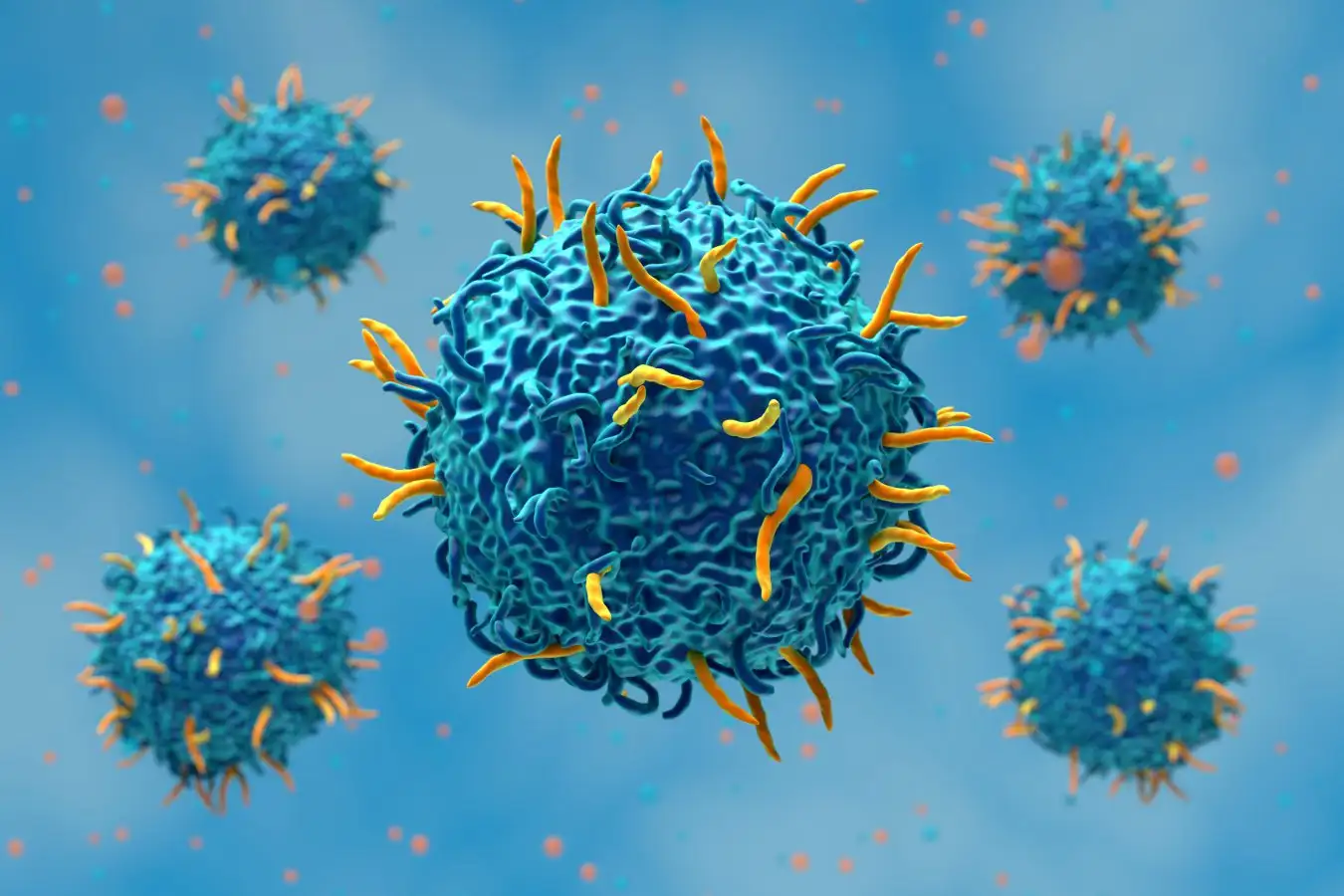
CAR-T Cell Therapy: Pioneering Accessible Cancer Treatments
Nemeth Laszlo/Shutterstock
CAR T-cell therapy, where a patient’s immune cells are genetically modified to target cancer cells, shows remarkable effectiveness against certain cancers. However, its prohibitive cost limits global accessibility. Innovative advancements in 3D printing now allow for quicker and more affordable production of these engineered cells, potentially transforming availability into a reality for more patients.
With urgent cases in mind, experts such as David Coe emphasize that patients may deteriorate significantly while awaiting the complex CAR T therapy, which can take up to three weeks to deliver. Coe is part of CoED Biosciences in Cardiff, UK, but was not affiliated with the latest findings.
This therapy process involves extracting T cells from a patient’s blood and genetically modifying them to identify and eliminate cancer cells. This is achieved using special beads to stimulate cell growth and a harmless virus that introduces a chimeric antigen receptor (CAR) to target cancer cell markers. Research indicates that a successful reprogramming rate of 30 to 70 percent of T cells correlates with favorable patient outcomes, as documented here.
The entire CAR T-cell production process can span about a month. Furthermore, the treatment often costs over £280,000, making it largely accessible only in affluent nations, as pointed out by Gillian Griffiths from the University of Cambridge, who was not engaged in this research.
To tackle these issues, Judith Guasch-Camel and her team at the Barcelona Institute of Materials Science have pioneered a 3D-printed gel that mimics human lymph node structures, where T cells typically become activated upon detecting threats.
Prior studies suggest that T cells respond to the physical properties of lymph nodes, enhancing their activation and replication capabilities, Guasch-Camel highlighted at a recent biophysical immunoengineering conference in London. Unlike traditional methods involving flat plastic surfaces, which provide limited tactile cues, this 3D approach significantly boosts cell proliferation and genetic absorption.
In experimental setups, the researchers combined human T cells, a virus bearing a cancer-specific CAR, and activation beads within the lymph node-like structure, contrasting it with the standard plastic dish method. In just five days, 75 percent of T cells undergoing the lymph node method were successfully converted into CAR T cells, outperforming the 50 percent success rate of traditional techniques. This breakthrough indicates a pathway to reduce the cost of expensive chemicals used in the CAR T-cell genetic engineering process.
Additionally, T cells within these lymph node alternatives proliferate at nearly double the rate of conventional methods, expediting treatment delivery for patients in urgent need.
These advancements represent a significant stride towards democratizing CAR T-cell therapy globally. Griffiths notes, “We’re advancing immunotherapy treatments that harness our immune system to battle cancer,” emphasizing the goal of making these therapies accessible in low- and middle-income nations, although extensive research is still required to ascertain scalability and associated costs.
Topics:
Source: www.newscientist.com