


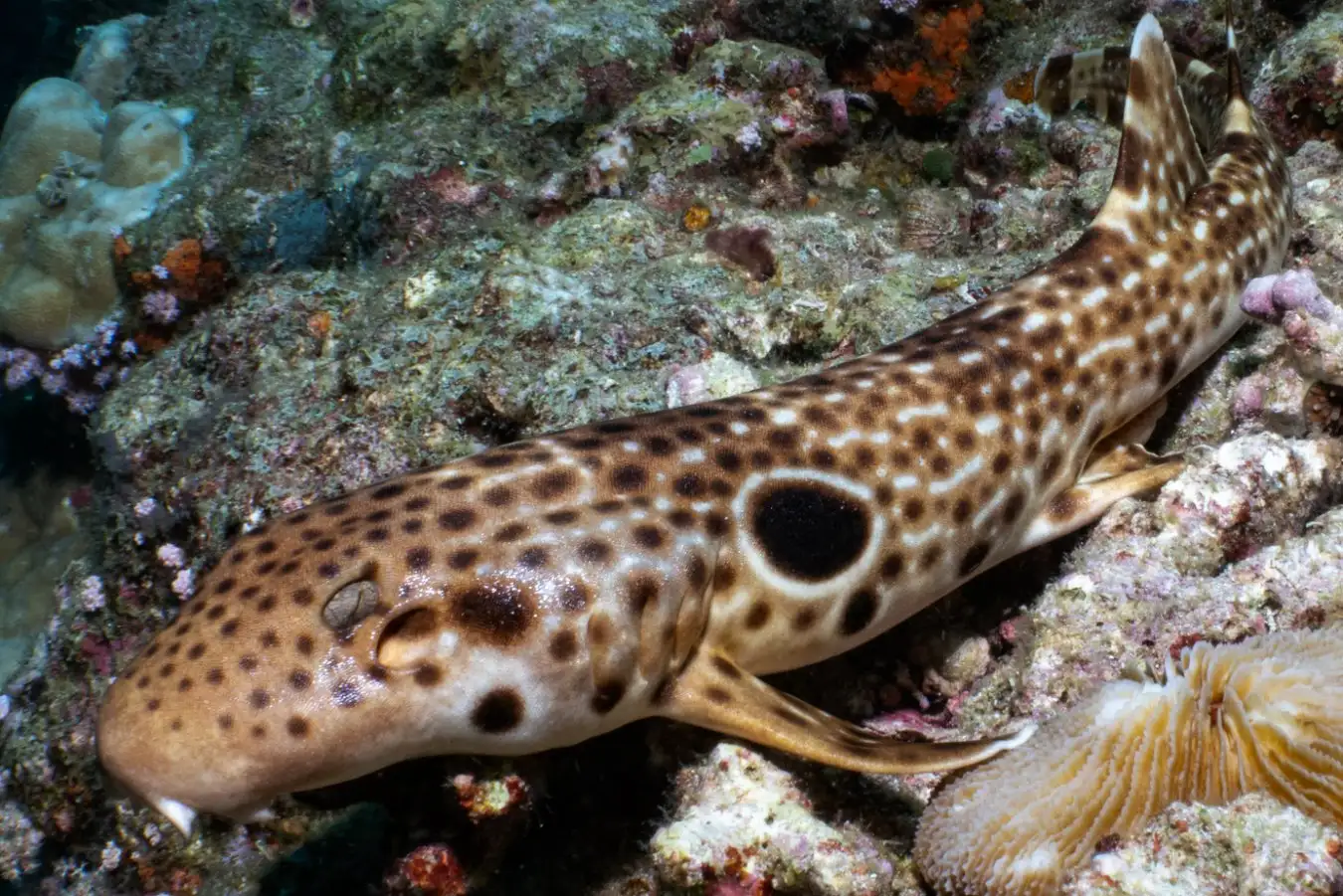
Discovering the Newly Identified Walking Shark: Hemiscyllium dudgeonae
MV Erdmann
A groundbreaking discovery has been made with the identification of a new shark species that can walk on land, primarily found off the coast of Papua New Guinea.
Local communities have known this extraordinary fish, often seen navigating coral reefs at low tide, as Kadededewa, translating to “dog shark” or “lazy shark”.
The genus Hemiscyllium, known as walking sharks or epaulette sharks, uses its pectoral fins for movement and is primarily found in Australian and New Guinean waters.
The newly designated species, Hemiscyllium dudgeonae, honors local researcher Christine Dudgeon, a professor at the University of the Sunshine Coast in Queensland, Australia, who played a pivotal role in its classification.
Professor Dudgeon first encountered this unique species during a nighttime dive in March 2025, just one meter deep in a seagrass meadow in Milne Bay, Papua New Guinea.
Originally searching for a different species, she spotted the Hemiscyllium shark swimming above the ocean floor. “It was quite slow, and after some time in the water, I noticed it. I cautiously pointed a flashlight at it, causing it to freeze instinctively. I then carefully performed a maneuver I call ‘flip and tuck’, to secure it for identification,” she explained.

Christine Dudgeon and the species named in her honor: Hemiscyllium dudgeonae
Nesha Ichida
After securing the shark, Dudgeon passed it to her colleague Jess Blakeway, who was nearby on a drifting boat.
Blakeway noted distinct color patterns that immediately identified the specimen as a unique species compared to previously studied sharks. “We immediately recognized that this shark’s coloration was different from others we knew,” said Blakeway.
Traditionally, the other nine known species of walking sharks primarily consume small invertebrates from ocean floors and share similar sizes and shapes. Distinguishing characteristics primarily revolve around their unique skin patterns and colors.
This newly discovered species showcased a pattern of dots and dashes, reminiscent of Braille or Morse code, which set it apart from others that display more leopard-like markings.
Subsequent research over several days led to the capture of an additional 11 specimens, three of which were retained for further research, while the others were examined and released.

A Coral Habitat: The Exclusive Home of Hemiscyllium dudgeonae
Nesha Ichida
Back in the lab, DNA analysis confirmed that the new species was genetically distinct from other members of its genus.
However, the newly identified walking sharks in Papua New Guinea face significant threats, including habitat destruction due to coastal development, palm oil plantation expansion, and coral bleaching.
Researchers believe that Hemiscyllium dudgeonae, endemic to Milne Bay, is possibly the most endangered species in this group.
According to Blakeway, “This discovery enhances Papua New Guinea’s remarkable biodiversity, but without swift conservation efforts, it faces the risk of local extinction.”
Topics:
Source: www.newscientist.com