


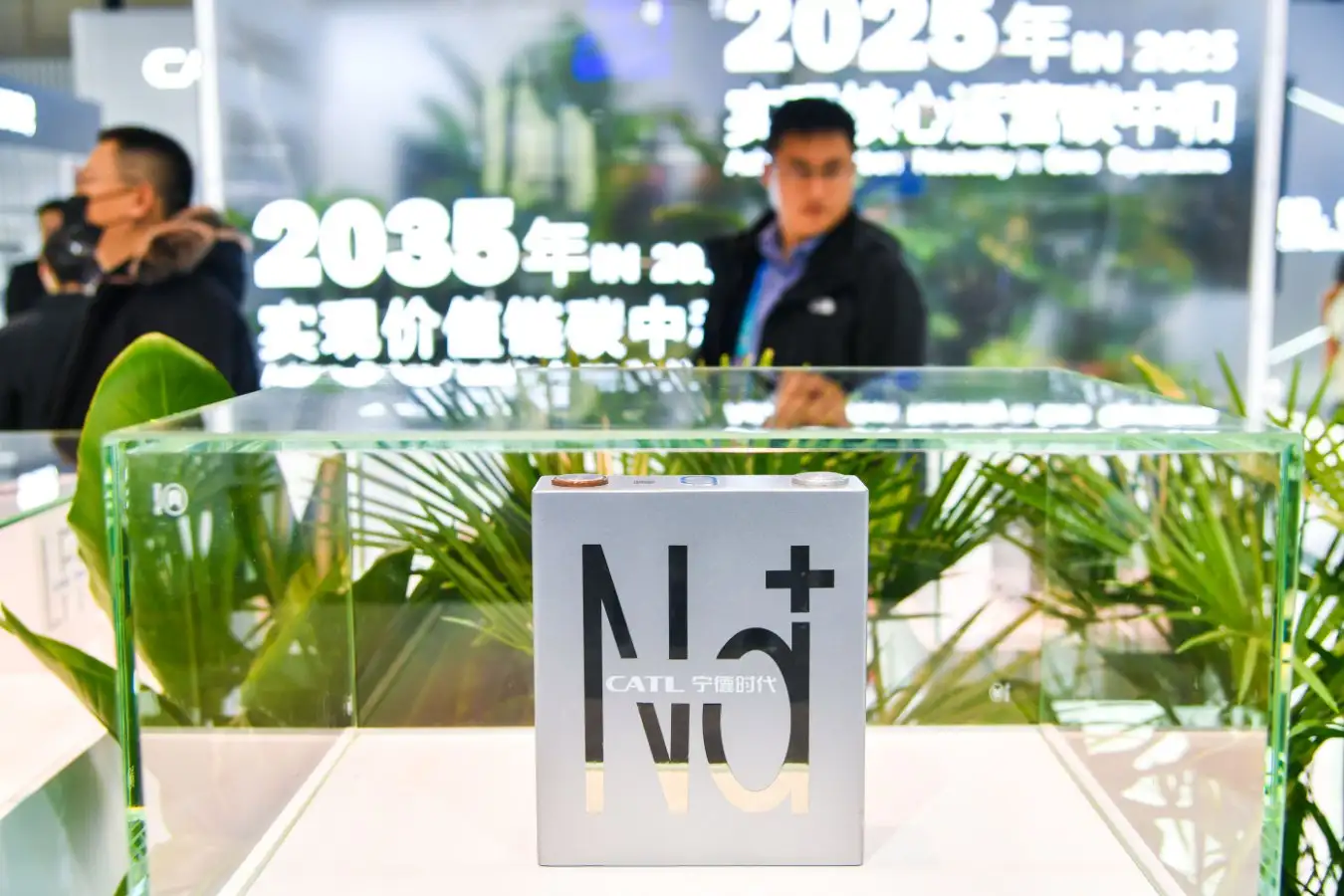

CATL’s Sodium-Ion Battery Showcased at the Exhibition
VCG/VCG (via Getty Images)
On February 5, a black sedan sped along an icy road in northern China at 95 km/h when a tire burst, releasing white smoke into the frigid -32 degrees Celsius air. Remarkably, the car came to a halt without skidding into the snow. This demonstration aimed to showcase Changan’s new range of electric vehicles, featuring the first mass-produced EV equipped with sodium-ion batteries, proving resilient in even the harshest conditions.
Changan’s Nevo AO6 model is powered by a next-generation sodium-ion battery from energy storage leader CATL, set to launch later this year.
Most rechargeable batteries utilize lithium, a critical mineral, but sodium-ion batteries employ a more abundant, cost-effective material: salt. If sodium-ion technology can match lithium’s performance at a lower cost, it could disrupt lithium’s dominance in the market, potentially leading to a diverse landscape of battery chemistries for various applications.
“We are at the dawn of a battery revolution,” says Maria Crespo-Rivadeneira from Queen Mary University of London. “Sodium is a pioneer that can show us a path beyond lithium.”
The concept of sodium-ion batteries dates back to 1966, developed by Ford. However, technological advancements have surged in the last 15 years, driven by the escalating need for lithium-ion batteries due to the electrification of power grids and vehicles. The core mechanism remains similar, but with sodium as the electrolyte instead of lithium and varied electrode compounds.
Despite sodium being three times heavier than lithium, making sodium-ion batteries heavier for equivalent storage capacity, they offer substantial potential, particularly for grid storage and small EVs with shorter ranges.
Several sodium-ion grid storage facilities have been established in China, Germany, and the United States. General Motors, the largest automobile manufacturer in America, has partnered with Peak Energy to develop more sodium-ion solutions. Peak Energy provides sodium-ion batteries to data centers for off-peak power storage. Additionally, 11 Energy has begun offering household sodium-ion batteries in the UK.
Recent developments have enhanced sodium-ion technology to the point where it is entering the general EV market. A recent study by Moritz Schutte from Germany’s Aachen University discovered that Hina’s sodium-ion batteries could perform similarly to Tesla’s lithium-ion batteries across most metrics, though they remain a third heavier.
CATL claims its sodium-ion batteries offer an energy density of 175 watt-hours per kilogram, competing with low-cost lithium iron phosphate batteries from manufacturers like Tesla. Although sodium-ion batteries have yet to match lithium in pricing, this could transform as market demand grows.
“Sodium-ion batteries are scaling up quickly,” noted Schutte. “This results in diminishing production costs. The technology is advancing with each generation, and the future for energy density is uncertain.”
Sodium also presents other advantages. The processing of lithium is energy-intensive and often exhibits a high carbon footprint. Additionally, China controls a significant portion of the lithium supply, making the industry vulnerable to geopolitical disruptions. At subzero temperatures, lithium ions may move sluggishly through electrolytes, which explains why devices often lose charge in cold conditions. Conversely, lithium electrolytes can pose fire hazards at elevated temperatures.
Moreover, sodium-ion batteries generate less heat during electrochemical reactions, which decreases the fire risk. They also exhibit better performance in colder climates. CATL demonstrated that its sodium-ion EV batteries retain 90% capacity at -40°C (-40°F), and even after significant stress testing, the batteries did not ignite and continued functioning.
Elliot Richards, an EV video blogger from Shanghai, asserted that during the launch event, sodium-ion batteries were dubbed “lithium killers.” While lithium might continue to serve luxury vehicle markets, sodium could become the preferred choice for affordable EVs, models designed for extreme climates, commercial trucks, grid applications, and home energy storage solutions.
“We might underestimate the impact this will have on daily life,” he explains. “Owning an electric vehicle will likely be much more affordable than traditional combustion cars, and energy storage for homes will also see significant reductions in costs.”
Topics:
Source: www.newscientist.com